
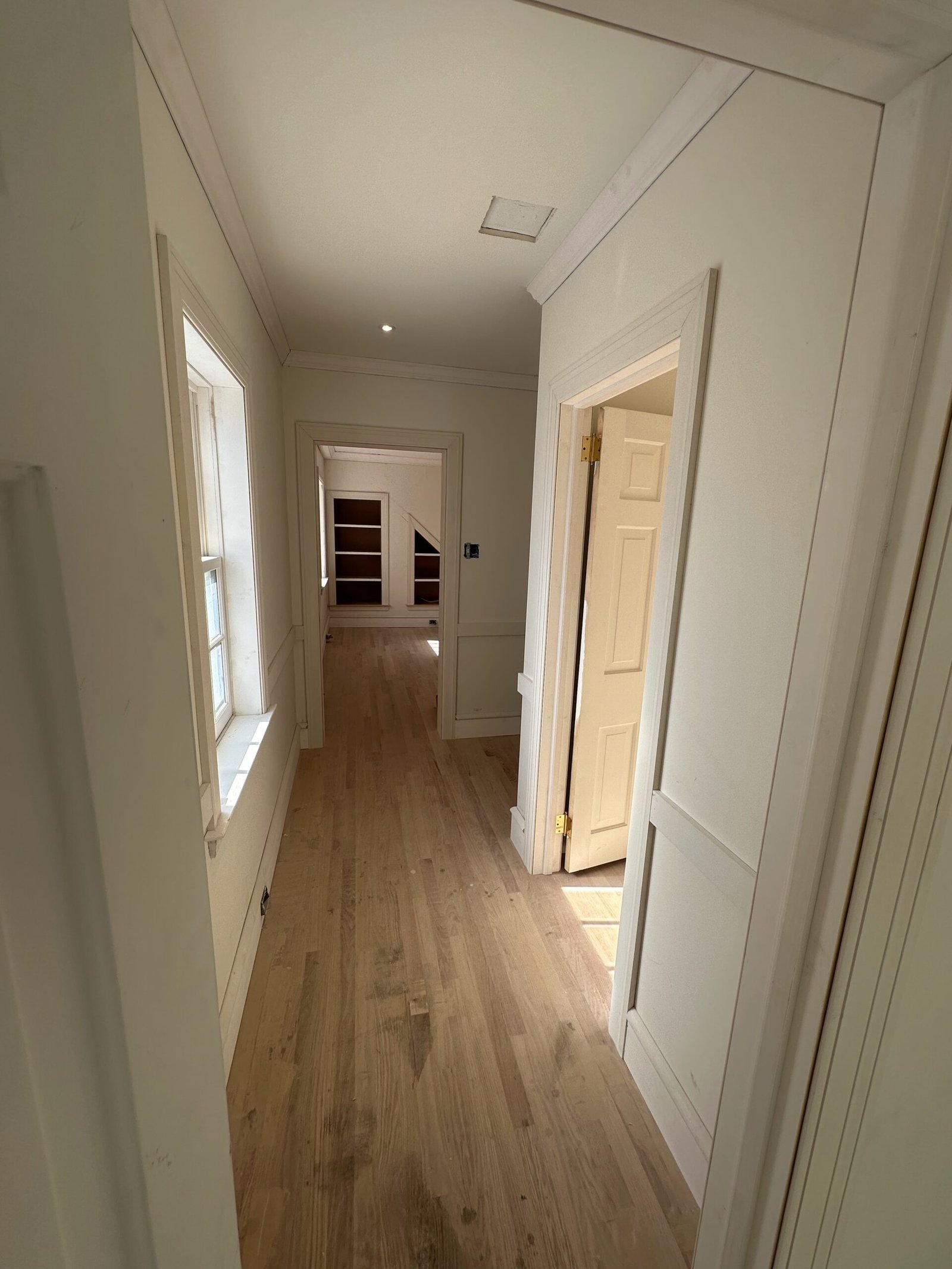

This photo is from an interior renovation in Downingtown, PA, taken mid-project. New white oak hardwood floors are down but not finished. There is a Marvin window on the left with the label still on it, chair rail running the length of the wall, and through the doorway at the end you can see the bathroom floor tile going in with blue painter’s tape marking out where the vanity mirror and fixtures will land.
Nothing is done yet. That is the point.
Photos like this one show how the different parts of an interior renovation connect to each other. The floor goes in before the door casings get scribed to it. The tile in the bathroom gets laid before the vanity goes in. The trim gets installed after the walls are painted but the window stool goes on before the apron. There is a sequence to all of it, and when a crew follows that sequence correctly the finish details end up clean. When they do not, you end up with gaps and overlaps that take extra work to fix or just get left.
What this interior renovation in Downingtown includes
The property is a period home in Chester County undergoing a full interior renovation. The hallway in the photo connects the main living area to a bathroom that is being updated at the same time.
Work underway includes:
- White oak hardwood flooring throughout the hallway and adjoining rooms
- Marvin window installation with interior trim and stool detail
- Chair rail millwork along the hallway walls
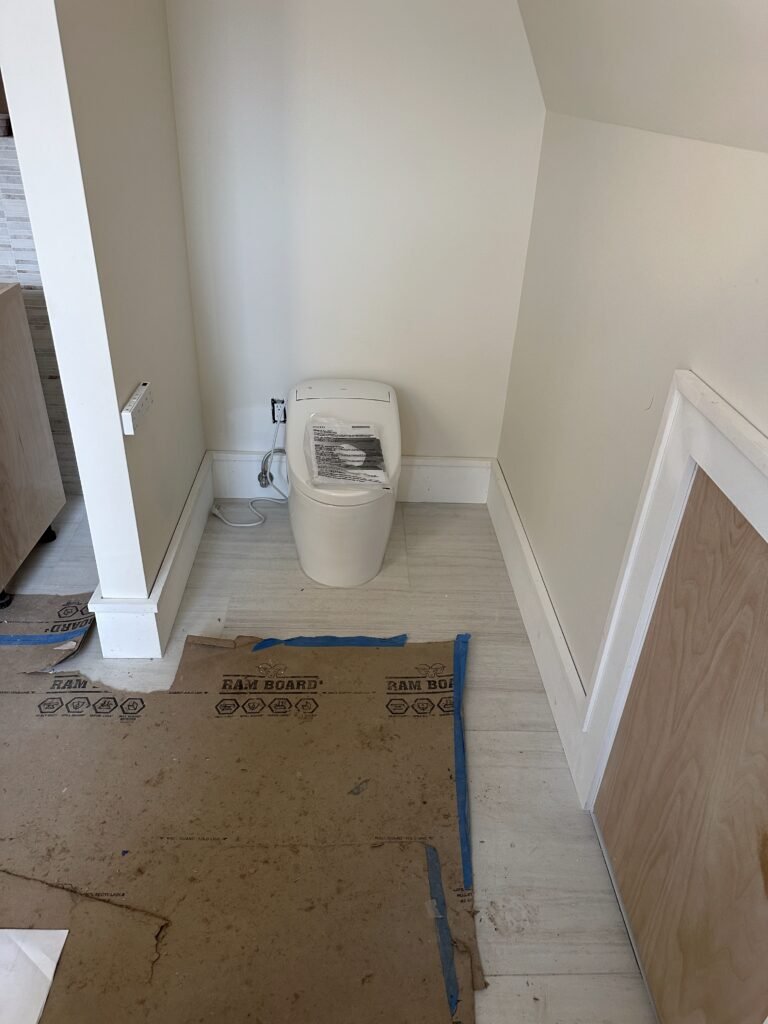
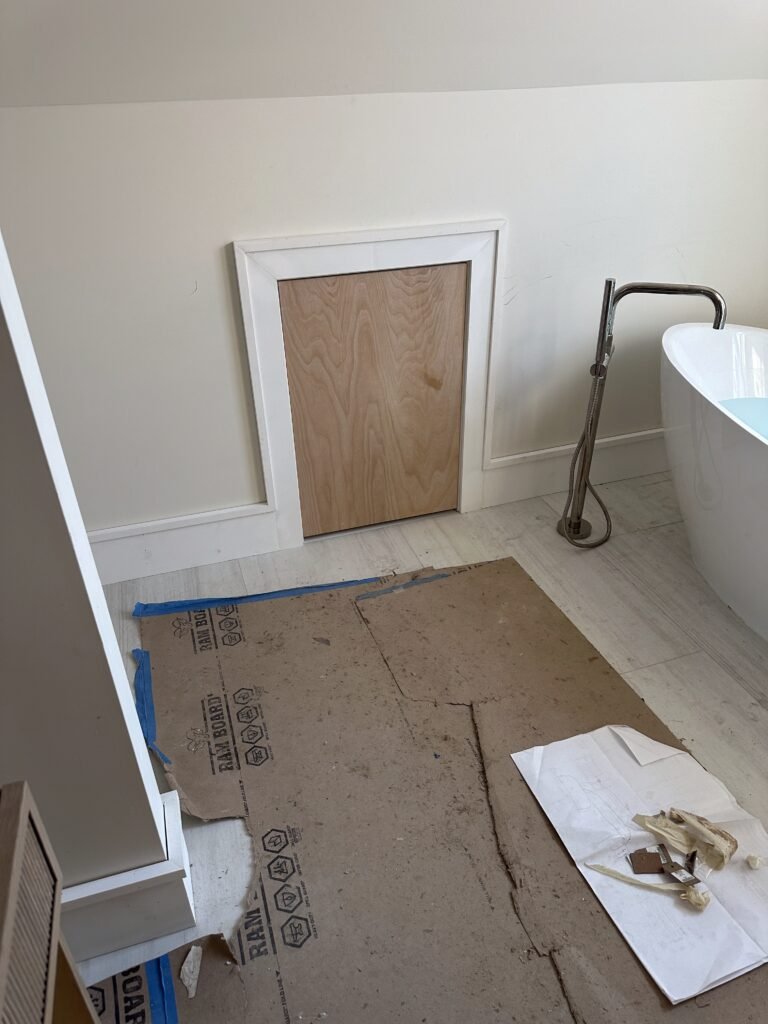
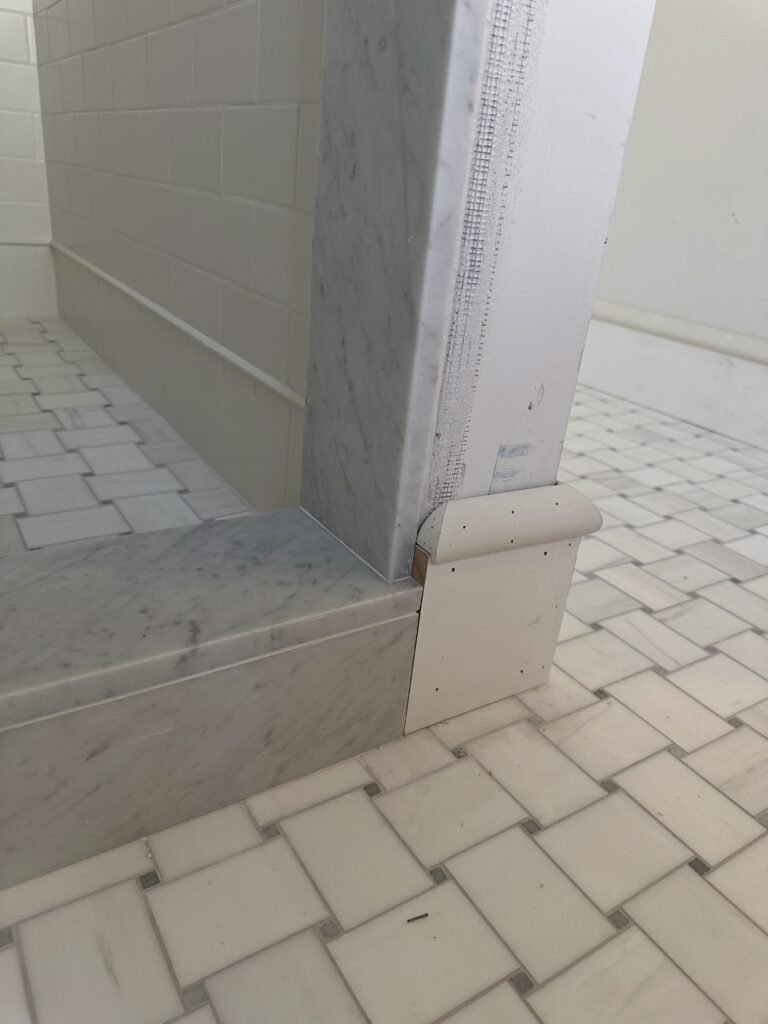
- Full bathroom renovation through the doorway, including mosaic tile floor
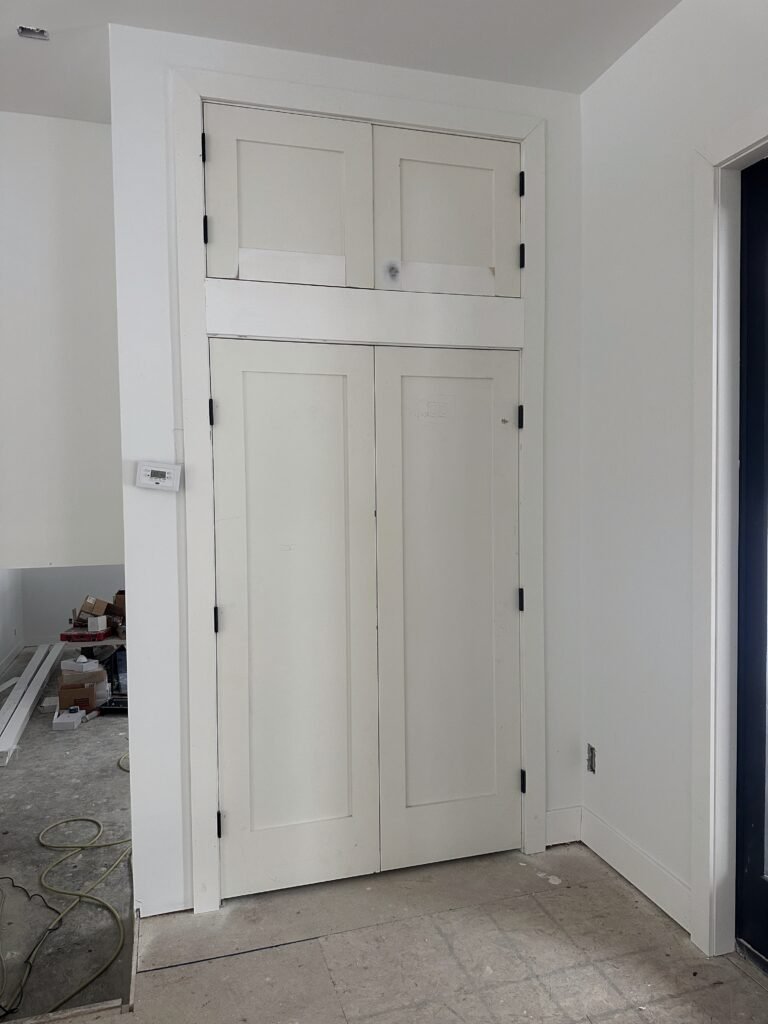
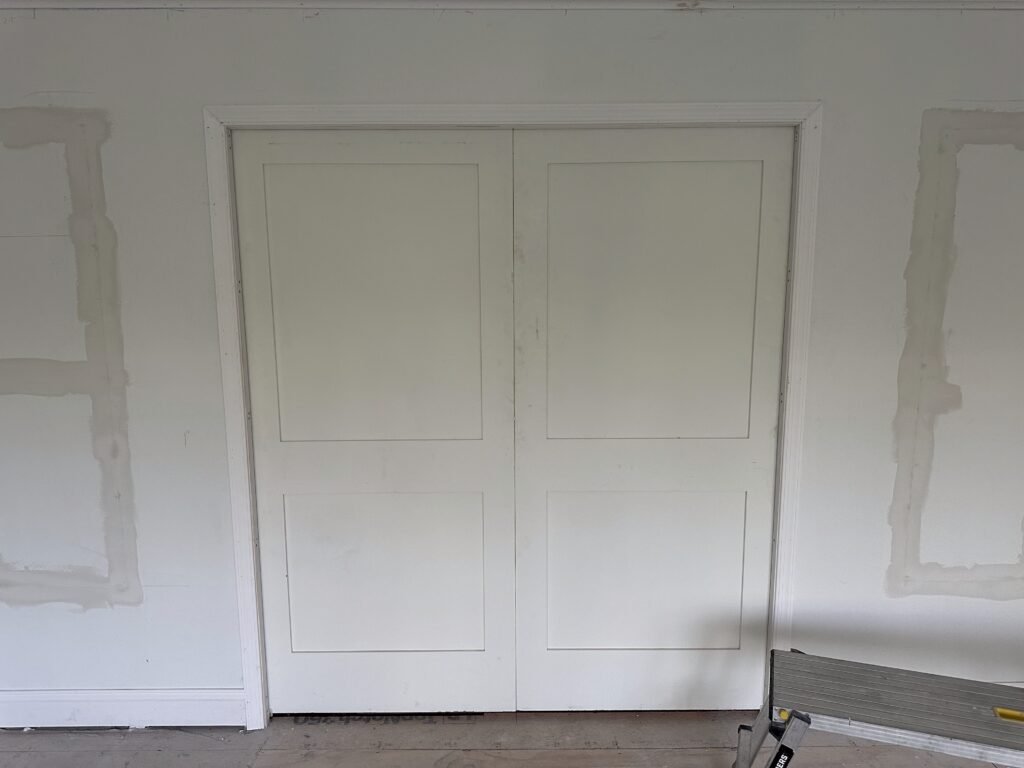
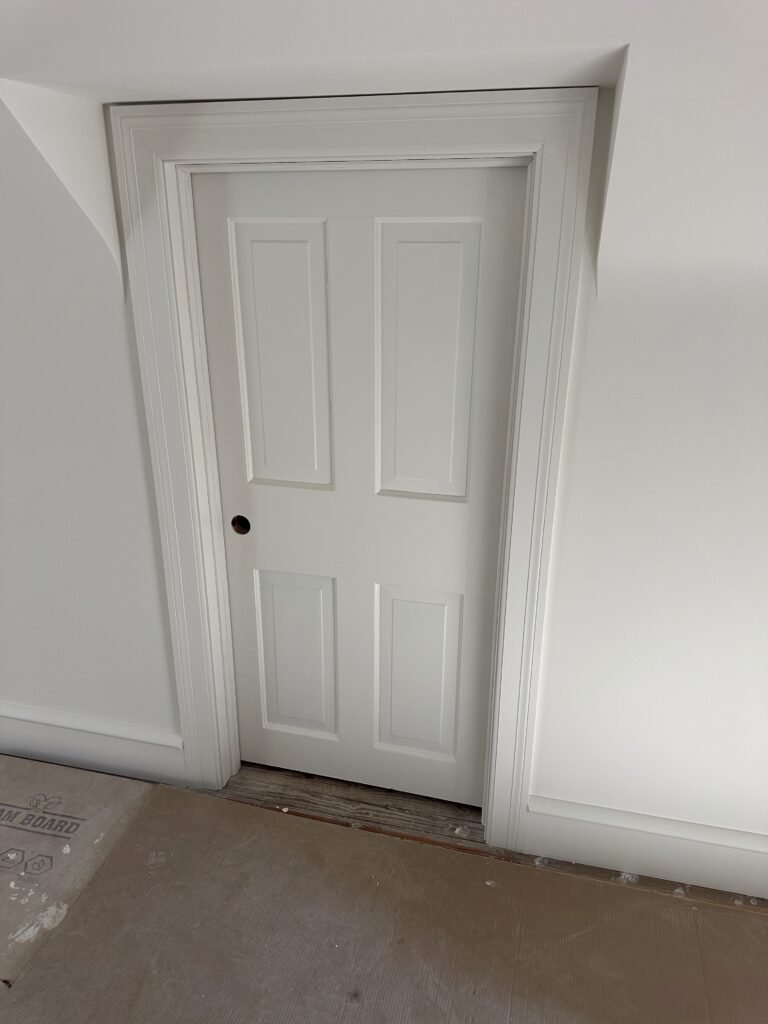
- Door casing and baseboard throughout
The bathroom visible at the end of the hall is getting small-format white mosaic tile on the floor, which is consistent with the age and character of the house. The walls are prepped and taped, and the fixtures will go in once the tile work is set and grouted.
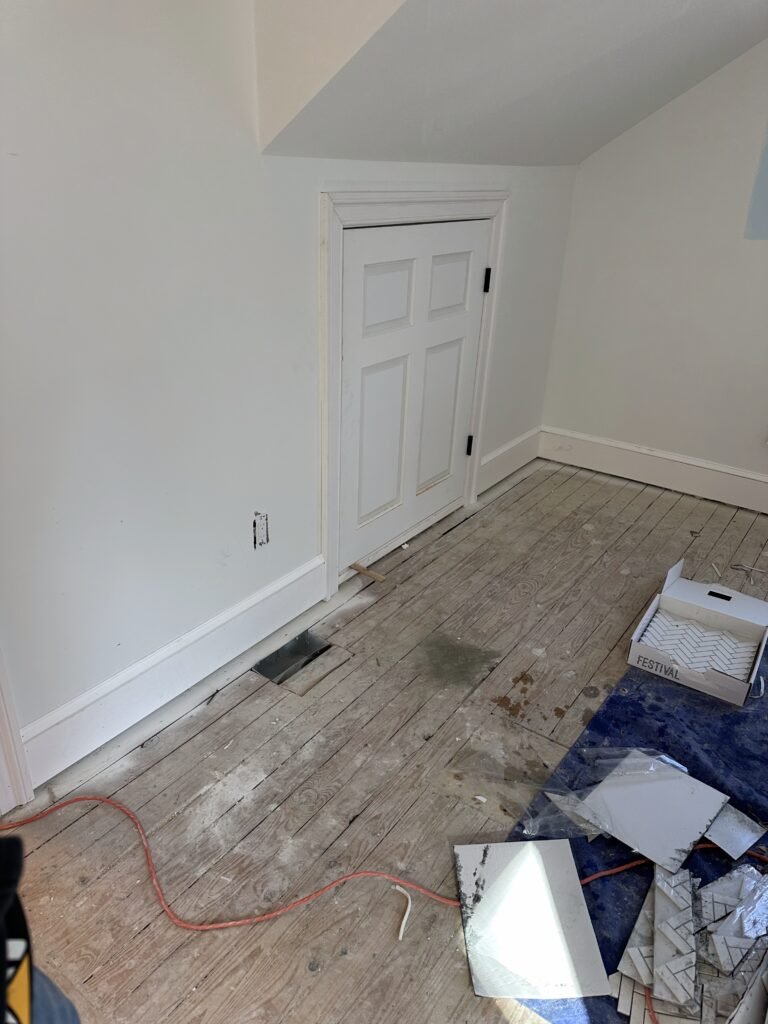
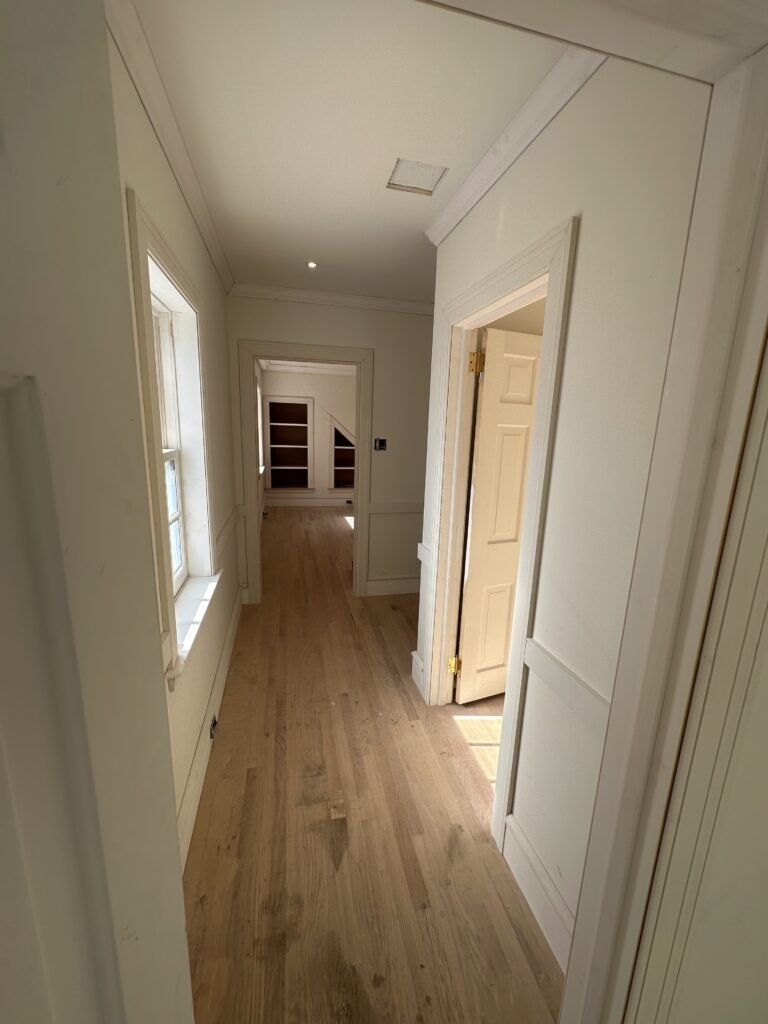
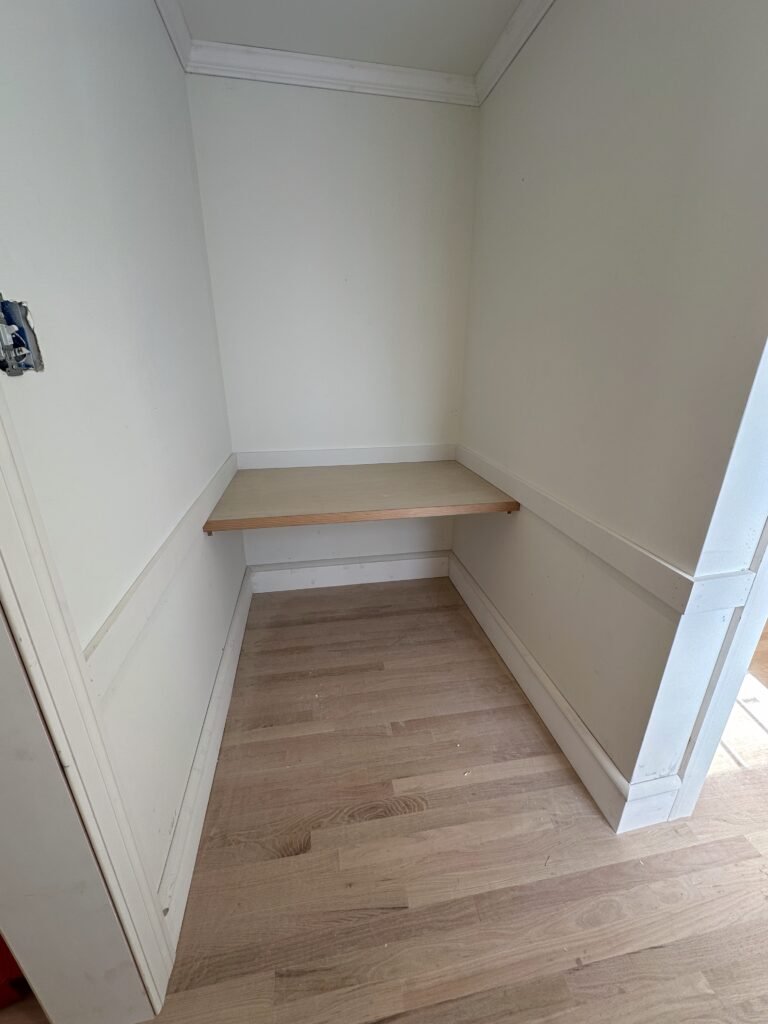
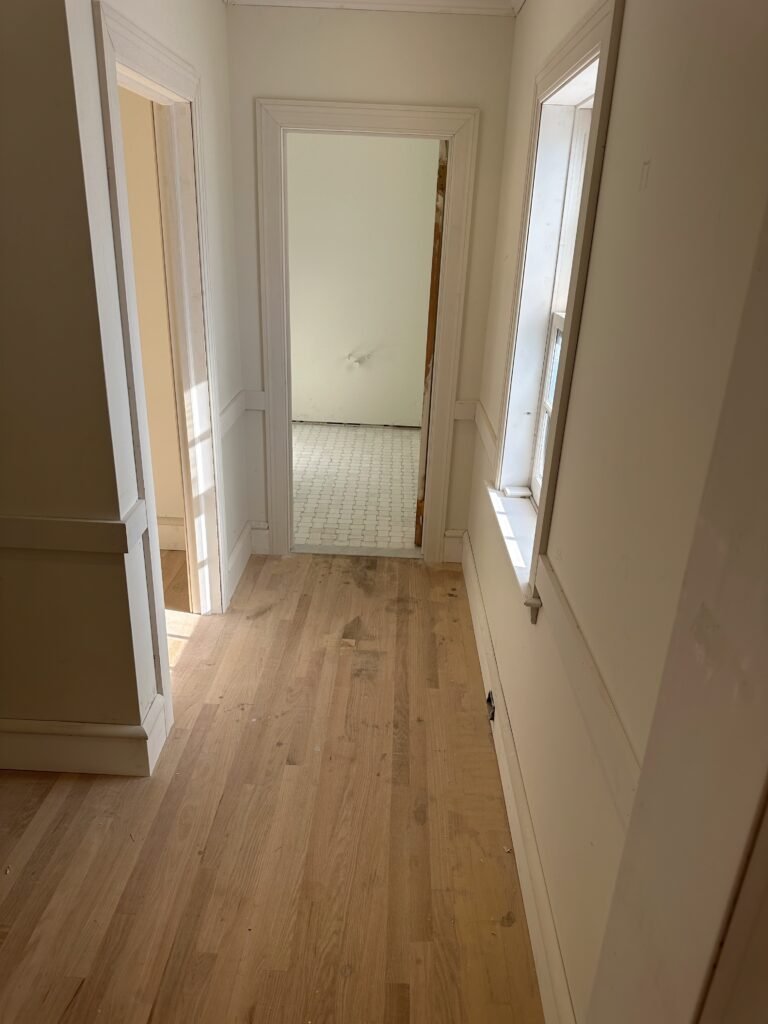
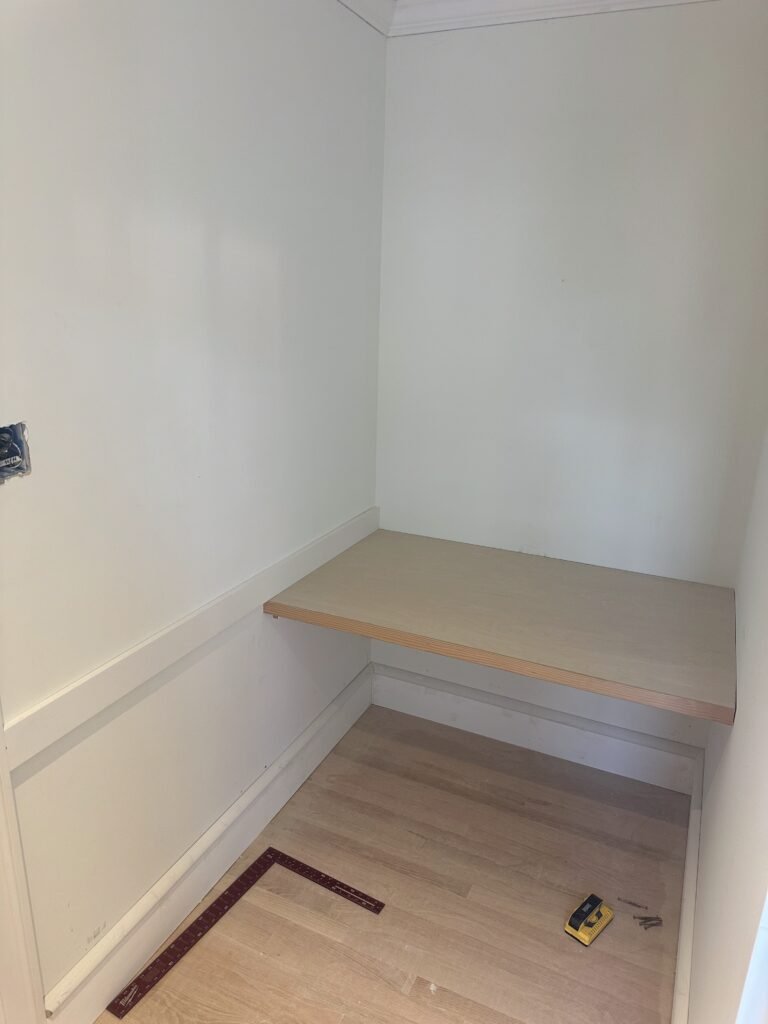
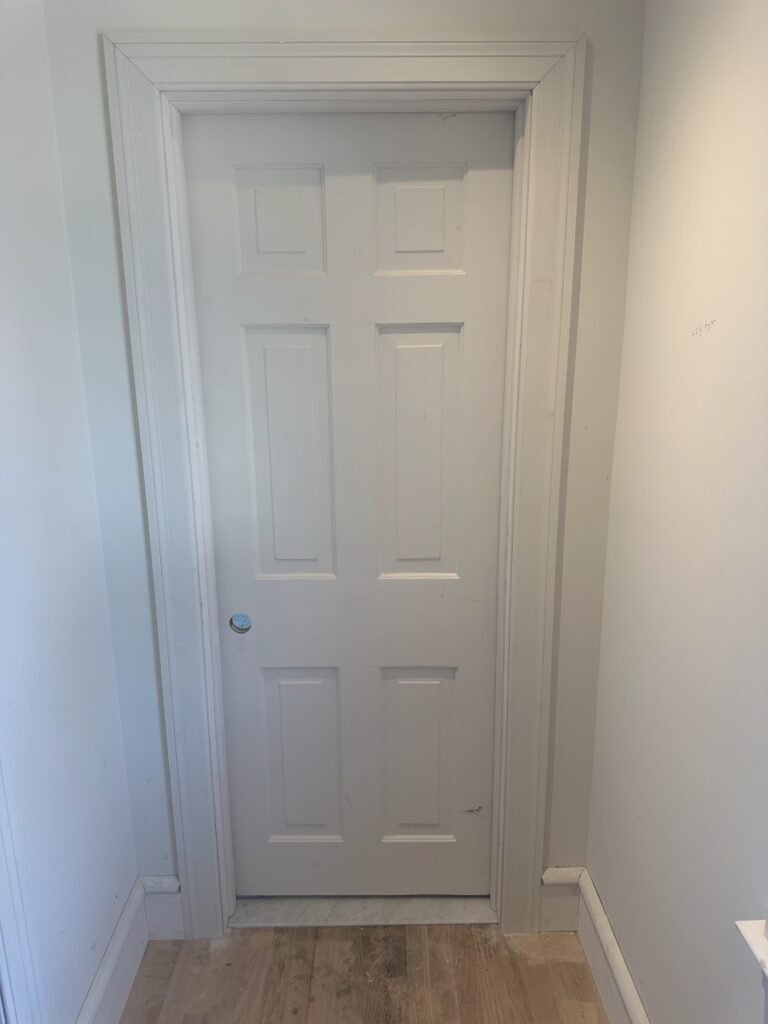
White oak hardwood floors in a Chester County period home
White oak has become the default choice for hardwood floors in older homes being renovated, and there are good reasons for that beyond just current taste.
White oak is harder than red oak, which means it holds up better under foot traffic and is less likely to show dents and scratches over time. The Janka hardness rating for white oak is 1360, compared to 1290 for red oak. That gap is not enormous but it adds up over years of daily use. White oak also takes stain more evenly than red oak because of the way its grain structure is oriented, which matters if you want a consistent finish across a full floor rather than blotchy spots where the stain absorbed differently.
For a period home, white oak also reads as period-appropriate. A lot of original hardwood floors in Chester County homes from the early to mid 20th century were white oak or a comparable species. Installing the same material in a renovation keeps the house feeling like itself rather than like a modern product was dropped into an old building.
The National Wood Flooring Association publishes installation guidelines that cover acclimation, moisture content requirements, and fastener schedules for different subfloor conditions. Getting those basics right before installation is what determines whether the floor stays flat and tight through the seasonal humidity changes a Pennsylvania home sees.
Interior trim: why it matters more than most people expect
The chair rail and window casing in this photo are not decorative in the way most people mean when they say something is decorative. They are doing visual work that affects how the whole room reads.
Chair rail serves a practical function on walls that are going to take contact from furniture, but in a period home it is also a proportioning tool. The height it sits at relative to the window sill and the ceiling height determines whether the room looks right or slightly off in a way that is hard to name. In older homes with higher ceilings, chair rail at 32 inches reads different than at 36 inches, and getting that height consistent with the existing molding profiles in the house is something you learn by doing a lot of it.
The window casing on a Marvin unit in an older home requires matching the existing profile or choosing a new profile that is consistent with the house’s millwork character. Marvin builds their windows to accept site-built trim, which gives you flexibility. That flexibility only works if the person installing the trim has thought through the profile choices and can execute them cleanly.
The Marvin window product line is designed specifically to accommodate traditional interior trim detailing, which is one reason it shows up consistently in period home renovations like this one.
Also on this site: 5 Mistakes Lancaster County Homeowners Make During Interior Renovation covers the sequencing and planning issues that come up most often on projects like this one.
The bathroom tile floor
The small-format white mosaic tile on the bathroom floor is visible through the doorway. It is a classic choice for a bathroom in a home this age, and it is also one of the more labor-intensive tile formats to install correctly.
Mosaic tile comes on mesh-backed sheets, which makes the installation faster than setting individual tiles, but the sheets still have to be laid level, with consistent grout joints, on a properly prepared substrate. The substrate matters more than most homeowners realize. Mosaic tile is less forgiving of substrate movement than large-format tile because the small individual pieces telegraph deflection more readily.
For a bathroom floor, the substrate needs to be stiff enough to pass the IBC deflection standard for tile installations, which works out to no more than L/360 for the span. In practice this usually means cement board or a properly blocked plywood subfloor, not just whatever happened to be under the old floor.
The Tile Council of North America publishes installation method standards that cover substrate requirements, adhesive types, and grout joint sizing for different tile formats. Following those standards is what separates a tile floor that looks good for twenty years from one that starts cracking in three.
Choosing the right contractor for interior renovation in Downingtown PA
Interior renovation in an older home is different from a standard remodel. The walls are not always plumb. The floors are not always level. Things you find inside the walls are not always what you expected. A contractor who has worked extensively on period homes will anticipate these conditions and plan for them. One who primarily works on new construction will treat every deviation as a surprise.
A few questions worth asking before you hire anyone for interior renovation in Downingtown or anywhere in Chester County:
Are you PA HIC registered? The Pennsylvania Attorney General’s HIC Registry is the starting point. Check it before any other conversation.
Have you done flooring and trim work in homes this age? References matter here. Ask to see finished photos of comparable projects, not just a general portfolio. Period trim details in an old home look different from the same work in a new build.
How do you sequence the work? A contractor who can walk you through the order of operations, floors before casings, tile before vanity, painting before final trim, has thought the project through. One who cannot describe the sequence has probably not.
Who does the tile work? Tile is often subcontracted. Ask who specifically will be doing it and whether you can see examples of their work on comparable floors.
What is your approach when you find something unexpected in the walls? On a period home, this is not if, it is when. How a contractor handles surprises is how they handle the whole job.
Smaller Chester County towns where we do interior renovation work
Downingtown is our anchor for Chester County interior projects, but we work across the area. A few communities where we work regularly and where there is not much competition at this level:
- Coatesville, PA – Older housing stock throughout, consistent demand for full interior renovations on period homes
- Phoenixville, PA – Borough with a lot of older homes being renovated and a very active renovation market
- Honey Brook, PA – Small Chester County borough with older homes that rarely get this level of attention
- Parkesburg, PA – Quiet borough on Route 30, older residential properties with genuine renovation needs
- Elverson, PA – Rural Chester County community, limited contractor options, older homes with character worth preserving
- Spring City, PA – Older borough in eastern Chester County, mix of period homes and consistent renovation demand
We also work throughout Lancaster County from our base in Ephrata. Full details at our services page.
Where this project is headed
Once the flooring is finished and the bathroom tile is set, the trim gets its final coat, the bathroom fixtures go in, and the door casings get scribed to the finished floor. That last step is one of the details that separates a clean interior renovation from one that looks like the parts were installed by different crews on different days.
We will post finished photos when the project is complete.
If you are looking for interior renovation in Downingtown PA, Coatesville, Phoenixville, or anywhere in Chester County, get in touch and we will come take a look.
Related posts: