October 10, 2026 · 6 min read
How to vet a home improvement contractor in Pennsylvania
By the D&E Mako Renovation crew, Ephrata, PA. General guidance, not a quote for your house.
Hiring a contractor is a leap of faith, and most of the horror stories start with skipping a few simple checks. Pennsylvania gives homeowners real protections under the Home Improvement Consumer Protection Act. This guide explains how to use them, what to check before you sign, and what a fair estimate and contract look like. It is written by a contractor, so we will also tell you what we think good contractors do without being asked.
 Lower Merion TwpJul 2025
Step 1: Check the HIC registration
In Pennsylvania, contractors who do more than $5,000 a year of home improvement work must register with the Office of Attorney General under the Home Improvement Consumer Protection Act (HICPA). Registered contractors get a number, usually written as PA followed by digits.
- Look it up at the Attorney General's search: hicsearch.attorneygeneral.gov.
- Check the name and address match the company you are talking to.
- The number should appear on the contractor's advertising, website, estimates and contracts. HICPA requires it.
Registration is not a license and is not a sign of skill. It means the contractor has given the state their information and carries liability insurance. Not being registered when they should be is a serious red flag.
Step 2: Ask for proof of insurance
Ask for a certificate of insurance sent directly from the insurance agent, showing:
- General liability coverage, which pays if the contractor damages your house or injures someone.
- Workers' compensation if they have employees, which covers injuries to workers on your property.
A contractor without insurance puts the risk on you and your homeowner's policy.
Step 3: Look at real work and real reviews
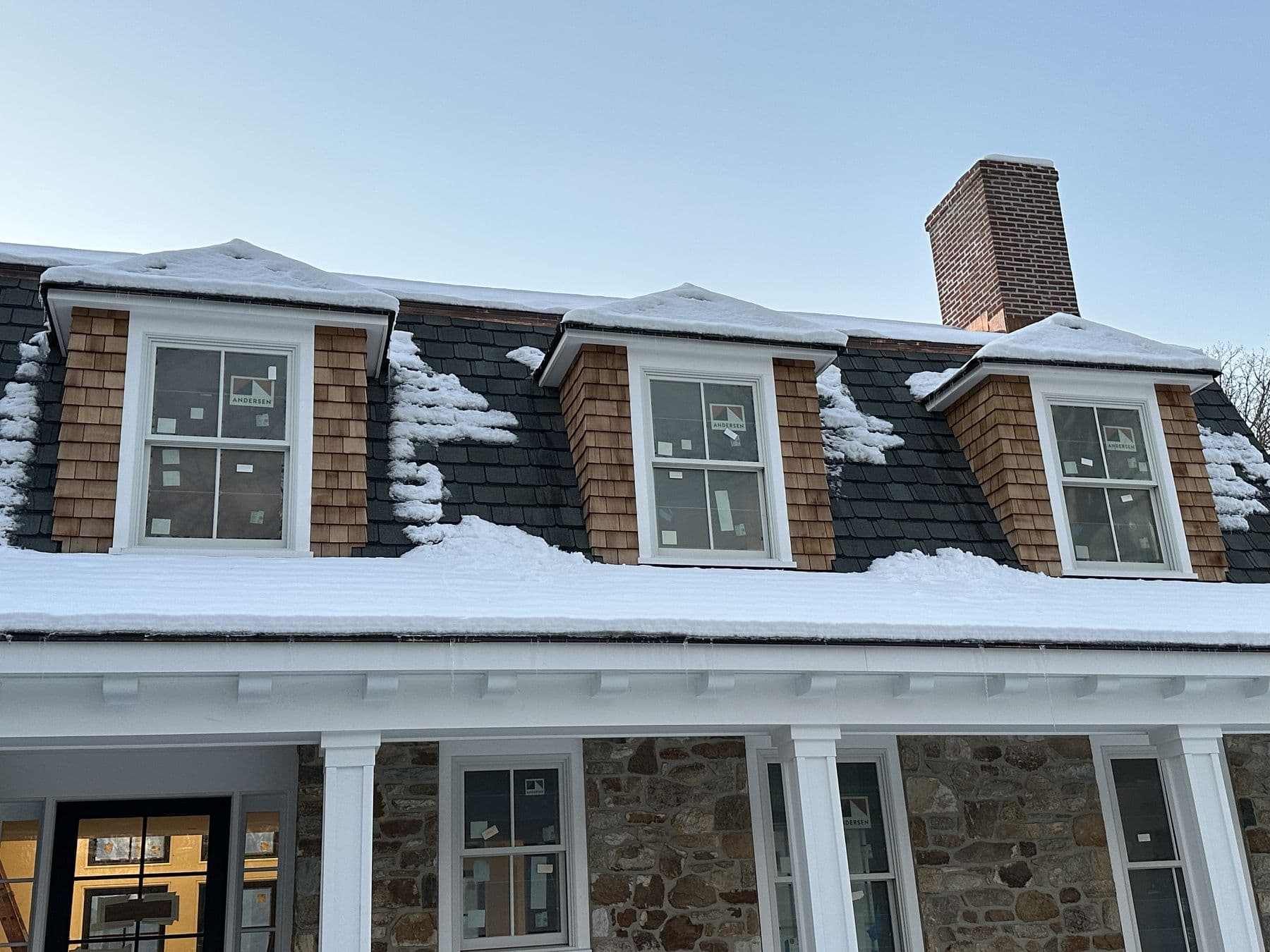
- Photos of their own jobs. Stock photos and photos with no context tell you nothing. Ask where and when a job was done. (On our site, every photo shows the town and month, read from the camera.)
- Google reviews. Read the text, not just the stars. Look at how the contractor replies to complaints.
- References. Ask for two or three recent clients with similar projects, and call them.
- Look at a finished job if possible, especially for interior finish work.
Step 4: Get written estimates and compare scope
Get two or three estimates. When comparing:
- Compare scope, not just price. One quote may include removing old siding, new trim and a repair allowance. Another may not.
- Look for allowances. For hidden conditions, such as rotten sheathing, a fair estimate includes an allowance and a unit price for anything beyond it.
- Materials should be named: brand, product line, color.
- Who does the work: the contractor's crew or subcontractors.
- Schedule: realistic start and duration.
Very low prices usually mean something was left out, or will be added later as a change order.
Step 5: Know your rights under HICPA
The Home Improvement Consumer Protection Act (73 P.S. § 517.1 and following) gives you several protections. In short:
- Written contract. Home improvement contracts over $500 must be in writing to be enforceable against the homeowner. The contract must include the contractor's registration number, names and addresses, a description of the work and materials, start and completion dates, the total price and any down payment.
- Right to cancel. You can cancel a home improvement contract within three business days of signing it, without penalty. The contract must tell you this. In a 2026 decision the Pennsylvania Supreme Court confirmed that notice of cancellation does not have to be in writing, as long as the contractor actually receives it in time. Putting it in writing is still the safest way to prove it.
- Deposit limit. For contracts over $1,000, a contractor may not take a deposit of more than one-third of the contract price, plus the cost of special-order materials.
- Prohibited acts. HICPA lists practices that are illegal, such as abandoning a job after taking a deposit or misrepresenting materials.
This is a plain summary, not legal advice. The Attorney General's office publishes guides for homeowners, and complaints can be filed with its Bureau of Consumer Protection.
Step 6: Read the contract before you sign
A fair contract includes:
- Contractor's name, address, phone and HIC number.
- Your name and property address.
- A detailed scope of work, matching the estimate.
- Materials, with brands and models where it matters.
- Price and payment schedule, tied to completed stages of work.
- Start date and estimated completion.
- How change orders are handled: in writing, with price, before the work is done.
- Who gets permits.
- Warranty on workmanship.
- The three-day right to cancel notice.
Step 7: Permits
Many projects need a permit: structural changes, additions, dormers, decks and some window, door and siding work, depending on your township. A good contractor knows what is required and pulls permits in their name. A contractor who suggests skipping a permit to save time is putting you at risk when you sell or insure the house.
Step 8: During the job
- Keep a file: contract, change orders, payments, photos.
- Pay by check or card, not cash, and keep receipts.
- Never pay far ahead of the work.
- Walk the job at milestones and ask questions.
- Put changes in writing with the price, before the work is done.
Red flags
- No HIC number, or one that does not match.
- Pressure to sign today, or a "discount" that disappears tomorrow.
- Large cash deposits.
- No written contract, or a vague one.
- Door-to-door offers after storms.
- Reluctance to provide insurance certificates.
- Photos they cannot tell you anything about.
Common mistakes homeowners make
- Choosing on price alone without comparing scope.
- Not asking what happens if hidden damage is found.
- Paying the final payment before the punch list is complete.
- Agreeing to changes verbally.
- Skipping references because the contractor seemed nice.
Online checks that take ten minutes
- HIC search at the Attorney General's site, by name and number.
- Google Business Profile: reviews, photos, how long it has existed, how the owner replies.
- Better Business Bureau: complaints and how they were resolved.
- Court records: the Pennsylvania Unified Judicial System portal shows civil cases by name.
- Pennsylvania Department of State business search: confirms the company is registered as an LLC or corporation and in good standing.
None of these alone proves a contractor is good, but together they make it hard for a bad one to hide.
Questions to ask in the first conversation
- Are you registered with the Attorney General, and what is your HIC number?
- Who will be on site every day? Your own crew or subcontractors? Who is in charge?
- How do you handle surprises? What happens if rot or other hidden damage turns up?
- What is the payment schedule? Payments should follow completed work.
- Who pulls the permits?
- What warranty do you give on your workmanship, and for how long?
- How do you protect my house during the work: floors, landscaping, open walls overnight?
- How will you communicate during the job, and who answers the phone?
- Can I see a recent job like mine, or talk to that client?
- When can you start, and how long will it take?
Good contractors are glad to answer all of these. Evasive answers tell you something.
Understanding estimates vs quotes vs bids
- Estimate: an informed approximation. It may change if conditions differ.
- Quote or fixed bid: a firm price for a defined scope.
- Allowance: a set amount in the price for items not yet chosen or not yet visible, such as tile or sheathing repair, adjusted up or down later.
Most renovation contracts combine a fixed price for visible work with allowances for hidden conditions. Knowing which parts are fixed and which can change prevents arguments later.
If something goes wrong
- Talk first. Most problems are solved by a direct conversation on site.
- Put it in writing. Email describing the problem, with photos and dates.
- Refer to the contract. The scope, schedule and warranty terms are what both sides agreed to.
- Contact the Attorney General's Bureau of Consumer Protection if a contractor abandons the job, refuses to honor the contract or acts dishonestly. HICPA complaints are handled there.
- Small claims court (magisterial district court in Pennsylvania) handles disputes up to a set dollar limit without needing a lawyer.
A word on timing
Good contractors are often booked weeks or months ahead, especially in spring and summer. A contractor who can start tomorrow on a large project may simply have had a cancellation, or may not be in demand for a reason. Ask why the schedule is open.
What we do
We think good contractors make these checks easy. We give written estimates line by line, explain allowances for hidden conditions, put change orders in writing before doing the work, and show real photos from our own jobs with where and when they were taken. You can read more about how we work on our about page, see our projects or contact us with questions, even if you are not ready to hire anyone yet.