October 11, 2026 · 6 min read
Window replacement cost in Pennsylvania (2026): every material, whole house
By the D&E Mako Renovation crew, Ephrata, PA. General guidance, not a quote for your house.
Replacing a window in Pennsylvania usually costs between about $500 and $2,000 per window installed in 2026, depending mostly on the frame material. Vinyl sits at the bottom of that range, fiberglass and composite in the middle, and wood and wood-clad windows at the top. A whole house of 12 to 15 windows commonly runs $8,000 to $25,000. The older the house, the more of the cost goes into the openings rather than the windows, and Pennsylvania has a lot of old houses.
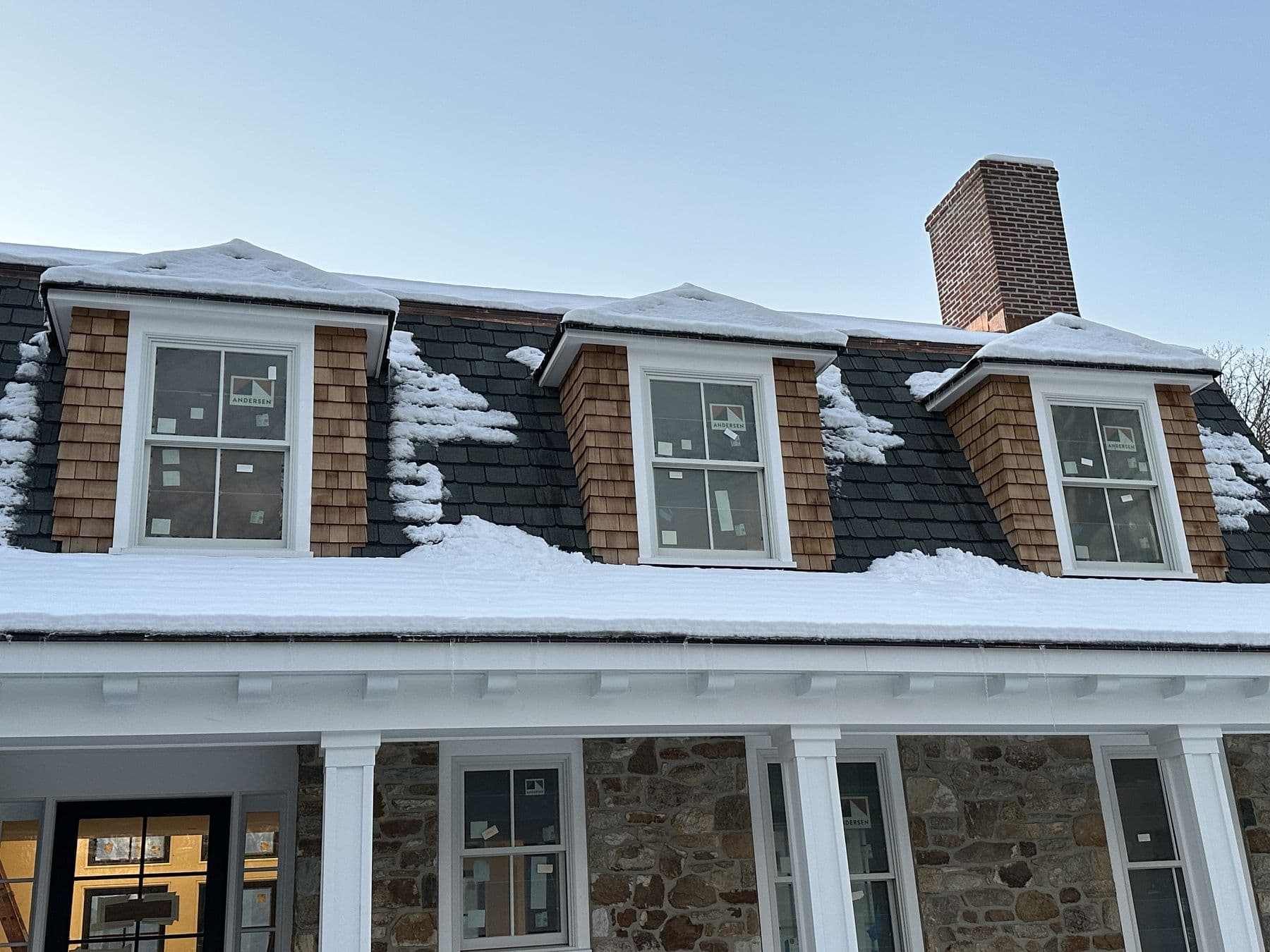
 Lower Merion TwpOct 2025
Price by frame material
These are 2026 installed ranges from national cost databases such as Fixr and Inch Calculator and manufacturer guides. Labor in southeastern Pennsylvania tends to sit in the middle or upper part of national ranges.
| Frame material | Typical installed cost per window |
|---|---|
| Vinyl | $500 to $1,200 |
| Fiberglass | $800 to $1,600 |
| Composite (such as Andersen Fibrex) | $900 to $1,800 |
| Aluminum-clad or vinyl-clad wood | $1,000 to $2,000 |
| Solid wood | $1,000 to $2,200+ |
| Bay, bow and large picture windows | $1,500 to $7,000+ |
If you are leaning toward vinyl, our vinyl window replacement cost guide goes into more detail on that material.
We price every window on its own line, with the unit, the type of install, the trim inside and out and any repair allowance written down. A single total for "the windows" hides the parts that matter.
Whole-house numbers
| House | Typical number of windows | Typical total, mid-range |
|---|---|---|
| Small ranch or Cape | 8 to 12 | $6,000 to $15,000 |
| Two-story colonial | 14 to 20 | $12,000 to $30,000 |
| Large or older house with special shapes | 20 to 30+ | $25,000 to $60,000+ |
Those totals assume mostly standard double-hungs. A couple of bays, a wall of picture windows or full-frame replacement in plaster and stone walls moves the number up quickly.
Why older Pennsylvania houses cost more
Pennsylvania has some of the oldest housing in the country. In Lancaster, Chester, Delaware and Montgomery Counties you find fieldstone farmhouses, brick rowhouses, stucco houses from the 1920s and post-war ranches, often on the same road. Each one changes the window job.
Stone and brick walls
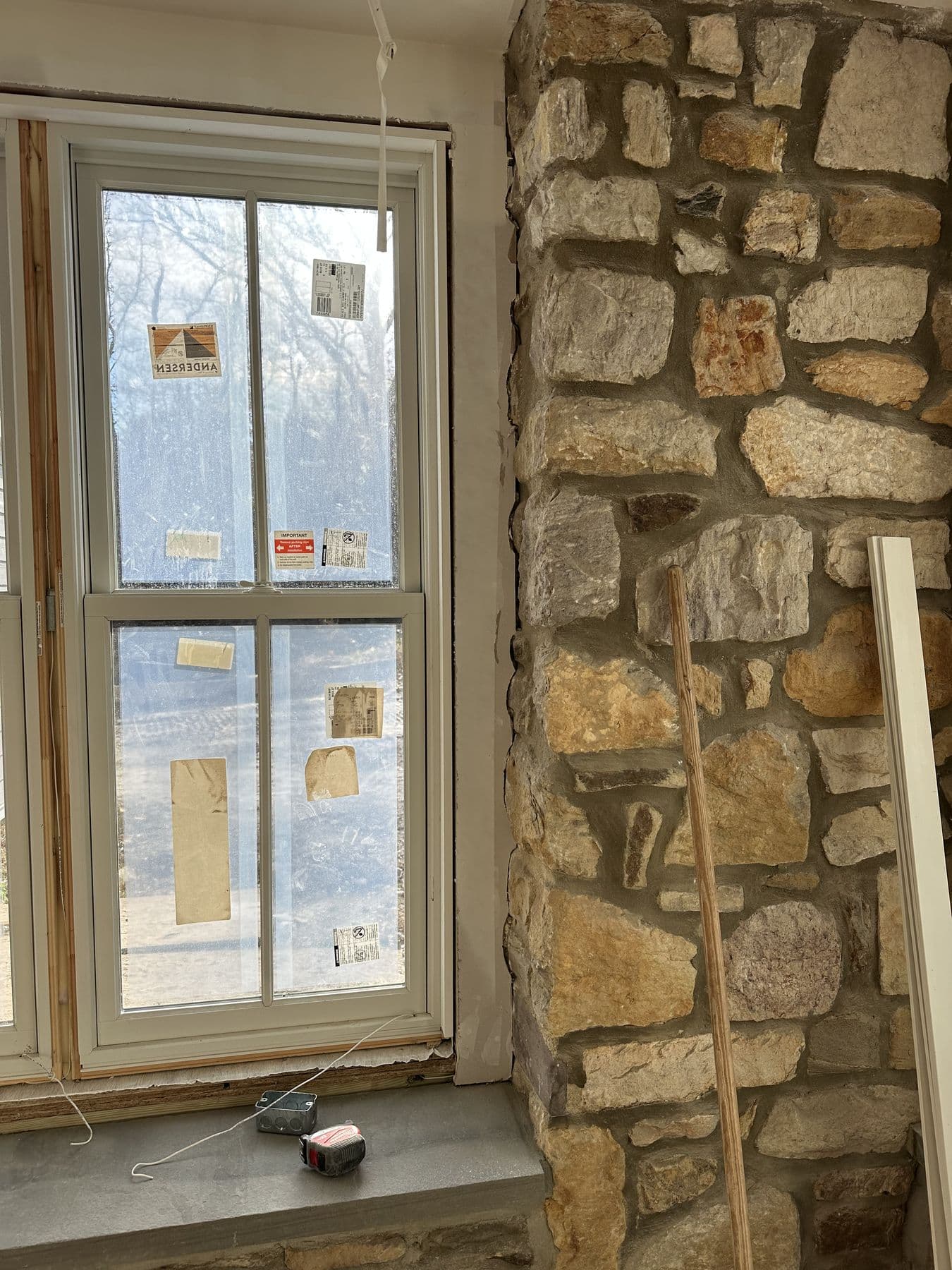
Openings in masonry are rarely square and often vary by half an inch or more from top to bottom. Every window is measured separately. The new unit is set and fastened to wood bucks or the masonry, and the joint to the stone or brick is sealed so it can move. Wide interior jamb extensions are usually needed because the walls are thick.
On the stone house in Lower Merion, new windows went into fieldstone walls a foot or more thick, set on new wood sills.
 Lower Merion TwpDec 2025
Plaster walls
Plaster cracks when old casing is pulled carelessly. Keeping the original casing means scoring paint lines and removing it slowly. Replacing it means new casing and patching.
Stucco
Stucco around old windows often has no flashing behind it. Taking out the old window can crack the stucco, and a new window needs flashing that ties into what is there. That is careful, slower work.
Lead paint
Most houses built before 1978 have lead paint on old windows and trim. Federal EPA rules require window replacement in those houses to be done by a certified lead-safe firm, with containment and cleanup. It adds time and cost, and it is the law.
Historic districts
Lancaster city, West Chester borough and many older boroughs have historic districts where window changes on street-facing walls may need review. Material, divided lites and profile can matter. We check before ordering.
Insert or full-frame
An insert goes inside the old frame. It costs less and keeps the interior and exterior trim. It works when the old frame is sound and square.
A full-frame replacement removes everything down to the rough opening. It costs more and lets us fix rot, flash the opening properly and get back glass area. In older houses with rotted sills, full-frame is often the only honest choice. Our guide on insert versus full-frame replacement explains how to decide.
Brand matters less than install
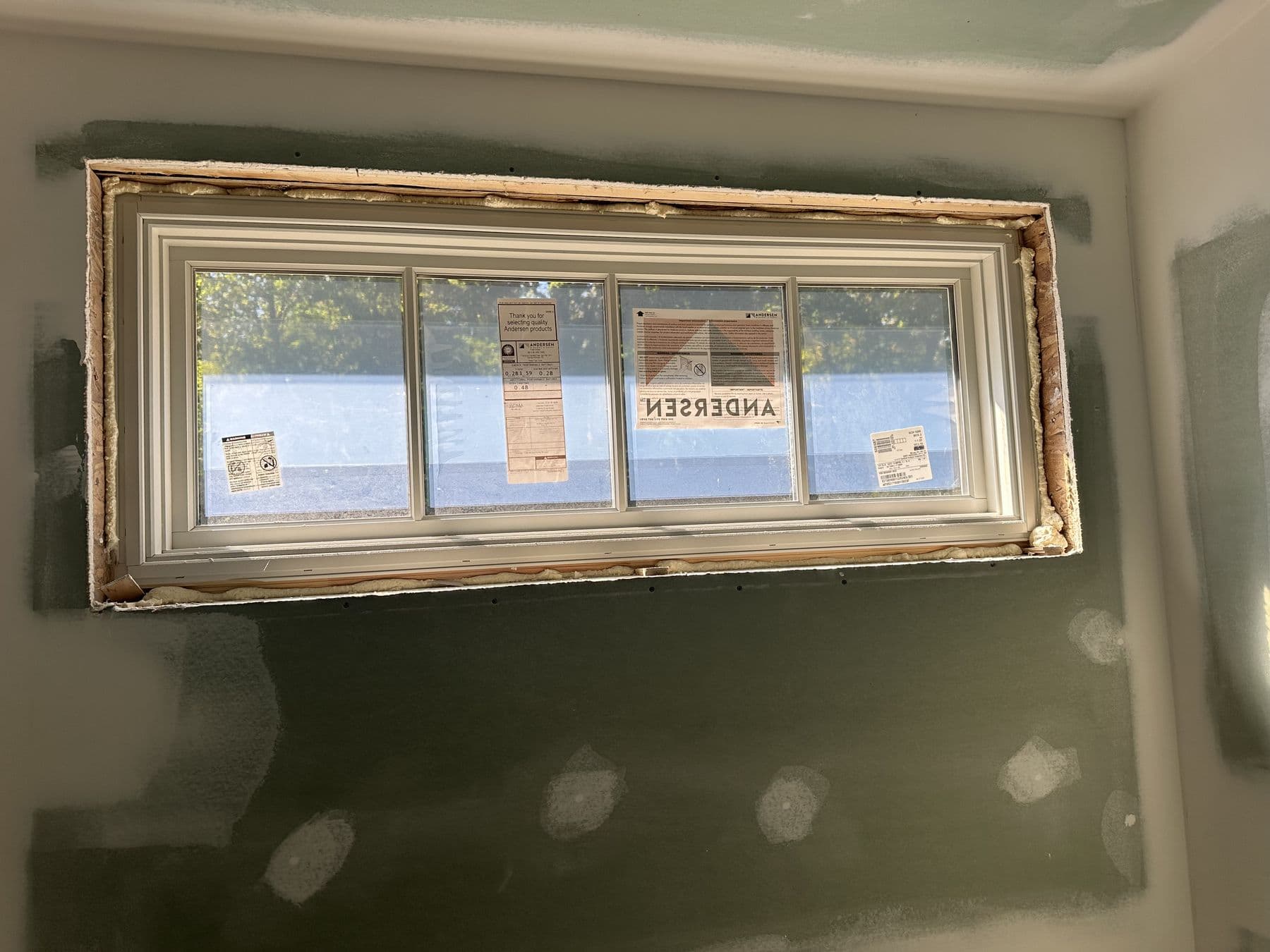
There are good windows at every price, from Andersen, Marvin, Pella and many others. A mid-range window installed carefully will outperform a premium window installed badly. The parts that decide how a window performs over 20 years are:
- A sloped sill pan or flashing at the bottom of the opening.
- Side and head flashing lapped in the right order.
- Low-expansion foam or backer rod, not a can of the strong stuff.
- A window set level, plumb and square, so it opens and locks.
- Trim inside and out that sheds water and closes the gaps.
Our Marvin versus Andersen guide covers the two brands we install most.
 Lower Merion TwpOct 2025
Commercial and mixed-use buildings
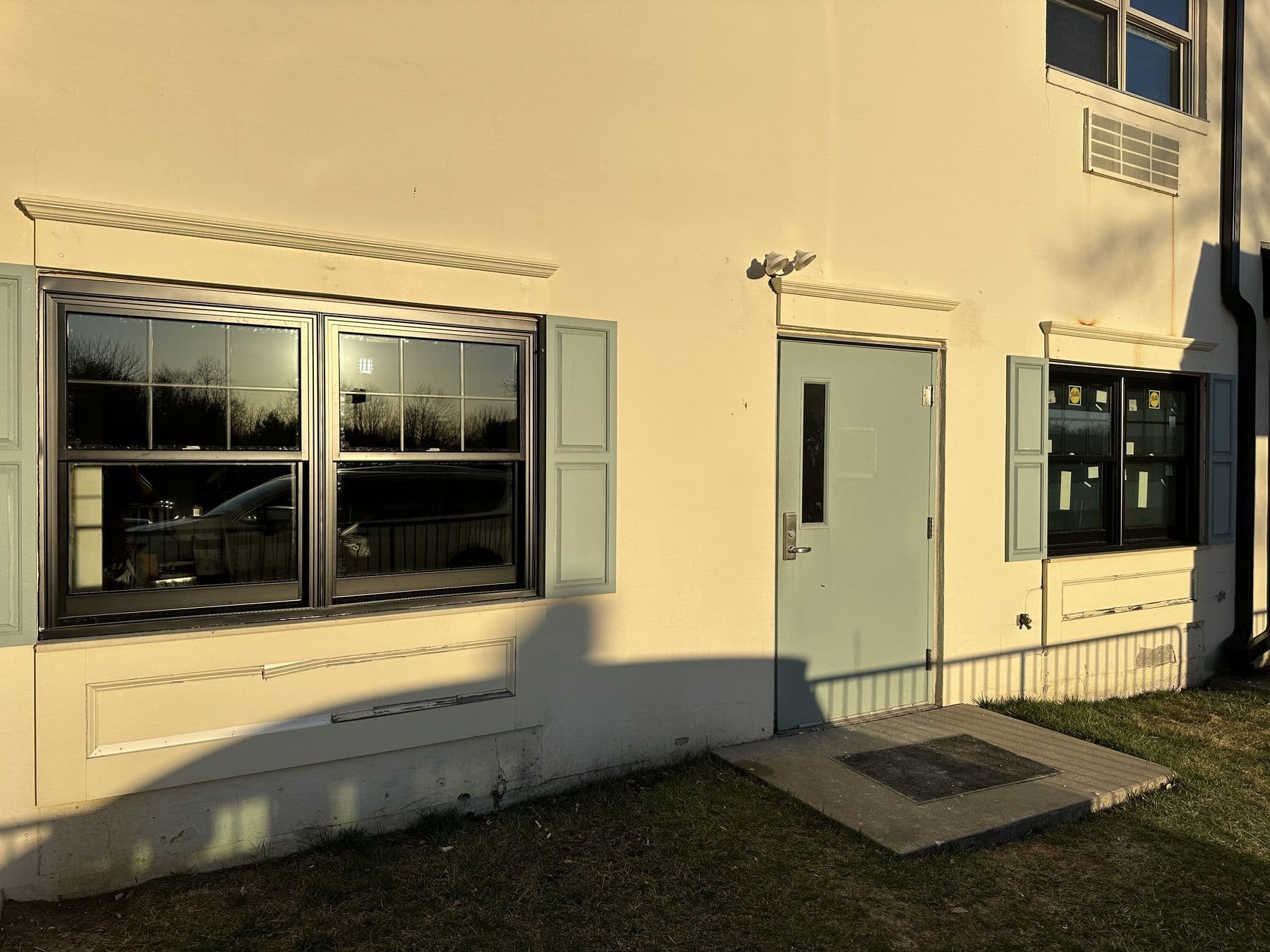
Small offices, shops and mixed-use buildings follow the same rules with a few differences: larger units, tempered glass in more places, and the need to keep the business open. In Newtown Square we replaced the windows across a two-story office building with black-frame units while the building stayed in use.
 Newtown SquareMar 2025
How to plan a window project
- Walk the house and note every window's problem: fogged glass, drafts, rot, sticking, broken balances.
- Decide what has to happen now and what can wait. Weather sides usually go first.
- Pick a product line and stick with it, so later windows match.
- Get written estimates that list each window, insert or full-frame, trim and rot allowance.
- Ask about lead-safe practices if the house is older than 1978.
- Schedule in spring or fall if you can. Windows can be installed in winter, one at a time, but it is less comfortable for everyone.
Energy savings, honestly
New windows make a house more comfortable: fewer drafts, warmer glass, less condensation. The energy savings are real but smaller than ads suggest, and the payback in energy alone is long. The best reasons to replace are rot, failed seals, windows that do not work, comfort and resale. If your old windows are sound and only drafty, good storm windows or a tune-up may be the better money. Our guide on repairing or replacing old wood windows covers that choice.
Permits and contracts in Pennsylvania
Replacing windows in the same openings generally does not need a building permit under Pennsylvania's Uniform Construction Code. Making openings larger, cutting new headers, or changing bedroom egress windows can, and townships differ, so we check.
Pennsylvania's Home Improvement Consumer Protection Act requires a written contract for jobs over $500, a three business day right to cancel, and limits the deposit on jobs over $1,000 to one third of the price plus special-order materials. Windows are almost always special order, so that part of the deposit is common.
Signs it is time to replace
- Fog or moisture between the panes.
- Soft wood at the sill or the bottom of the frame.
- Windows that will not stay open, will not lock or have broken balances.
- Drafts you can feel with your hand on a windy day.
- Water stains on the wall below a window.
- Paint that peels off the sash every year.
One or two of these on a few windows means a repair or a partial replacement. Many of them across the house means it is time to plan the whole job.
Glass options, explained simply
The glass package changes both the price and how the window feels in a Pennsylvania winter:
- Double-pane with Low-E and argon is the standard choice and the best value for most houses.
- Triple-pane adds a third layer. It helps on north walls, in very windy spots and near busy roads for noise. It is heavier and costs more.
- Tempered glass is required by code near doors, tubs, showers, stairs and in some large low windows.
- Laminated glass holds together when broken. It adds security and cuts noise.
- Obscure or privacy glass is common in bathrooms.
Ask each contractor which glass is quoted for each window. Two quotes for the same brand can differ because one includes Low-E and the other does not.
Questions people ask about window replacement cost
What is the cheapest way to replace windows? Vinyl insert windows in standard sizes, done all at once, give the lowest cost per window. Full-frame and special shapes cost more.
Is it cheaper to replace all windows at once? Usually yes per window, because setup, travel and trim work are shared. Doing them in phases is fine if you stay with one product line.
How long do new windows last? Good vinyl and fiberglass windows last 20 to 40 years. Wood-clad windows can last longer with care. Seal failures are usually the first sign of age.
Will new windows increase my home's value? They help a house sell and show well, and they rarely return their full cost on sale. Replace for comfort and to stop water damage, not as an investment alone.
Is the estimate free? Yes. We look at every window, check frames and sills, and send a written estimate with each window priced on its own.
See our window replacement service, the Andersen windows in Lower Merion and the office building windows in Newtown Square.