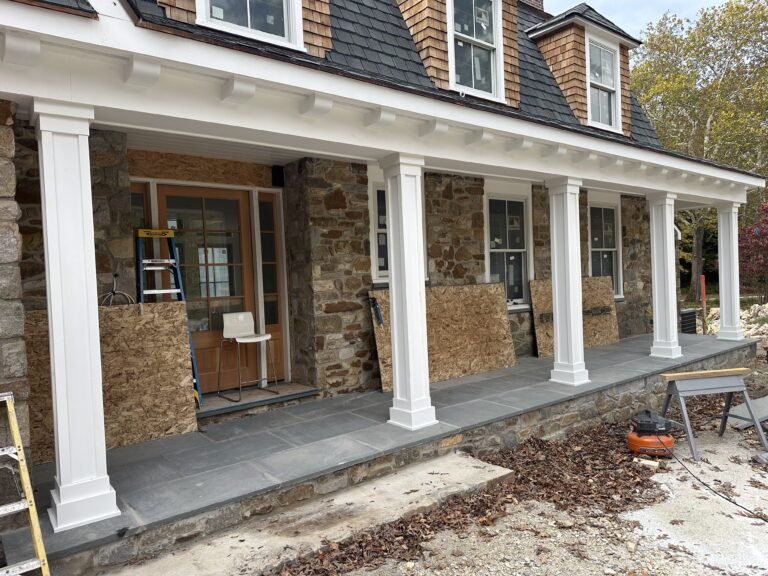
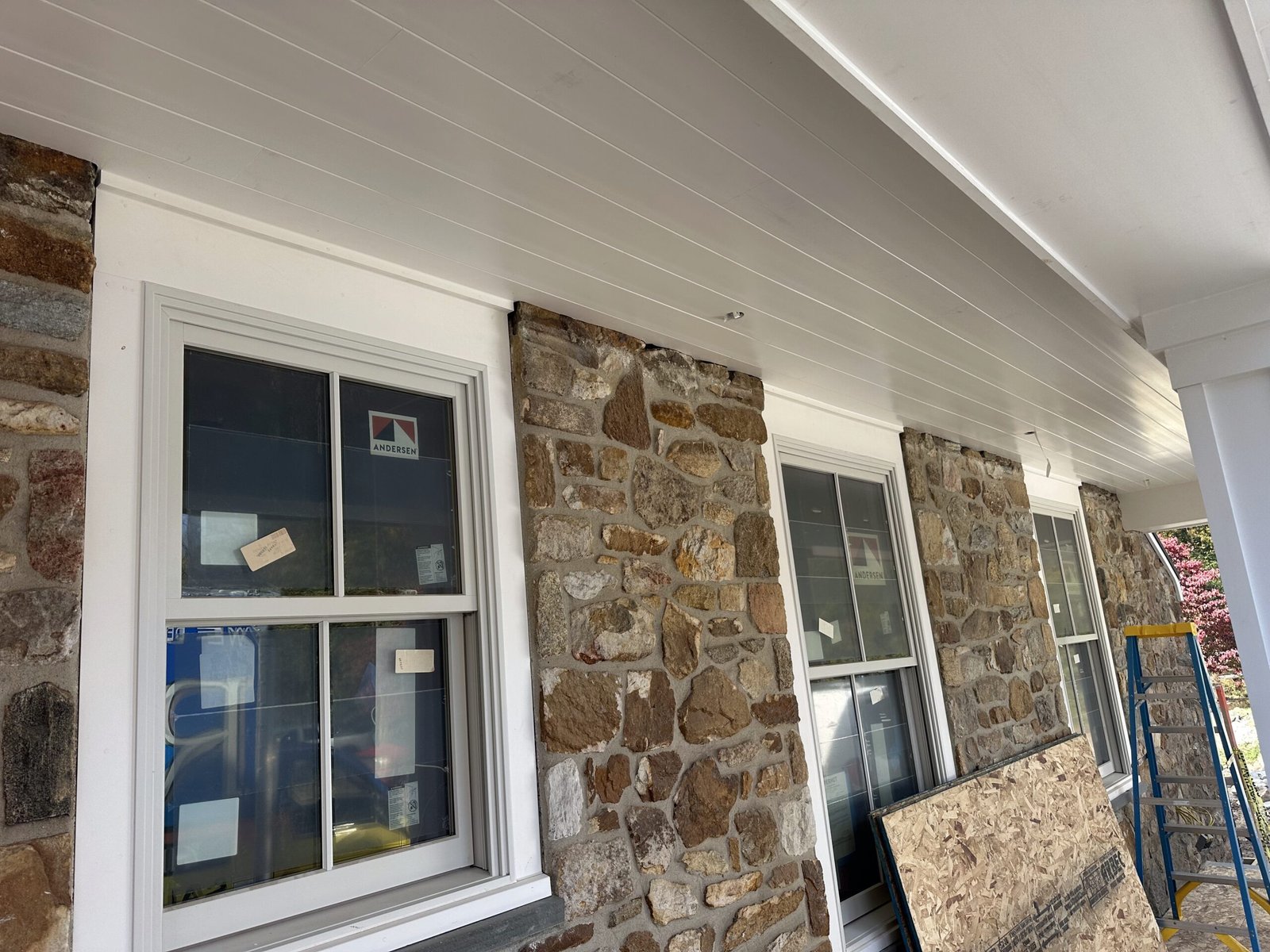

If you own a home in West Chester, Malvern, or anywhere across Chester County, there is a good chance aluminum trim plays a bigger role in your exterior than you realize. It frames your windows. It caps your soffits and fascia. It runs along your eaves and wraps your doors. When it is installed correctly, you stop noticing it. When it is not, you start noticing everything else that goes wrong because of it.
This guide walks through what aluminum trim installation in Chester County actually involves, what separates good work from work that fails within a few years, and why this particular part of an exterior renovation deserves more attention than most homeowners give it. D&E Mako Renovation handles aluminum and copper trim across Chester County and Lancaster County, and this is a core part of what we do every week.
What this guide covers
- What aluminum trim actually does on your home
- Where it is installed and why placement matters
- The common failures on older West Chester homes
- What proper installation looks like step by step
- When to repair versus fully replace
- Communities we serve across Chester County
What aluminum trim actually does on a West Chester home
Aluminum trim is the connective tissue of your home’s exterior. It seals the joints where siding meets windows, doors, corners, and rooflines. It protects the edges of your soffits and fascia from water infiltration. It carries the visual line of your home across every elevation. Done well, it is invisible. Done badly, it is the first thing a neighbor notices when they pull up your driveway.
There are three places where aluminum trim does real work on a typical home in West Chester or Malvern:
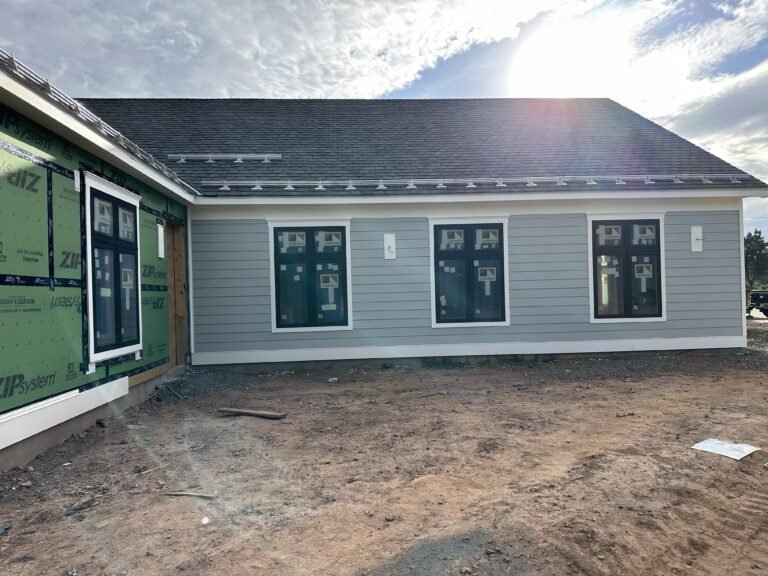
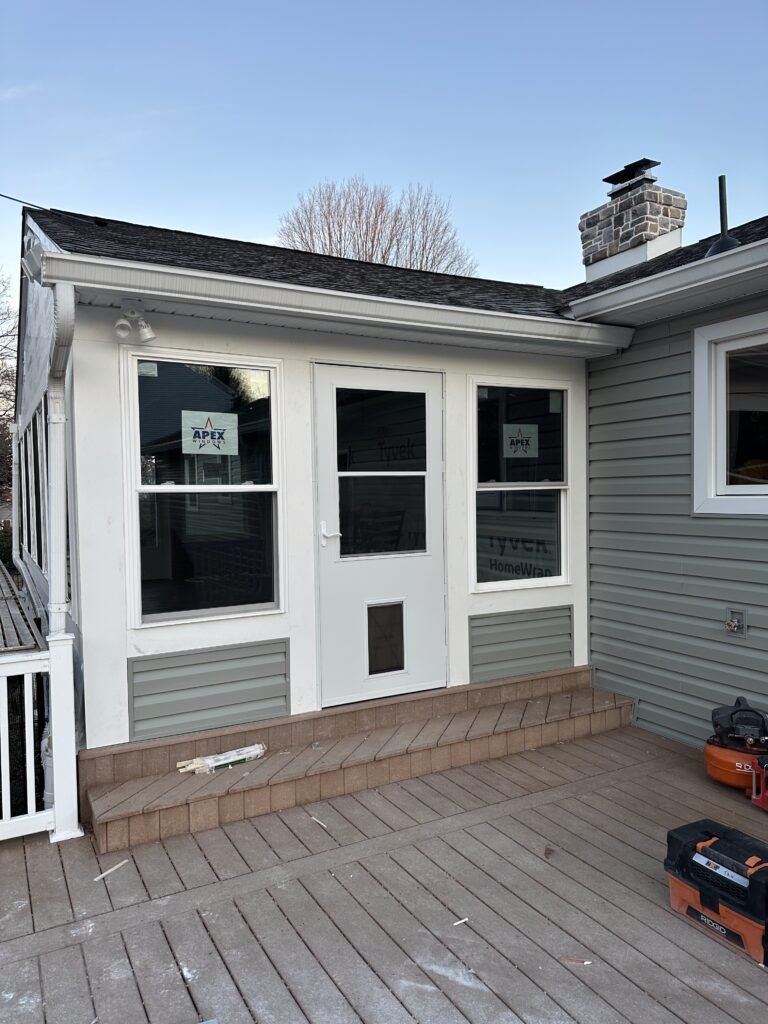
- Around windows and doors, where it seals the gap between siding and the window or door frame
- At the soffit and fascia, where it caps the horizontal boards under your roof line and along the eaves
- At corners, seams, and rake edges, where it terminates long runs of siding cleanly and weatherproofs the joint
Each of these locations handles moisture, wind, and thermal movement differently. A contractor who treats them all the same produces trim work that fails at the weakest point within a few seasons.
Why aluminum trim matters on older Chester County homes specifically
Chester County has a large stock of homes built between the 1940s and 1980s, especially in West Chester, Downingtown, and parts of East Whiteland Township. Many of those homes were originally wrapped in aluminum siding with matching aluminum trim. Over decades, the siding has often been replaced, but the original trim was left in place, recoated, or patched.
The result is trim that no longer performs the way it was designed to. Seams have opened up. Factory finishes have degraded. Caulk joints have dried and cracked. Water is getting in behind what still looks like solid metal from the street. By the time the symptoms show up inside, on window sills or along exterior walls, the trim failure has often been quietly progressing for years.
The tell: If your siding was replaced in the last twenty years but the trim around your windows and doors was not, the weakest part of your exterior is almost certainly the trim, not the siding. That is backwards from what most homeowners assume.
We cover how to read this kind of exterior failure in our guide on when siding needs to be removed versus repaired. The same decision framework applies to trim, and the two are connected in ways that affect how any exterior job should be approached.
How aluminum trim actually fails on West Chester homes
Failure 01
Caulk joints dry out and crack
This is the most common failure point, and it is almost always the first one. Caulk has a working life, and exterior caulking from ten or fifteen years ago has typically dried, shrunk, and cracked. Water enters through those cracks, runs behind the trim, and starts working on whatever is underneath. The trim itself can still look perfect from the street while the substrate behind it is quietly deteriorating.
Failure 02
Seams open up as the house moves
Wood-framed homes expand and contract with temperature and humidity. Aluminum trim installed without adequate overlap or expansion allowance starts to separate at seams over time. This shows up first as a thin gap that widens each season. Once it is wide enough for water to reach the sheathing behind it, the timeline to structural damage compresses quickly.
Failure 03
Factory finish degrades from UV exposure
Older aluminum trim, especially on west and south facing elevations of Chester County homes, loses its factory finish through decades of UV exposure. The result is chalking, oxidation, and eventually paint adhesion problems. Repainting is possible, but only after proper mechanical removal of the failing finish and a bonding primer appropriate for aluminum substrate.
Failure 04
Soffit and fascia trim pulls away from wood
When the wood behind aluminum soffit or fascia gets wet, it swells. When it dries, it shrinks. Repeat that cycle enough times and the nails holding the trim lose their grip. The trim starts to sag, pull away, and eventually fall off in strips. At that point you are not just dealing with a trim problem. You are dealing with rotted fascia underneath.
Failure 05
Incorrect installation from day one
Some aluminum trim failures have nothing to do with age. They have to do with installation that was wrong from the start. Trim nailed too tightly, so it cannot expand and contract. Wrong overlap direction on seams, so water flows toward the house instead of away from it. Missing flashing behind trim at critical transitions. These problems do not self-correct. They only get worse.
What a proper aluminum trim installation looks like
When we talk about good aluminum trim installation in Chester County, we are talking about a process that looks roughly the same on every home, even though the details vary by situation. A contractor who skips any of these steps is producing work that will show its age much sooner than it should.
1. Substrate inspection and preparation
Before any new aluminum goes up, whatever is behind it needs to be assessed. On older homes in West Chester and Malvern, that often means removing existing trim, checking the wood underneath for rot or softness, and replacing anything that is compromised. Installing new trim over rotted fascia is cosmetic work, not repair. It also traps the problem.
2. Correct sizing and cutting
Aluminum trim is custom-cut on site to match your home’s dimensions. Straight cuts, proper miters at corners, and the right overlap direction at seams all matter. This is where experience shows up. A trim installer who has been doing this for years makes these decisions without thinking. One who has not makes measurable mistakes that show up years later as water damage.
3. Proper fastening
Nails and screws go in the right places, at the right depth, with enough play to allow for seasonal movement. Over-fastening locks the trim in place, which leads to buckling and cracking. Under-fastening leaves trim prone to pulling loose in wind. Fasteners should be aluminum or stainless steel to prevent galvanic corrosion where they contact the trim.
4. Flashing and weather protection behind the trim
Water should never be allowed to reach the sheathing, even if the trim fails. That is what flashing is for. On a properly installed home, aluminum trim is the outermost defense, but there are one or two layers behind it that catch anything that gets past. Skipping those layers is common on budget work, and it is the single biggest reason aluminum trim installations fail prematurely.
5. Sealing with the right product
The final step is sealing any joints that need to be sealed, using a product rated for exterior use and compatible with aluminum. Not all caulks work on metal. Not all exterior caulks hold up in Pennsylvania’s freeze-thaw cycles. Choosing the right product, applying it cleanly, and tooling it properly all affect how long the installation performs before needing touch-up work.
Worth noting: This is exactly the kind of work where a consistent crew matters. We cover why in our post on what to look for in a renovation contractor. Trim work done by a rotating cast of subs produces visibly different quality on different elevations of the same house.
Aluminum soffit and fascia in West Chester PA: the details that matter
The soffit and fascia boards under your roofline are one of the highest-stakes areas of any exterior. They take water that comes off the roof during every rainstorm. They carry the gutter system. They frame the visible edge of your home from every angle. And they are one of the first places where exterior problems turn into structural problems if the trim is not doing its job.
Proper aluminum soffit and fascia in West Chester PA installations share a few qualities:
- Wood behind the aluminum is sound, dry, and in some cases replaced before the new aluminum goes on
- Ventilation is preserved through proper use of perforated soffit panels where the original design called for them
- Gutter attachment is reconsidered if the old gutters were pulling on damaged fascia
- Color and profile match, or deliberately complement, the rest of the trim on the home
Many of the worst soffit and fascia jobs we see in Chester County were done quickly, by installers who viewed them as a cosmetic upgrade rather than a structural envelope. The visual result might look fine for a season or two. The underlying performance is a different story.
When to repair aluminum trim versus replace it
Not every trim problem requires full replacement. Some are genuinely localized and can be addressed with targeted repair work. The question is whether the damage is isolated or whether it points to a larger pattern.
Lean toward repair when:
- Damage is confined to one or two sections of the home
- The wood behind the trim is still sound
- The rest of the exterior is performing well
- The trim itself is structurally solid, just cosmetically aged
Lean toward full replacement when:
- Problems are showing up on multiple elevations simultaneously
- Soffit or fascia wood is soft, rotted, or visibly damaged
- The original installation was poorly executed and cannot be selectively corrected
- Other exterior work, like siding replacement, is already planned
When exterior projects overlap, it almost always makes sense to address the trim at the same time. The disruption is already underway, the crew is already on site, and the long-term performance of the new work depends on the trim around it doing its job.
Questions worth asking an aluminum trim contractor in West Chester PA
When you are evaluating contractors for aluminum trim work, these are the questions that separate the ones doing it properly from the ones cutting corners:
- Will you inspect and repair the wood behind the trim before installing new aluminum?
- What flashing or weather barrier will go behind the trim?
- What caulk or sealant will be used, and is it rated for aluminum substrate?
- Who on the crew has done this specific kind of work before, and for how long?
- Will you show me the substrate before the new trim goes up?
A contractor who answers these clearly is one you can work with. A contractor who gets defensive about them is telling you how the job will go. The same standards apply to commercial work, which we cover in detail in our guide on what to ask before starting a commercial renovation.
The National Association of the Remodeling Industry (NARI) also maintains a directory of credentialed contractors, which is a useful starting point if you want to verify a contractor’s standing with an industry body. And for basic verification of a contractor’s Pennsylvania Home Improvement Contractor registration, the Pennsylvania Attorney General’s HIC Registry is the state resource.
Where D&E Mako Renovation installs aluminum trim across Chester County
Aluminum trim service area
- West Chester, PA — the borough and surrounding townships, where older homes regularly need trim assessment, repair, and full replacement
- Malvern, PA — one of Chester County’s most established communities, where trim detail quality matters for both performance and appearance
- Kennett Square, PA — historic community with older homes that benefit from careful attention to exterior trim details
- Exton, PA — growing residential corridor in West Whiteland Township with active demand for trim, soffit, and fascia work
- Chadds Ford, PA — where historic character often runs up against the realities of maintenance on decades-old exteriors
- Downingtown, PA — homes in the borough and East Caln Township where aluminum trim from earlier eras is common and often failing
- Chester County broadly — we take on aluminum trim and exterior work throughout the county
If your home is outside these areas, get in touch through our contact page and we will tell you directly whether your project falls within our range. We also cover related exterior renovation topics in our post on the mistakes homeowners make during renovation, which applies to exterior work just as much as interior.
The short version on aluminum trim in West Chester PA
Aluminum trim is one of those parts of an exterior that only gets attention when something is already going wrong. By then, the easy fix has usually passed. The homeowners who get the best long-term results are the ones who address trim as part of a planned approach to the exterior, not as a reaction to visible failure.
When you are looking for an aluminum trim contractor in West Chester PA, the right choice is a contractor who treats trim with the same care as siding or roofing. Who asks what is behind the existing trim before quoting new work. Who walks through the plan with you and tells you what they found on site. That approach produces work that holds up. The other approach produces work that looks fine until it doesn’t.
D&E Mako Renovation handles aluminum and copper trim work across Chester County and Lancaster County. Take a look at our full services overview for the other exterior and interior work we do.
Have aluminum trim that is showing its age on your West Chester home? We will come take a look and tell you exactly what is going on behind it.Get a Free Estimate