
Siding problems have a way of looking worse than they are, and sometimes looking better than they are. A few cracked panels can be a quick fix or a sign that the entire exterior is overdue for replacement. Knowing which situation you are actually in saves you money either way: you avoid paying for a full removal when repair would do the job, and you avoid sinking money into repairs on siding that is going to fail regardless.
This guide walks through the specific signs that point toward repair, the ones that point toward removal, and the in-between cases that require a closer look. D&E Mako Renovation handles siding removal and installation across Lancaster County PA, including in Ephrata, New Holland, Lititz, and the surrounding area. We see this decision point on a regular basis and have a clear view of how it plays out.
What this guide covers
- Signs that siding can be repaired
- Signs that siding needs to be removed
- The cases that are harder to read
- How siding material affects the decision
- What happens when siding comes off and what is found underneath
- Where we handle siding work in Lancaster County
Signs your siding can be repaired
Not every siding problem requires a full removal. In many cases, targeted repairs extend the life of an exterior significantly and at a fraction of the cost of replacement. The key is that the damage is isolated, the underlying structure is intact, and the siding material itself is still performing its basic function.
Damage is limited to a specific area
A few panels damaged by an impact, a branch, or a localized water event are generally repairable, provided the damage has not spread and there is no sign of moisture getting behind the siding in those areas. On aluminum and vinyl siding, individual panels or sections can often be replaced without disturbing the rest of the exterior.
The underlying sheathing and framing are dry
Siding’s main job is to keep water away from the structure behind it. If a repair reveals that the sheathing and framing beneath the damaged section are dry and solid, the siding has been doing its job. That is a good indicator that the damage is cosmetic or limited, and repair is the right call.
The siding is relatively recent and otherwise performing well
If the siding is less than fifteen years old, was properly installed, and the rest of the exterior looks sound, repair on a damaged section makes sense. Replacing the whole exterior on siding that still has useful life left in it is hard to justify unless there are other compounding issues.
The problem is aesthetic rather than structural
Fading, minor surface oxidation on aluminum, small dents, and chalking are cosmetic issues. They do not affect the siding’s ability to protect your home. If the panels are still sealed, flat, and tight, you are dealing with appearance and not performance.
Signs your siding needs to be removed
There is a point past which repair stops making financial or practical sense. These are the patterns that typically indicate removal is the right decision.
Moisture behind the siding or rot in the sheathing
This is the most serious indicator. If water has been getting behind the siding long enough to cause rot in the sheathing or framing, no surface repair solves the problem. The damaged material underneath has to come out before anything new goes on top of it. Attempting to re-side over rotted sheathing traps the damage and creates a bigger problem later.
Worth understanding: Rot behind siding is often invisible from the outside until it is already extensive. Soft spots when you press on the siding surface, or sections that flex more than the surrounding area, are signals worth investigating before they get worse.
Widespread buckling, warping, or panel separation
When buckling or warping appears across a significant portion of the exterior rather than in isolated spots, it typically means the siding is at or past the end of its useful life, or that it was installed incorrectly and is now failing systemically. Spot repairs on siding in this condition are a short-term fix on a long-term problem.
Persistent moisture or mold inside the home near exterior walls
Interior moisture issues along exterior walls, especially on upper floors or in corners, can point to siding that is no longer keeping water out. If you have addressed interior causes and the problem persists, the exterior is worth a close inspection. By the time moisture is showing up inside, the damage outside is usually well underway.
The siding is layered over previous siding
It is not uncommon to find homes in Lancaster County where a second layer of siding was installed over the original. This was a common approach that skips removal costs. The problem is that layered siding adds weight to the structure, can trap moisture between layers, and makes it impossible to inspect or address what is happening underneath. If you are dealing with problems on a home where siding was installed over existing siding, full removal is almost always the right approach.
The damage is too widespread to repair economically
At some point the math shifts. If repairing the siding requires addressing thirty percent or more of the exterior, the cost and disruption often approaches what full removal and replacement would cost, without the benefit of starting fresh. A contractor who is honest about this will tell you when the repair estimate no longer makes sense relative to replacement.
The quick-reference breakdown
Lean toward repair
- Damage is isolated to one area
- Sheathing underneath is dry and intact
- Siding is under 15 years old
- Problem is cosmetic, not structural
- No moisture showing up inside
- Single layer of siding on the home
Lean toward removal
- Rot or moisture in the sheathing
- Buckling or warping across large areas
- Interior moisture near exterior walls
- Siding installed over existing siding
- Damage covers 30% or more of exterior
- Siding is past its expected lifespan
How the siding material affects the decision
Aluminum siding
Aluminum siding is durable and holds up well in Pennsylvania winters, but it dents, oxidizes over time, and can develop paint adhesion problems as it ages. Individual panels are replaceable, which makes localized repair practical. When aluminum siding starts to show widespread oxidation, loose panels across multiple elevations, or has been on the home for forty or more years, full removal and replacement is usually the better path.
One thing worth noting about aluminum siding removal in Lancaster County: older aluminum siding sometimes conceals the home’s original wood siding underneath. What is found beneath matters, and it affects both the cost and the approach to the new installation.
Vinyl siding
Vinyl is easier to replace panel by panel than aluminum, and individual section repairs are generally straightforward. The bigger concern with vinyl is brittleness over time, especially in cold climates. Older vinyl that has become brittle cracks easily and is harder to match for color when replacing sections. If the siding is cracking in multiple places or has become noticeably fragile, replacement is worth considering over continued patching.
Wood and fiber cement siding
Wood siding that has been well-maintained can last for decades, but it requires that maintenance. Peeling paint, soft or spongy sections, and visible rot are all clear indicators that sections need to come out. Unlike aluminum or vinyl, you cannot leave rotted wood siding in place and expect new material installed nearby to hold up. The rot spreads.
Fiber cement is more forgiving and less prone to moisture damage than wood, but it is not immune to installation errors or impact damage. Repairs on fiber cement siding are more involved than vinyl and typically require more care to match texture and profile.
What happens when the siding comes off
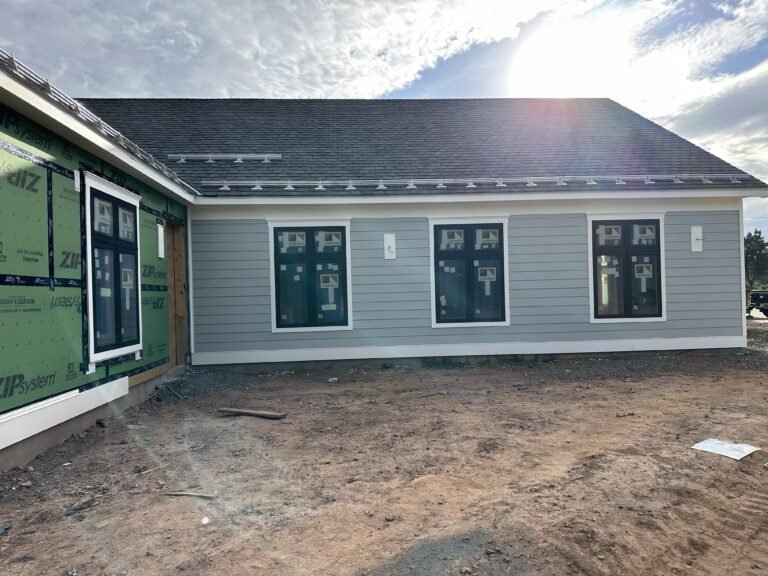
Full siding removal is also an opportunity. Once the exterior is stripped, you can see exactly what you are working with. Sheathing condition, insulation, flashing around windows and doors, and the state of the house wrap or building paper all become visible and can be addressed before new siding goes on. On older homes in Lancaster County, this inspection often reveals improvements that pay for themselves in reduced energy costs and fewer moisture problems going forward.
On older homes specifically: Do not be surprised if removal uncovers work that was done years ago in ways that would not meet current standards. That is not necessarily a crisis. It is useful information that lets you make better decisions about what goes back on the house.
At D&E Mako Renovation, we document what we find during removal and walk through it with the homeowner before new material goes up. You should know what is behind your siding, and you should not have to ask for that information. Learn more about how we approach this on our siding services page.
A note on getting a second opinion
If you have gotten an estimate for full siding removal and replacement and are not sure it is warranted, getting a second assessment is reasonable. The National Association of the Remodeling Industry maintains a directory of credentialed remodeling professionals where you can find contractors in your area. A contractor who pushes back on your questions or discourages a second opinion is not making a strong case for their own judgment.
Conversely, if two contractors who have actually inspected the exterior come to the same conclusion, that alignment is worth taking seriously regardless of which direction they land.
Where we handle siding removal and installation in Lancaster County
D&E Mako Renovation siding service area
- Ephrata, PA — our base of operations, where we handle siding removal, installation, and exterior finishing for homeowners across the area
- New Holland, PA — a community with a significant number of older homes where siding assessment and replacement is common work for us
- Lititz, PA — one of Lancaster County’s most established boroughs, where exterior work demands careful material matching and clean execution
- Terre Hill, East Earl, and Blue Ball, PA — rural communities in eastern Lancaster County where aluminum siding is common and full-removal projects come up regularly
- Strasburg and Bird-in-Hand, PA — historic communities where older siding conditions are the norm and inspection before any decision is always the right first step
- Lancaster County broadly — we take on siding projects throughout the county, both residential and commercial
Outside Lancaster County? Reach out through our contact page and we will let you know whether your project falls within our range.
The short version
Most siding removal decisions in Lancaster County PA come down to one question: is the damage isolated, or has it spread to the structure behind the siding? If the sheathing is dry and the damage is contained, repair is usually the right call. If moisture has gotten in, if warping is widespread, or if the siding has been on the home long enough to be at the end of its life, removal and replacement is the decision that makes sense long-term.
When you are not sure, an in-person inspection by a contractor who has seen enough of both situations to read them accurately is worth more than any checklist. We do that assessment at no cost. Read more about our approach on the full services overview.
Not sure whether your siding needs repair or full removal? We will come take a look and give you a straight answer.Get a Free Estimate