October 11, 2026 · 7 min read
Composite deck cost in Pennsylvania: per square foot, all in
By the D&E Mako Renovation crew, Ephrata, PA. General guidance, not a quote for your house.
A new composite deck usually costs about $35 to $70 per square foot in 2026 when you count everything: footings, framing, decking, stairs and railing. If you only count the decking boards installed on existing framing, the number is closer to $9 to $25 per square foot. That gap is why deck quotes are so confusing. For a 300 square foot deck with stairs and railing, a realistic total in southeastern Pennsylvania often lands somewhere between $11,000 and $21,000.
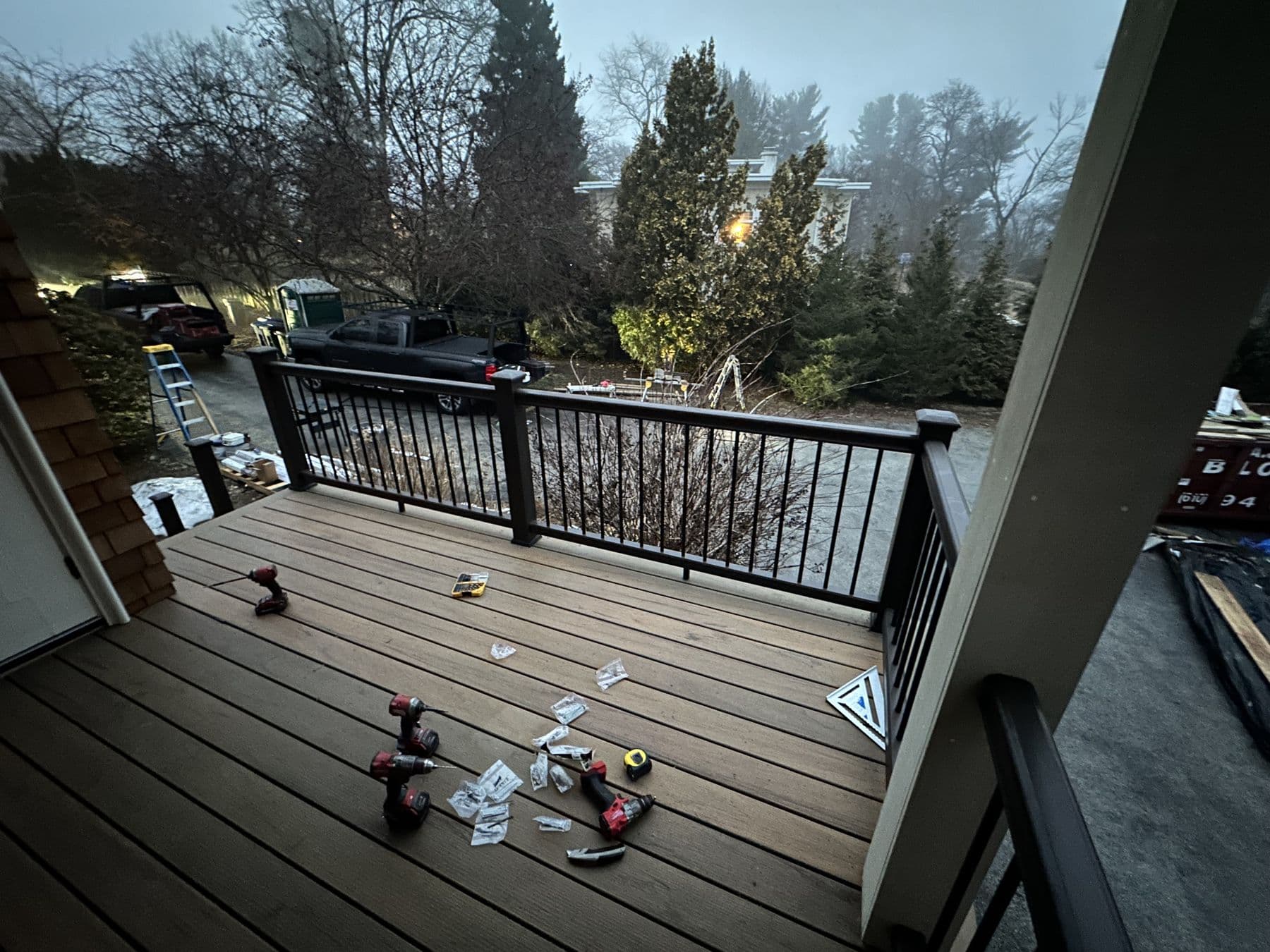 WayneMar 2026
The numbers
These ranges come from 2026 national cost guides and retailer pricing, which vary a lot depending on what they include.
| What is included | Typical cost per sq ft |
|---|---|
| Composite boards only, installed on existing sound framing | $9 to $19 |
| Entry-line composite deck, new framing, no railing | $25 to $40 |
| Mid-line composite deck with new framing and aluminum railing | $35 to $55 |
| Premium composite, complex shape, stairs, railing, lighting | $50 to $80+ |
Railing is often the surprise. Aluminum or composite railing commonly runs $60 to $150 per linear foot installed, so 40 feet of railing can add $2,500 to $6,000.
We price decks by part: footings, framing, decking, stairs, railing and extras. Then you can see what changes if you pick a different board or railing.
Trex and other brands
Trex, TimberTech and Fiberon all make composite decking in several lines. Using Trex as the example:
- Enhance is the entry line. Fewer colors, thinner protective shell, lowest cost.
- Select is the middle. More colors and a better surface.
- Transcend is the top line. Best surface, best fade and stain resistance, highest cost.
Board prices per linear foot roughly double from entry to top line. On a whole deck, the board choice changes the total by a few dollars per square foot, while framing, stairs and railing often add more. Our guide on composite versus wood decking compares the materials in depth.
Framing is where a deck lasts or fails
Composite boards can last 25 to 50 years. Pressure-treated framing under them can last 20 to 30 years if it is built right, and much less if it is not. That is why we spend the time underneath.
Good deck framing includes:
- Footings below the frost line, which in southeastern Pennsylvania is usually about 30 to 36 inches, sized for the load.
- Beams sized for the span, with proper connections to the posts.
- Joists spaced for the decking. Many composite boards need 16 inch spacing, and 12 inches for diagonal patterns.
- A ledger bolted to the house rim with structural screws or through-bolts, with flashing above and behind it. Most deck collapses start at a bad ledger.
- Joist tape on top of joists and beams, so water does not sit on the wood under the boards.
- Hidden fasteners or color-matched screws, as the manufacturer specifies, so the warranty holds.
On the raised deck in Wayne, the work started underneath: new beams on the existing stone piers, before any decking went down.
 WayneMar 2026
Stairs
Stairs are a big part of the cost on raised decks. They need long stringers, a solid landing pad at the bottom, consistent risers, and railings on both sides when they are wide. On the Wayne deck, new stairs were framed down the side of the house to the patio.
 WayneMar 2026
Composite steps on lower decks and entries can be a project of their own. In Media we built composite steps and a wide landing up to a sunroom between a stone wall and the porch.
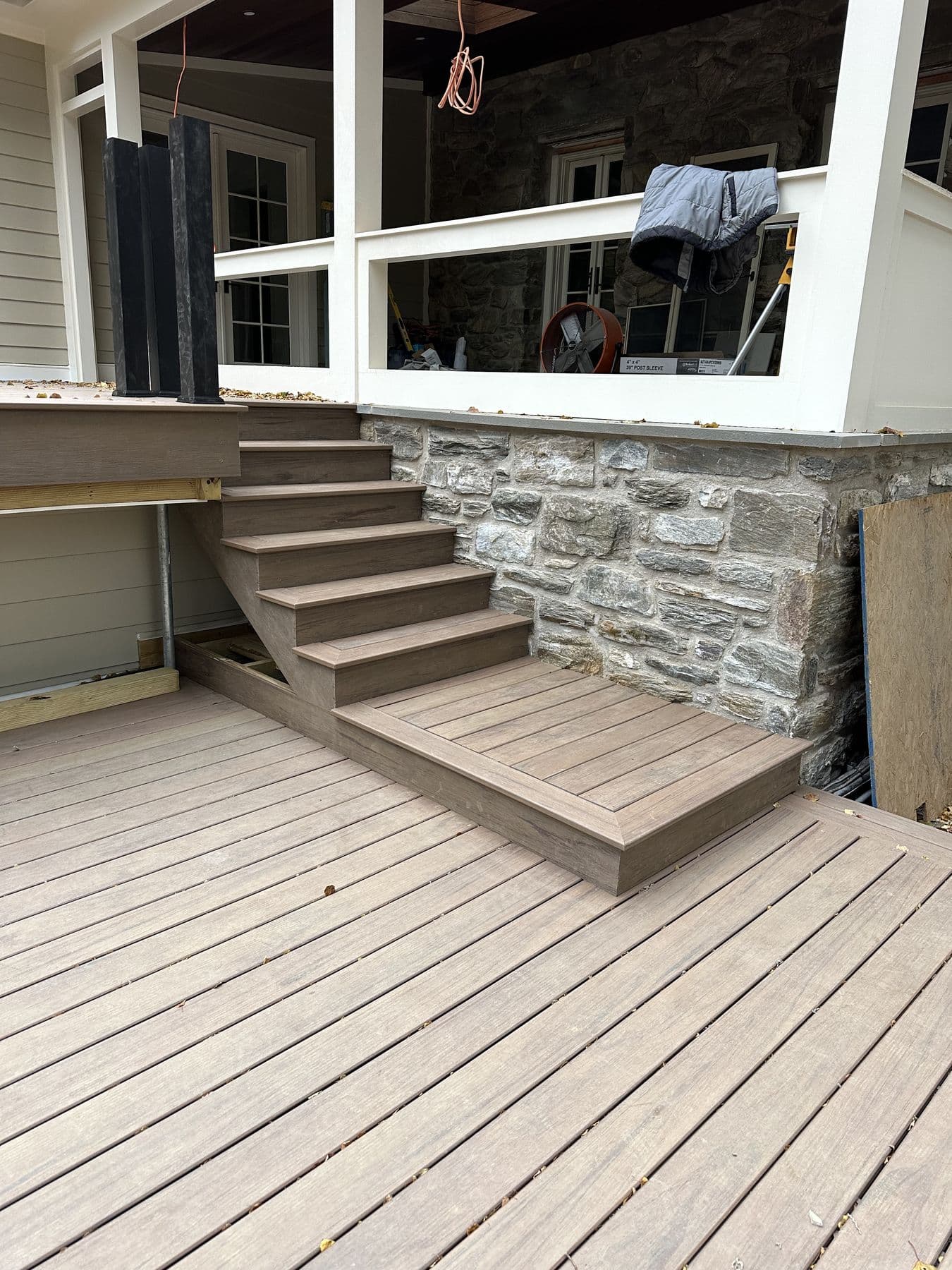 MediaOct 2025
Railing
Railing is required on any deck surface more than 30 inches above the ground, and on stairs with four or more risers. Common choices:
- Aluminum, usually black, lasts, needs no paint and looks clean. That is what went on the Wayne deck.
- Composite railing matches the decking.
- Cable or glass railing for views, at higher cost.
- Wood, the lowest cost and the most maintenance.
Replacing boards on an old deck
If your deck framing is sound, you can sometimes replace only the wood boards with composite. We check the joists, beams, posts and the ledger first. If the framing is near the end of its life, putting new boards on it is a waste, because the boards will outlast what holds them up.
Old decks often hide rot under the boards, especially at the ledger and where joists sit on beams.
Permits in Pennsylvania
Under Pennsylvania's Uniform Construction Code, an uncovered deck whose floor is no more than 30 inches above grade is generally exempt from a building permit. Most townships still require a permit for:
- Decks higher than 30 inches anywhere.
- Decks attached to the house with a ledger. Many townships require a permit for any attached deck, whatever the height.
- Covered decks and decks with a roof.
- Decks at the main exit door.
Zoning setbacks apply even when a building permit does not. We pull the permit as part of the job and schedule the footing and framing inspections.
Home improvement contracts over $500 must be in writing in Pennsylvania, with three business days to cancel. On jobs over $1,000, the deposit is limited to one third of the price plus special-order materials, which often includes the decking and railing.
Ways to keep cost down
- Keep the shape simple. Rectangles cost less than angles and curves.
- Keep it low. A deck under 30 inches needs less railing and simpler footings.
- Pick a mid-line board and spend the difference on better framing and railing.
- Limit picture frame borders and inlays. They look great and add labor.
- Build stairs on the short side. Fewer risers, less material.
How long it takes
A typical 300 square foot deck with stairs and railing takes our crew about one to two weeks once materials arrive and the permit is issued, plus inspection days. Larger or raised decks take longer.
Maintenance and cleaning
Composite decking is low maintenance, not no maintenance. To keep it looking right:
- Wash it twice a year with a soft brush and soapy water, or a cleaner the manufacturer approves.
- Clear leaves and debris from between boards so water drains and the framing below stays dry.
- Wipe up grease and oil quickly, especially near a grill. Most premium lines resist stains, but not forever.
- Use a plastic shovel for snow, not metal, and follow the manufacturer's guide on ice melt.
- Keep a pressure washer at low pressure and a distance, or skip it, because high pressure can damage the surface.
- Check the ledger flashing and railing posts every year or two. Those are the structural parts that matter.
Questions to ask a deck builder
Before you hire anyone to build a deck, ask:
- How deep will the footings go, and how big are they?
- How will the deck attach to the house, and how will the ledger be flashed?
- What joist spacing will you use for the board and pattern I picked?
- Is joist tape included?
- Which fasteners will you use, and do they keep the board warranty valid?
- Who pulls the permit and schedules inspections?
- What railing is included, and how are the posts attached?
A builder who answers these clearly and puts them in writing has done it before.
Composite next to stone, siding and the house
Many decks in our area sit against stone foundations, cedar shake or brick. A few details keep the house and the deck from damaging each other:
- Never bolt a ledger to brick veneer or stone veneer. The deck must attach to the house framing, or stand on its own posts next to the house. On the Wayne deck, the load goes down to stone piers under new beams.
- Leave a gap between the end of the boards and the house wall or a stone wall, so water and leaves can get out.
- Flash the ledger with a membrane behind and a metal or PVC cap over it, lapped under the siding above.
- Keep the deck surface below the door sill, usually an inch or more, so rain and snow cannot run under the door.
- Plan downspouts so roof water does not dump onto the deck or the stairs.
Getting these right costs little at the start and saves the rim joist and siding behind the deck from years of water.
Composite or PVC boards
Most people say composite for any plastic-based decking, but there are two types. Capped composite boards have a wood-fiber core with a plastic shell. All-PVC boards, like some Azek and TimberTech lines, have no wood fiber, are lighter and handle moisture and heat a little differently. PVC usually costs more. Both are good choices, and the right one depends on color, budget and how much sun the deck gets.
Questions people ask about composite deck cost
Is composite worth it over pressure-treated wood? If you plan to stay in the house, usually yes. Composite costs more up front and saves years of staining, sanding and board replacement.
How much does a 12 by 16 composite deck cost? A 192 square foot deck with new framing, stairs and railing often lands around $7,000 to $14,000, depending on height and railing.
Does composite decking get hot? Darker composite gets hot in direct sun. Lighter colors and premium lines with heat-reducing surfaces help.
How long does composite decking last? Most manufacturers warranty composite boards for 25 to 50 years against rot, fade and stains, depending on the line.
Is the estimate free? Yes. We measure the space, check the house wall for the ledger and send a written estimate by part.
See our porches and decks service, the composite deck in Wayne and the composite steps in Media.