October 10, 2026 · 6 min read
Should old siding be removed before new siding goes on?
By the D&E Mako Renovation crew, Ephrata, PA. General guidance, not a quote for your house.
Some contractors will offer to install new siding right over the old. It saves a day or two of labor and a dumpster, so the quote comes in lower. We almost never do it, and this article explains why, what we typically find when old siding comes off, and when a repair makes more sense than a full replacement.
 BroomallMay 2025
The short answer
Take it off. Removing old siding is the only way to see and fix the sheathing and framing behind it, to flash windows and doors properly and to keep the new siding's warranty valid. Installing over the old siding is a shortcut that hides problems rather than solving them.
Why covering old siding causes trouble
You cannot see what you are covering
Siding fails at predictable places: under windows, below roof lines, around doors, behind downspouts and near the ground. Behind those spots the sheathing is often soft and sometimes the studs or sill plate are damaged. Cover it and the rot keeps going, now hidden behind two layers.
Windows and doors end up sunken
Every layer added to the wall makes the window and door trim sit deeper. To fix it you need to build out the trim or add jamb extensions, which takes the labor savings right back. Skip it and the house looks like the windows are set into a hole.
Flashing cannot be done right
New siding needs flashing at every window head, every door and every place a roof meets a wall. Most of that flashing has to tie into the water-resistant barrier on the sheathing. Over old siding there is no clean surface to lap into.
The warranty may not apply
Most manufacturers, including James Hardie for fiber cement, list specific substrates their product can be installed over. Old lap siding is usually not one of them without furring and other steps. If a problem comes up later, the warranty claim may be denied.
Moisture gets trapped
Two layers of siding can trap moisture between them, especially if the old siding was already letting water in. Trapped moisture is how rot spreads.
What we usually find when old siding comes off
On most re-siding jobs we find at least some of the following:
- Soft sheathing below windows. Water runs off the window sill and into the wall where the original flashing was missing or failed.
- Rot at the bottom of walls. Siding installed too close to the ground or to a deck wicks water up.
- Damage where roofs meet walls. Missing kickout flashing sends roof water straight into the wall.
- Old insect damage. Carpenter ants and termites like damp wood.
- Gaps and holes from old wiring, vents and pipes that were never sealed.
- No housewrap at all on houses built before the 1980s.
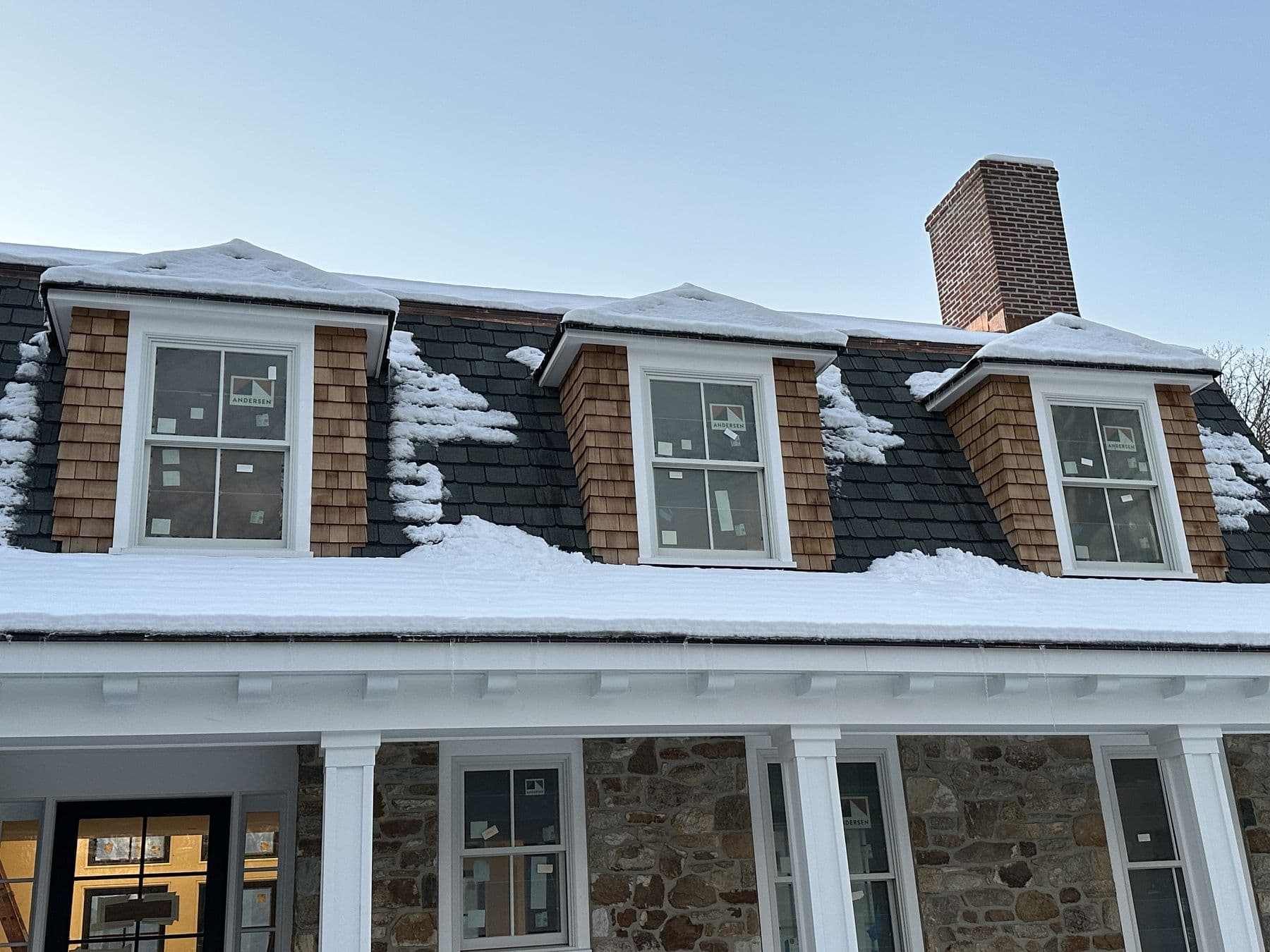
When we stripped the walls on the stone gambrel house in Lower Merion, the new framing got ZIP System sheathing with taped seams, and the old walls got repaired and wrapped before any siding went up.
 Lower Merion TwpJun 2025
Signs of water damage behind siding
You do not have to take the siding off to suspect a problem. Look for:
- Paint peeling inside on exterior walls, especially under windows.
- Soft spots when you press on siding near the ground or under windows.
- Swollen or bowed siding boards.
- Stains or mold on interior drywall or baseboards on outside walls.
- Rotten window sills and trim outside, which often means the wall below is wet too.
- Musty smells in rooms on one side of the house.
- Siding that has popped loose at the bottom or at joints.
If you see several of these, it is worth having someone pull a few pieces of siding and look.
Repair or replace?
Not every siding problem needs a whole new house of siding. Here is how we decide.
Repair makes sense when:
- The damage is limited to one area, such as below one window or behind one downspout.
- The siding is still made, or you can borrow matching boards from a hidden wall.
- The rest of the siding is sound and has years left.
A repair means removing the siding in the damaged area, fixing the sheathing and framing, adding the missing flashing and reinstalling or replacing the siding.
Replacement makes sense when:
- Damage shows up on several walls.
- The siding is at the end of its life: cracking, chalking badly, warping or losing paint every year.
- The material is no longer made and cannot be matched.
- You are also replacing windows, so the walls will be opened anyway.
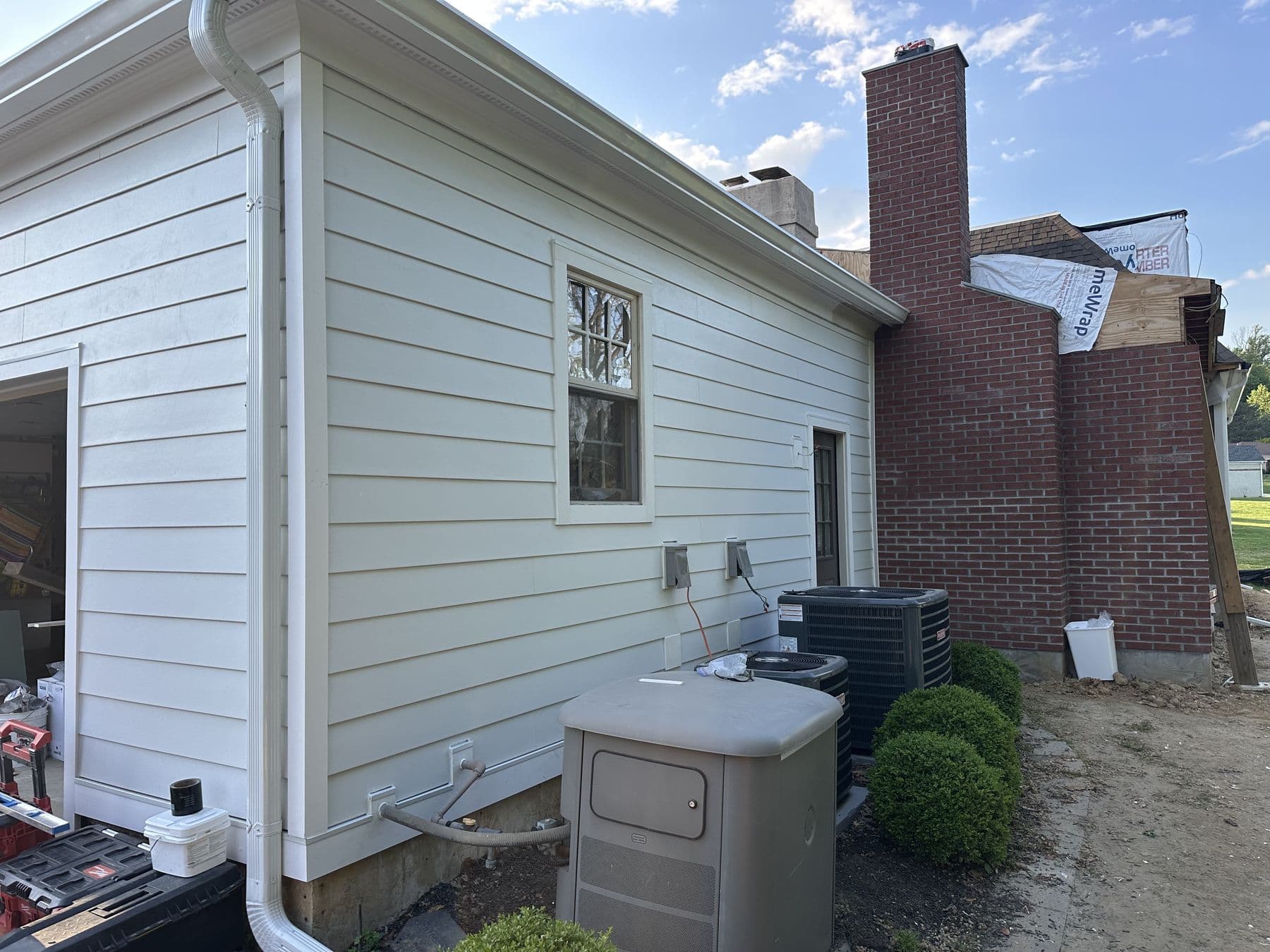 BroomallMay 2025
How long re-siding takes
For a typical two-story house our crew needs about two to four weeks, depending on:
- How much sheathing needs repair.
- How much trim is involved. Older houses with many windows take longer.
- The material. Fiber cement is slower than vinyl.
- Weather. We do not open walls in heavy rain.
We work one wall at a time. A wall is stripped, repaired, wrapped and closed the same day or the next, so the house is never left open overnight.
What a careful siding job looks like, step by step
- Protect the site. Tarps over plantings, magnets ready for nails, a dumpster placed where it will not damage the driveway.
- Strip one wall. Old siding off, nails pulled.
- Inspect and repair. Push on every sheet of sheathing. Replace soft sheets, sister damaged studs, fix sill plates.
- Wrap and flash. Housewrap or a taped sheathing system, lapped top over bottom. Flashing tape at every window and door, head flashings, kickout flashings where roofs meet walls.
- Trim. Corner boards, window and door casings and frieze go on before the siding.
- Siding. Courses laid out to line up with window heads and sills, with proper clearances at the bottom and at roofs.
- Seal and finish. Caulk only where needed, paint if the siding is primed.
- Clean up. Magnet sweep for nails, haul away debris.
Special cases: aluminum, asbestos and stucco
Aluminum siding. Common on post-war houses in Pennsylvania. It comes off quickly and is often recycled. Underneath we usually find the original wood siding, sometimes painted with lead paint. In most cases we remove the aluminum and the old wood down to the sheathing, following lead-safe work practices on houses built before 1978.
Asbestos-cement shingles. These stiff gray or white shingles were used from the 1920s into the 1970s. They are stable while intact but must not be broken, sanded or cut. Removal is done by a licensed abatement contractor before our work starts. It adds cost and a few days to the schedule, and it is not optional.
Stucco. Stucco on frame walls is a special case. Water that gets behind stucco cannot dry out easily, and damage can be extensive before it shows. If stucco is cracked, stained or soft, the right first step is testing or opening a few areas to see how wet the wall is, not putting new siding over it.
Permits and neighbors
In most Pennsylvania townships, replacing siding with no structural changes does not need a building permit, but some boroughs and historic districts review any exterior change, and homeowner associations may have color and material rules. If walls need structural repair, such as replacing studs or sill plates, that can need a permit. We check with your township before we start.
Re-siding is noisy for a few weeks and needs room for a dumpster and material. A short word with the neighbors before the dumpster arrives goes a long way.
Questions to ask any siding contractor
- Will the old siding be removed, and what happens if you find rot?
- What is the sheathing allowance and the price per sheet beyond it?
- What water barrier goes on the walls, and how are windows and doors flashed?
- Will you add kickout flashing where roofs meet walls?
- What trim material goes around windows, doors and corners?
- How many walls will be open at once, and how is the house closed at night?
- Who does the work, your own crew or subcontractors?
What this means for your quote
When you compare siding quotes, look for:
- Removal and disposal of old siding.
- A sheathing repair allowance and a price for anything beyond it.
- How windows and doors will be flashed.
- New trim material and where it goes.
- Kickout flashing at roof-wall intersections.
A quote that skips these is cheaper for a reason. For more on cost, see fiber cement siding cost in Pennsylvania. For material choices, see fiber cement vs vinyl vs LP SmartSide.
If you suspect water damage behind your siding, we can come out, pull a few pieces in the likely spots and show you what is there. See our siding service or the Broomall project, where we stripped a wall to the sheathing before re-siding.