October 10, 2026 · 6 min read
Fiber cement vs vinyl vs LP SmartSide: which siding fits your house
By the D&E Mako Renovation crew, Ephrata, PA. General guidance, not a quote for your house.
Most people choosing new siding end up deciding between three materials: fiber cement, vinyl and engineered wood such as LP SmartSide. All three are good products when they are installed right. None of them is the best choice for every house. This guide compares them the way we explain it on site, from the point of view of a crew that installs all three.
 Lower Merion TwpDec 2025
The short answer
- Fiber cement is the choice when you want the look of painted wood, a long life and no rot, and you are willing to pay more up front.
- Vinyl is the choice when budget and low upkeep matter most and the look of the house is less of a priority.
- LP SmartSide sits in between: a real wood look at a lower price than fiber cement, with more care needed at the edges.
The rest of this article explains why.
Fiber cement (James Hardie, Allura, Nichiha)
Fiber cement is made from cement, sand and cellulose fiber, pressed into boards and panels. James Hardie is the best-known brand. It comes primed for painting or with a factory finish.
What it does well
- Does not rot, swell or feed insects.
- Will not melt next to a grill or from reflected sunlight off a neighbor's window, which happens to vinyl.
- Holds paint well, often 10 to 15 years for site-painted boards and longer for factory finish.
- Looks like painted wood from the street, including crisp shadow lines on lap siding.
- Noncombustible, which matters near woods and for some insurers.
What to watch for
- Heavier and slower to install, so labor costs more.
- Needs proper clearances from the ground, roofs and decks.
- Butt joints must be flashed and cut ends sealed.
- Cutting creates silica dust, so installers need the right saws and dust control.
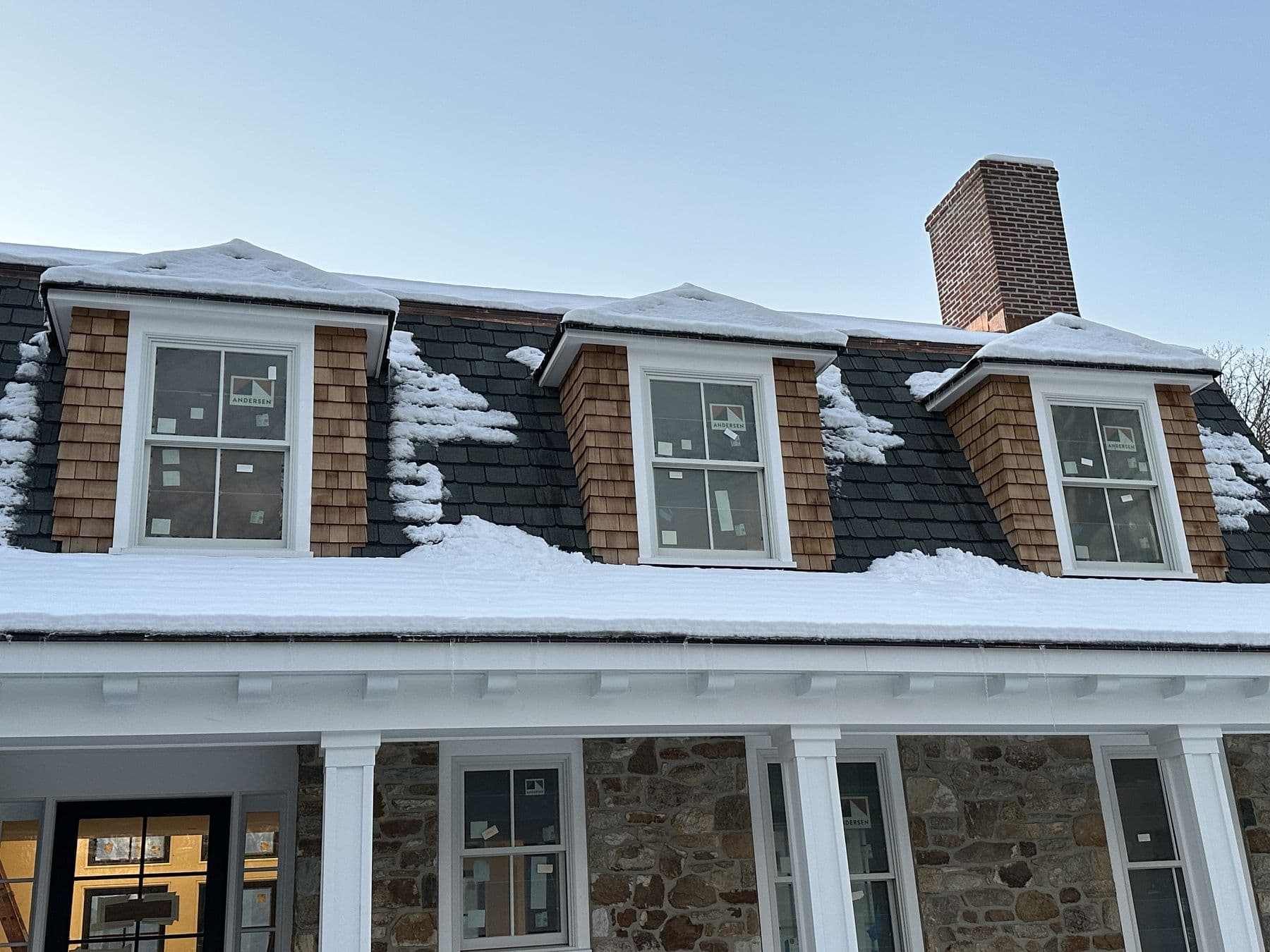
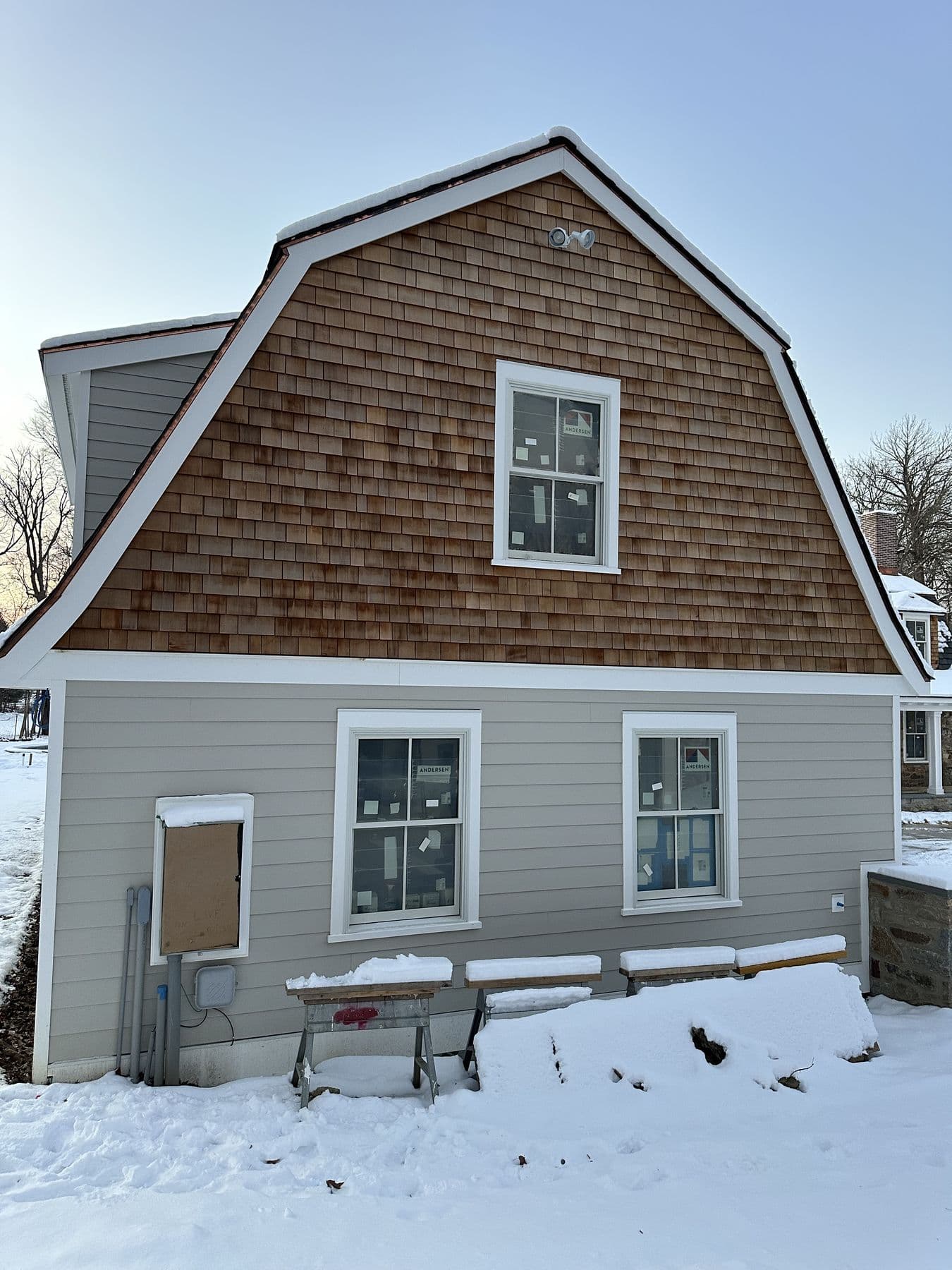
Where we use it most: older houses, houses with a painted wood look, additions next to stone or brick, and anyone planning to stay put. The stone gambrel house in Lower Merion we sided in 2025 got lap siding on the walls with cedar shake gables, a common combination on older houses here.
National cost guides put fiber cement at roughly $5 to $14 per square foot installed. We go through the cost in detail in fiber cement siding cost in Pennsylvania.
Vinyl siding
Vinyl is PVC plastic extruded into panels. It is the most common siding in the country because it is affordable and needs almost no maintenance.
What it does well
- Lowest cost of the three.
- Never needs paint.
- Light and quick to install.
- Thicker premium vinyl and insulated vinyl look much better than the thin builder grade of the past.
What to watch for
- Moves a lot with temperature. It must be hung loose on the nails with room at the ends, or it buckles in summer.
- Can crack on impact in cold weather.
- Can warp from reflected sunlight or heat sources.
- Up close it looks like plastic, especially at corners and J-channels.
- Color is fixed. Painting vinyl is possible with the right paint but rarely a good idea.
Where vinyl makes sense: rentals, houses being prepared for sale, budget-limited projects, outbuildings, and houses in neighborhoods where vinyl is the norm.
 BroomallMay 2025
LP SmartSide engineered wood
LP SmartSide is made from wood strands bonded with resins and treated against rot and insects, with a textured surface that looks like wood. It is sold primed or prefinished.
What it does well
- Looks like wood, with a deeper texture than most fiber cement.
- Lighter than fiber cement and cuts with normal tools, so labor is lower.
- Long lengths mean fewer joints.
- Tough against impacts like hail and lawn equipment.
What to watch for
- It is still wood-based. Cut ends must be sealed and paint kept up.
- Must be kept off the ground and away from standing water.
- Edges that stay wet, for example behind gutters that overflow, can swell over time.
Where it makes sense: garages, sheds, barns and houses where you want a wood look for less money than fiber cement and are willing to keep up the paint.
Side by side
| Fiber cement | Vinyl | LP SmartSide | |
|---|---|---|---|
| Up-front cost | Highest of the three | Lowest | Middle |
| Look | Painted wood | Plastic up close | Textured wood |
| Paint | Every 10 to 15 years (or factory finish) | Never | Every 7 to 15 years |
| Rot | Does not rot | Does not rot | Treated, but keep edges sealed |
| Heat | Not affected | Can warp | Not affected |
| Impact | Can crack if hit hard | Can crack in cold | Very tough |
| Fire | Noncombustible | Melts | Burns like wood |
| Install difficulty | Highest | Lowest | Middle |
What matters more than the material
Most siding problems we are called to fix have nothing to do with which material was chosen. They come from the installation:
- No flashing at windows and doors. Water gets behind the siding at every window corner.
- No kickout flashing where a roof meets a wall, which sends roof water straight into the siding.
- Siding too close to the ground or roof, soaking up water from below.
- Old rotten sheathing left in place under new siding.
- Vinyl nailed tight, so it cannot move and buckles.
A well-installed vinyl job will outlast a badly installed fiber cement job. So when you compare quotes, compare how the walls will be prepared, flashed and trimmed, not only the material. We explain the wall prep side in should old siding be removed before new siding.
Can fiber cement go over stucco or old siding?
Fiber cement can be installed over stucco in some cases, with furring strips to create a flat, drained surface and fasteners long enough to reach the framing. It is not a fix for stucco with water damage behind it. If stucco has failed, the damaged areas need to be opened and repaired first. Over old wood or vinyl siding, we nearly always recommend removal so the sheathing can be checked.
Mixing materials
Many good-looking houses use two siding materials: lap siding on the main walls and shingles or board and batten on gables, dormers or bump-outs. This breaks up big walls and is common on older Pennsylvania houses. Fiber cement comes in lap, shingle and panel forms, so you can mix profiles in one material, or combine fiber cement walls with real cedar shake gables.
 Hunterdon Co., NJSep 2024
Upkeep, year by year
The cheapest siding to buy is not always the cheapest to own. Here is what each one asks of you after it goes up.
Fiber cement. Wash it once a year with a garden hose and a soft brush, especially on the north side where mildew grows. Check caulk joints around windows and trim every couple of years. Site-painted boards need fresh paint roughly every 10 to 15 years; factory-finished boards go longer. If a board cracks from an impact, it can be cut out and replaced one board at a time.
Vinyl. Wash it once a year. Check that panels have not unlocked at the bottom after a wind storm, and that nothing hot sits near the walls, such as a grill. Faded panels cannot really be restored. A cracked panel can be unlocked and replaced with a zip tool, if you can still get the color.
LP SmartSide. Wash once a year, keep the paint in good shape and touch up any chips or cut edges promptly. Keep mulch and soil well below the bottom edge. Watch the bottom of walls under gutters and around decks, where boards stay wet longest.
Thinking in twenty-year terms
If you plan to stay in the house, it helps to add up the likely costs over twenty years rather than comparing only the install price:
- Vinyl: lowest install, little upkeep, but it may look dated well before it fails, and many people replace it for looks.
- LP SmartSide: middle install, plus one or two paint jobs.
- Fiber cement: highest install, plus one paint job for primed boards or none for factory finish in that period.
Over twenty years the gap between fiber cement and the others narrows, and fiber cement usually looks the best at the end of it. Over five years, vinyl wins on cost easily. That is why how long you will own the house is the first question.
Colors and finishes
Fiber cement and LP SmartSide can be painted any color, now and again later. Factory-finished versions come in a set range of colors. Vinyl colors are fixed; darker vinyl colors are made with special formulas that resist heat, but they still need care near reflected sunlight. If you like dark siding, such as charcoal or deep blue, fiber cement or engineered wood gives you the most freedom.
How to choose
Ask yourself four questions:
- How long will you own the house? Ten years or more points toward fiber cement.
- How important is the look? On an older or more formal house, vinyl often looks out of place.
- Will you keep up paint? If not, vinyl or factory-finished fiber cement.
- What is the budget for the whole job? Better installation with a cheaper material beats poor installation with an expensive one.
If you would like help deciding for your house, we can look at it with you and price two options side by side. See our siding service or the Manheim lap siding project for an example.