
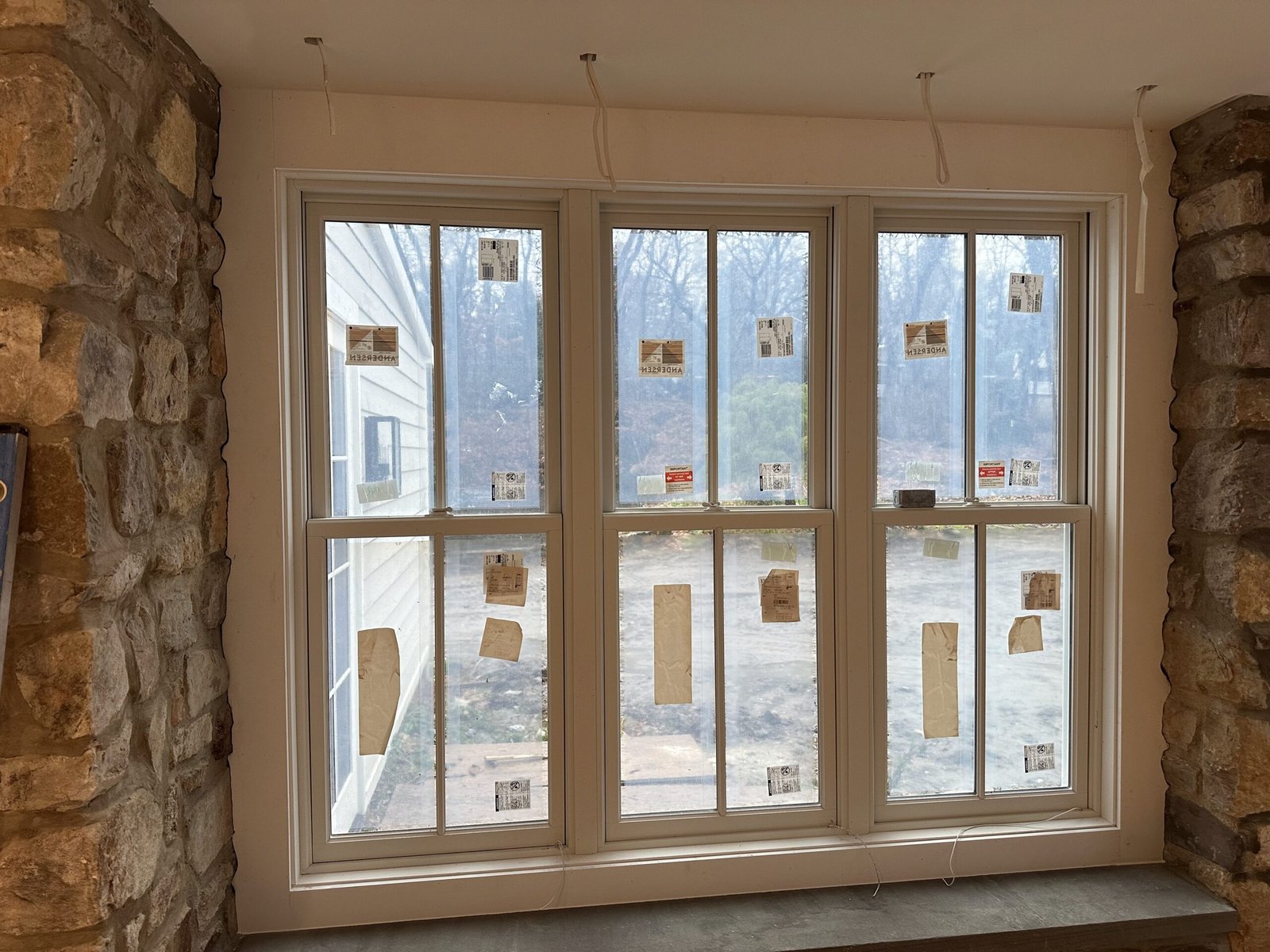

When we finished installing this bank of Andersen windows in a stone home near West Chester, the protective labels were still on the glass. That is the version of a job we like to photograph: everything fresh, nothing touched up, trim tight against the stone on both sides, and a window unit that sits exactly level in the opening.
This post is about what went into that project and what homeowners in Malvern and the surrounding Chester County area should know before hiring anyone for window replacement work.
What the project involved
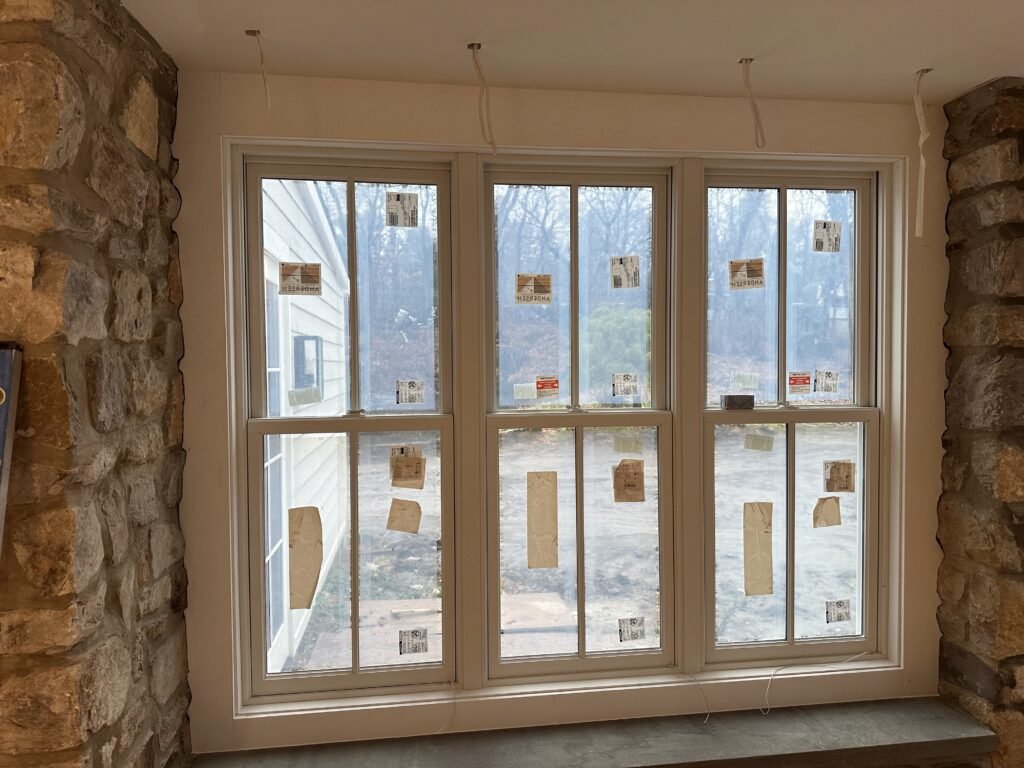
The home is a stone-construction property in the West Chester area of Chester County. The interior shows what you see in the photo: a large window bay with four Andersen double-hung units set side by side, flanked by exposed stone on both sides, with a stone sill running the full width below the units.
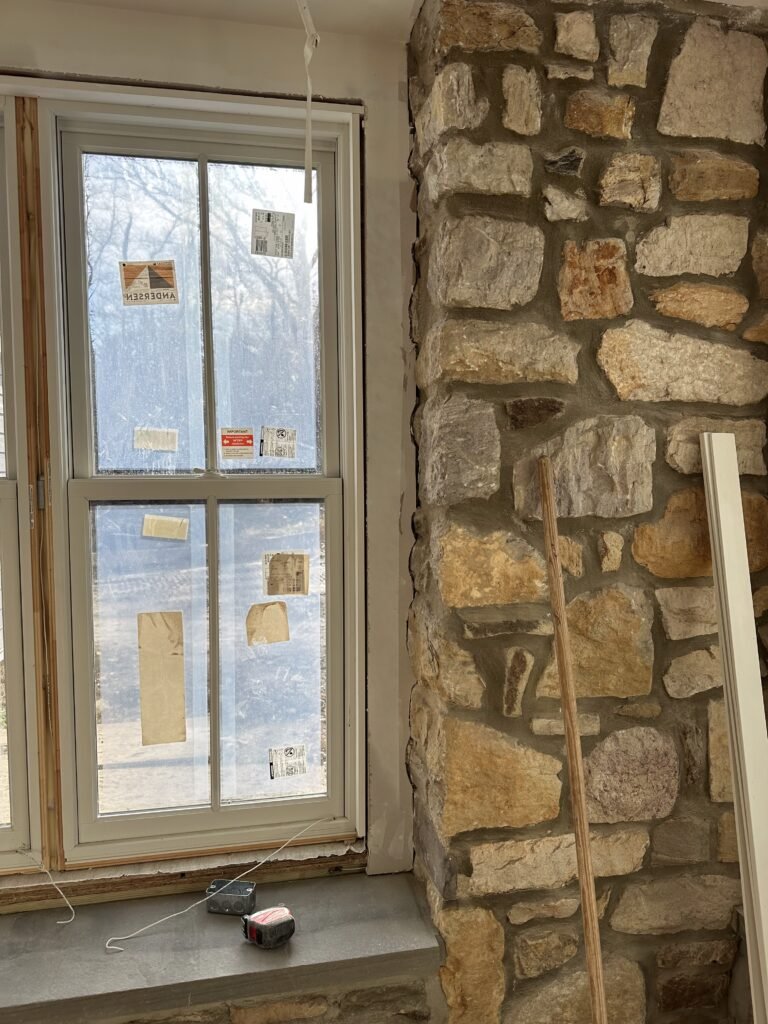
Stone construction changes what window installation requires. The opening is fixed and does not move. The interior and exterior trim has to be cut to fit against irregular stone edges rather than flat framing, and there is no room to adjust the opening if the units arrive slightly off-dimension. Everything has to be measured correctly the first time.
The scope on this project included removing the original windows, inspecting the rough framing for any moisture damage, installing new Andersen 400 Series double-hung units, trimming out the interior, and prepping the exterior for casing.
The framing was solid. The installation went in on schedule.
Why Malvern and the surrounding area has so many homes that need this work
Malvern sits just inside Chester County along the Main Line corridor. The housing stock here skews older than most of southeastern Pennsylvania: a lot of stone and brick construction from the 1940s through the 1970s, and a fair number of larger homes that have gone through partial updates over the decades but still have original or near-original windows.
Original windows from that era have a few things in common. The glazing is single-pane or early double-pane with failed seals. The frames are wood or aluminum, and the weatherstrip has either deteriorated or was never adequate. The hardware is worn. And in stone homes specifically, the original installation often used whatever filler material was available to pack the gap between the window frame and the masonry opening, which fails over time and allows air and water to track into the wall assembly.
Replacing those windows properly, with a correctly installed modern unit and proper flashing and sealing, changes how the house performs more than most homeowners expect.
Related on this site: How to Tell When Your Siding Needs to Be Removed vs. Repaired covers the same moisture and water management principles that apply to window openings in older masonry construction.

Why Andersen
There are a lot of window manufacturers, and we work with several depending on the project and the homeowner’s budget. For a project like this one, Andersen was the right choice for a few reasons.
Andersen has been manufacturing windows in the U.S. since 1903. Their 400 Series is one of the most installed window lines in residential construction in this country, which means parts are available, service is straightforward, and the product has a real track record in homes like this one. They publish their performance data and have their windows independently tested and certified through ENERGY STAR and the National Fenestration Rating Council, which rates windows for U-factor, solar heat gain, and air leakage.
That last point matters in Chester County and Lancaster County, where winter heating costs are real. A well-sealed, properly rated window in a stone home that was previously losing heat through failed original glazing makes a noticeable difference in the first winter.
None of that matters, though, if the installation is not done correctly. The window is only as good as how it is set in the opening.
What a proper window installation involves, step by step
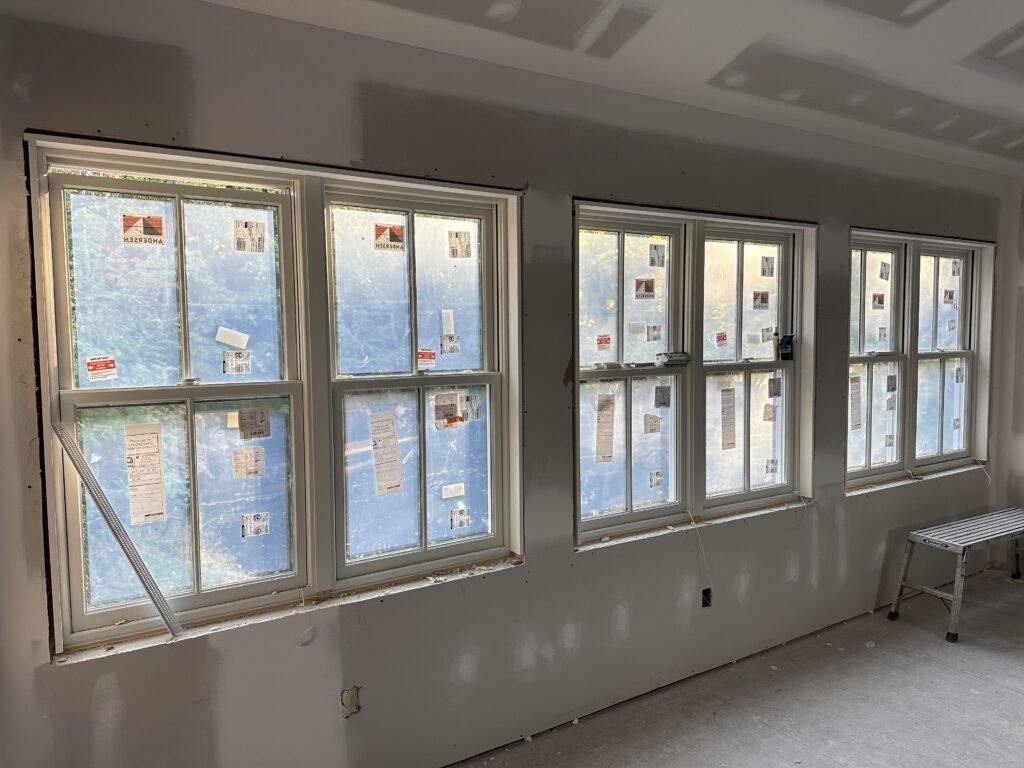
This is where the difference between a careful contractor and a fast one becomes visible. The steps are not complicated, but each one matters.
Measuring before ordering. Replacement windows are ordered to the rough opening dimensions, not the old window size. Measuring the rough opening correctly, accounting for any out-of-square conditions, is the first thing that determines whether the job goes smoothly. We measure every opening twice before anything is ordered.
Removing the old unit. On a stone home, removal has to be careful. The interior trim and exterior casing come off first, then the old window is taken out of the opening without damaging the surrounding masonry. Any deteriorated framing or sill material is assessed at this stage.
Inspecting and preparing the opening. This is the step that is easy to skip and expensive to regret. Every opening gets checked for rot, water damage, and structural integrity before the new unit goes in. The International Residential Code requires sill flashing on new window installations, and we flash every opening regardless of whether code enforcement is watching.
Setting and shimming the unit. The window goes in plumb, level, and square. Shim placement is critical here. A window shimmed at the wrong points will bind when it gets cold and the frame contracts, or bow under load and stop sealing correctly.
Air sealing and insulation. The gap between the window frame and the rough opening gets filled with low-expansion foam, which seals air movement without putting pressure on the frame. Homeowners who have had windows installed where the contractor used standard expansion foam or skipped this step entirely often notice drafts in winter that the new windows should have eliminated.
Interior and exterior trim. The visual finish. On a stone home, the interior trim has to be scribed to fit against the stone face, not just butted against it with a caulk line. The exterior casing gets primed before it goes on, and any penetrations through the casing are sealed against water entry.
What to ask any window contractor in Malvern or Chester County
The window business in Chester County has a lot of companies competing for the same work, and the pricing spread between them is wide. Low price usually means one of a few things: cut-rate materials, fast installation that skips the steps above, or subcontracted crews with no accountability to the homeowner. Here are the questions worth asking before you hire anyone.
Are you PA HIC registered? This is the baseline. Pennsylvania requires contractors doing home improvement work to register with the state. Check any contractor at the Pennsylvania Attorney General’s HIC Registry before you go any further. No registration number means they should not be working on your home.
Who does the installation? A lot of window companies are sales organizations that subcontract the actual installation to whoever is available. Ask directly whether the people installing your windows are company employees or subcontractors, and whether the same crew will be there from start to finish.
How do you handle flashing on a masonry opening? A contractor who cannot describe their flashing approach is probably not doing it. Ask them to walk you through it specifically. The answer tells you a lot about whether they have actually thought about water management or are just putting windows in openings.
What does the warranty cover? The manufacturer warranty covers the window unit itself. The workmanship warranty covers the installation. These are separate, and some contractors are vague about the workmanship coverage. Get it in writing.
Can I see a completed project on a similar home? References are useful. A reference from a stone home project in Chester County is more useful than a general list of satisfied customers in newer construction.
Other small towns in Chester County where we work
Malvern is our anchor for this part of the county, but we work across the surrounding area. These are some of the smaller communities where we take on window and door work and where there is very little competition at the level of finish we bring:
- Berwyn, PA – Main Line town with a lot of older stone and brick homes that still have original windows
- Devon, PA – Similar housing stock, consistent demand for quality exterior work
- Frazer, PA – Growing residential area just north of Malvern with mixed construction types
- Lionville, PA – Older established neighborhoods with homes that need the same kind of careful replacement work
- Thorndale, PA – A quiet residential stretch along Route 30 where almost no contractors are writing about the work they do here
- Coatesville, PA – Larger city in western Chester County with a strong base of stone and brick construction
We also work across Lancaster County from our base in Ephrata. If your project is in the area and you are not sure whether we cover it, the easiest thing is to reach out and ask.
The bigger picture on window replacement in stone homes
There is a version of window replacement that is essentially a product transaction: a salesperson comes out, shows you samples, and sends an installer a few weeks later. It works fine in standard construction where the openings are forgiving and the installation details are less consequential.
Stone homes are different. The openings are fixed, the trim work is visible and precise, and the consequences of a poor installation show up quickly: drafts, condensation on the interior trim, water tracking into the wall assembly, windows that bind seasonally. Getting it right requires a contractor who understands masonry construction and treats the installation as a craft rather than a production task.
That is the work we do. If you have windows that need replacing in Malvern, Berwyn, Devon, or anywhere else in Chester County or Lancaster County, we are glad to come out and give you an honest assessment.
Related posts: