
A crack in the wall is rarely just a crack. Cracked drywall from house settling in Lancaster County tends to follow patterns, and those patterns are the house telling you something specific about how it is moving. A thin line above a doorway means one thing. A stair-step crack running diagonally from a corner means something else entirely. Reading the difference is what separates a quick cosmetic fix from a problem worth investigating.
D&E Mako Renovation works on plenty of older homes across Lancaster County, from century-old houses in Lititz to mid-century builds in Manheim and New Holland. Old homes move. They have been through decades of seasons, settling, and shifting. This guide walks through what the common crack patterns mean, when a repair is all you need, and when a crack is worth a second look.
What this guide covers
- What different drywall crack patterns actually mean
- The difference between cosmetic cracks and structural ones
- Why older Lancaster County homes crack in the first place
- When a patch is enough and when to look deeper
- How squeaky floors and stairs tie into the same movement
Reading cracked drywall from house settling in Lancaster County
Every house settles. The frame dries and shrinks, the ground beneath shifts with moisture, and seasonal humidity swells and contracts the wood. Drywall is brittle and rigid, so when the structure behind it moves even slightly, the drywall cracks at its weakest points. The location and shape of the crack tell you how serious the movement is.
Where cracks tend to start
Cracks almost always begin at stress points. The corners of windows and doors are the classic spots, because the opening is a weak link in an otherwise solid wall. Ceiling-to-wall joints, the seams between drywall sheets, and the tops of stairwells are other common starting points. A crack at one of these spots is expected. A crack running through the middle of a solid wall is less expected and more worth attention.
Worth knowing: A crack that keeps coming back after you patch it is telling you the movement is ongoing. Cosmetic cracks stay closed once repaired. Recurring cracks mean the cause is still active.
The common crack patterns and what they mean
Not all cracks deserve the same response. Here is how we read the four patterns we see most often in older Lancaster County homes.
Pattern 01
Hairline cracks at door and window corners
Thin, short cracks angling off the corner of an opening are the most common and the least alarming. They come from normal seasonal movement and minor settling. These are cosmetic. They get taped, filled, and painted, and as long as the house has finished its major settling, they tend to stay closed.
Pattern 02
Stair-step cracks at corners
A crack that steps diagonally, especially near an exterior corner or on a wall above the foundation line, often points to foundation or footing movement. One part of the house is settling more than another. These deserve a closer look before you patch, because covering them without understanding the cause just hides an active problem.
Pattern 03
Horizontal cracks mid-wall
A horizontal crack running across the middle of a wall is the one we take most seriously. It can indicate structural stress, lateral pressure, or framing that is carrying load it was not meant to. This is not a patch-and-paint situation. It is a find-the-cause situation.
Pattern 04
Ceiling cracks and sagging seams
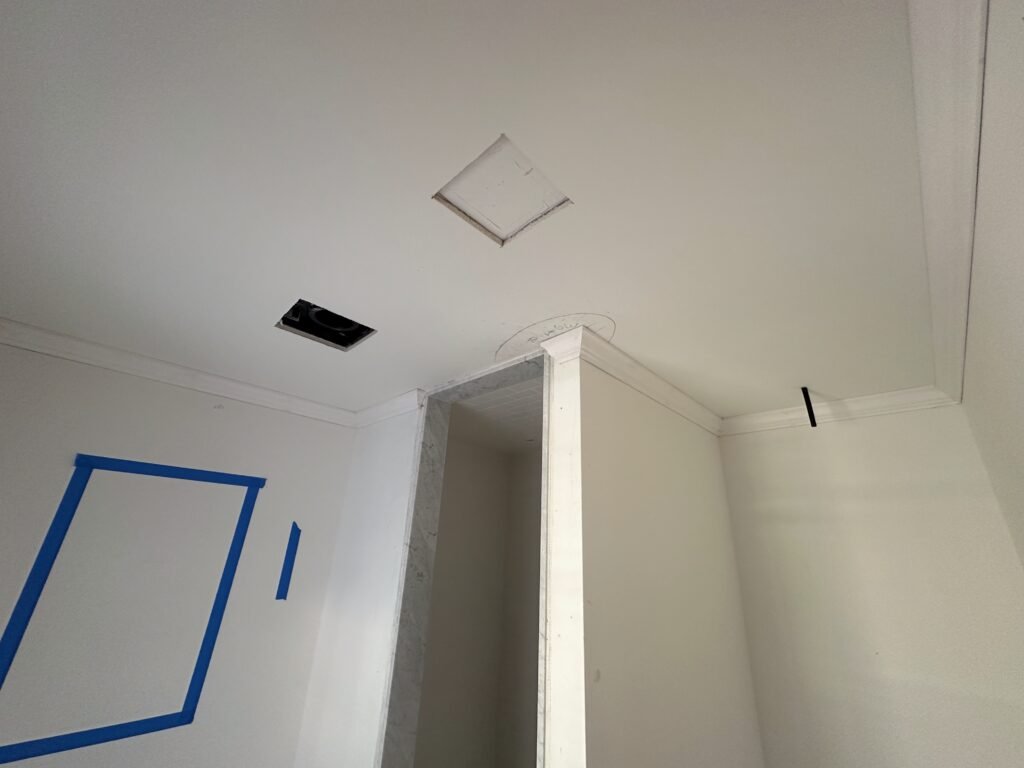
Cracks where the ceiling meets the wall, or seams that crack and sag, can come from truss uplift in winter, from a load issue above, or from old plaster letting go. Some are seasonal and cosmetic. Sagging combined with cracking is worth investigating, because the ceiling is carrying weight.
When repair is enough and when to look deeper
The honest answer is that most drywall cracks in older homes are cosmetic, and a small number are not. The job is telling them apart before you spend money covering up something that needs more.
Doing a crack repair the right way
A real repair is more than smearing filler in the gap. The old crack gets cut out, taped with mesh or paper, reinforced, feathered with compound, sanded, and repainted so it disappears and stays gone. Skipping the tape is why so many patched cracks reappear in a season. Seasonal humidity moves the wall, and an untaped patch has nothing holding it together. This kind of detail work is part of our interior finishing service.
When a crack signals something structural
If a crack is wide, horizontal, stair-stepped, recurring, or paired with doors that stick and floors that slope, the drywall is the messenger, not the problem. At that point you want someone to look at the structure behind it. Building movement and moisture are connected, and the resources at Building Science Corporation explain how moisture and structural behavior interact in older homes. Our work on custom construction and renovation often starts exactly here, with a crack that turned out to be a clue.
Worth knowing: Doors and windows that suddenly stick, combined with new cracks, often mean the same movement is at work in both. The frame is racking slightly, which jams the door and splits the drywall at the same time.
Squeaky floors and stairs from the same movement
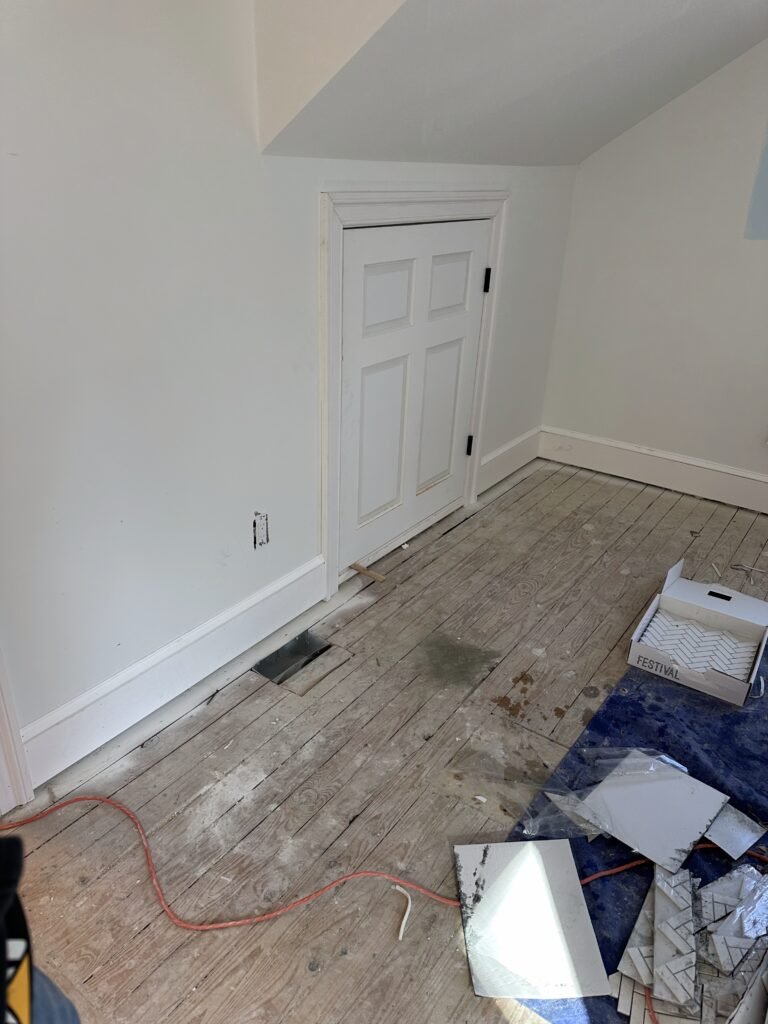
The settling that cracks your drywall often shows up underfoot too. Squeaky floors and stairs come from wood components rubbing as the structure flexes, from loosened subfloor fasteners, or from gaps that opened as the framing dried and shifted. They are usually a nuisance rather than a danger, and they are very fixable, but they are part of the same story your cracks are telling. If you are tackling cracks during a larger project, our guide on common interior renovation mistakes is worth a read before you start.
Where D&E Mako Renovation works across Lancaster County
Lancaster County service area
- Lititz, PA — historic homes where original plaster and old framing crack with the seasons
- Manheim, PA — mid-century houses that have finished settling but show their history
- New Holland, PA — established homes where cracks often pair with sticking doors
- Ephrata, PA — our home base, with every era of construction and crack pattern
- Akron, PA — older borough homes with cosmetic settling cracks
- Mount Joy, PA — a mix of homes where we sort cosmetic from structural
If your project is outside these areas, get in touch through our contact page and we will let you know whether it falls within our range.
The short version on drywall cracks
Cracked drywall from house settling in Lancaster County is usually cosmetic, especially the hairline cracks at door and window corners. Those get taped, filled, and forgotten. The ones to respect are the horizontal cracks, the stair-step cracks near the foundation, and any crack that keeps coming back after you fix it.
Read the pattern before you reach for the filler. Most of the time you are looking at a simple, satisfying repair. Once in a while you are looking at a clue worth following. Knowing which is which is the whole point.
Not sure if that crack is cosmetic or something more? We will take a look and tell you straight.