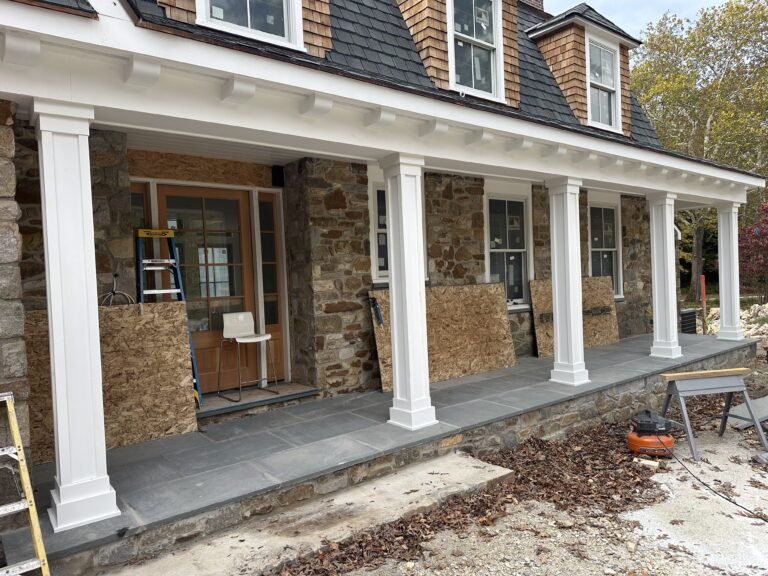

If you have repainted or repaired the same fascia boards more than once, you already understand the appeal of doing it permanently. Replacing wood fascia with PVC trim in Lancaster County PA is one of the few exterior upgrades that genuinely ends a recurring problem instead of postponing it. Wood fascia rots, holds paint for only so long, and feeds every gutter leak it touches. PVC trim does not rot, does not feed mold, and holds a finish far longer. For an older home that has fought this battle for years, the switch is usually a relief.
D&E Mako Renovation makes this upgrade often on homes around Ephrata, Lititz, and New Holland, where decades-old wood trim has reached the end of the line. This guide covers why PVC outlasts wood, what a proper installation involves, the mistakes that ruin the result, and how an aluminum-clad soffit fits into the same upgrade.
What this guide covers
- Why PVC trim outlasts wood fascia in our climate
- What a proper fascia replacement actually involves
- The installation mistakes that cause PVC to fail early
- How aluminum-clad soffit pairs with a PVC fascia upgrade
- When to make the switch versus repair what you have
Why replacing wood fascia with PVC trim in Lancaster County PA makes sense
Wood fascia has one fatal weakness in this region: it is organic, and our freeze-thaw winters and humid summers are hard on organic material. The moment the paint fails, water gets into the wood and rot begins. PVC, specifically cellular PVC like AZEK, removes that weakness entirely.
What PVC does that wood cannot
Cellular PVC does not absorb water, so it cannot rot, and it gives mold and insects nothing to feed on. It does not need paint to survive, though it takes and holds paint beautifully if you want a color. It will not split, cup, or check the way a wood board does after a few seasons of sun. For a fascia board that lives at the roofline taking the worst of the weather, those traits matter more than they would anywhere else on the house. You can read more about the material directly from AZEK Building Products.
Worth knowing: PVC is the rare upgrade that pays you back in time, not just looks. Once it is on, the yearly scrape-and-paint cycle on your fascia is over for good.
What a proper fascia replacement involves
The board going up is the easy part. The work that makes the upgrade last happens before and during installation, and it is where a careful contractor earns the difference.
Removing and inspecting first
The old fascia comes off, and that is the moment to inspect the rafter tails and any sub-fascia behind it. If wood fascia rotted, there is a real chance the framing behind it took on moisture too. Putting beautiful new PVC over wet, compromised wood just hides a problem. We check, dry, and repair what is behind the board before anything new goes up.
Accounting for expansion
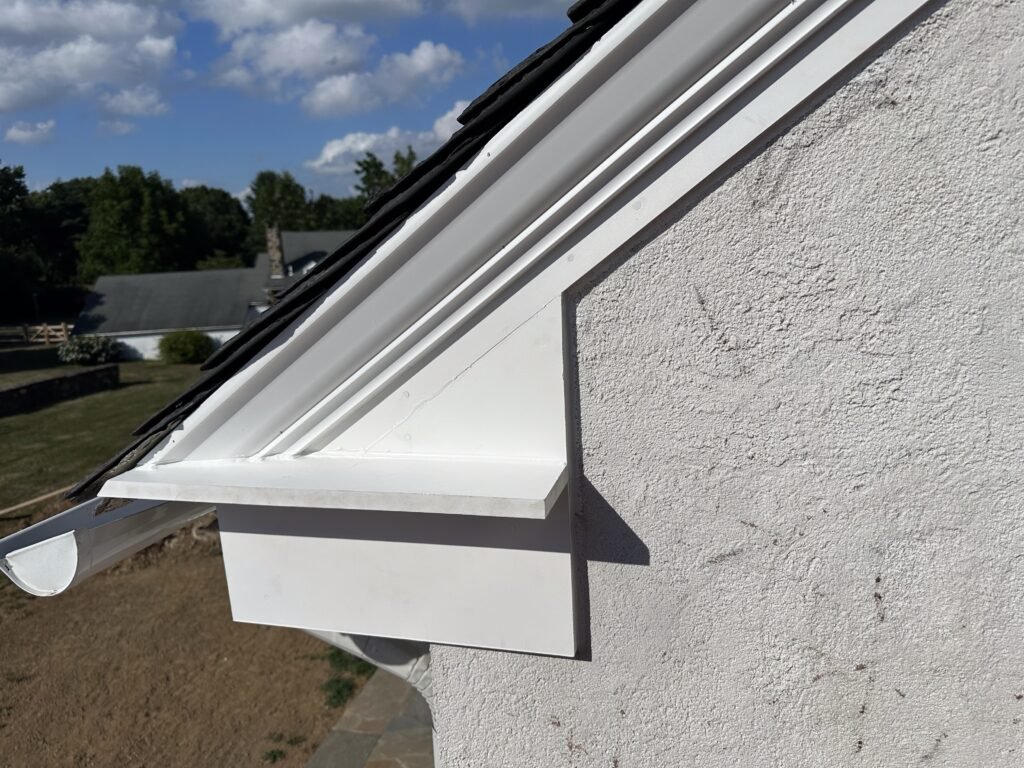
PVC expands and contracts with temperature more than wood does. A proper installation accounts for that movement with the right fasteners, the right spacing, and correctly handled joints, often glued with PVC cement so seams do not open. Get this wrong and the trim buckles or the joints split in the first hot summer. Get it right and it stays flat and tight for decades. This is exactly the kind of detail our AZEK trim and aluminum service is built around.

The mistakes that cause PVC trim to fail early
PVC is forgiving as a material but unforgiving of bad installation. Almost every failed PVC job we are called to fix traces back to one of these.
Mistake 01
Ignoring thermal movement
Fastening PVC tight with no allowance for expansion is the top cause of buckled trim and popped joints. Long runs especially need the movement designed in. When installers treat PVC exactly like wood, summer heat does the rest.
Mistake 02
Skipping the wood inspection
Covering rotted rafter tails or wet sub-fascia with new PVC seals moisture in. The trim looks perfect and the framing behind it keeps deteriorating. The inspection step is not optional on an older home.
Mistake 03
Wrong fasteners and unglued joints
The wrong nails, overdriven heads, or butt joints left dry instead of cemented all lead to open seams and a wavy line. PVC needs its own fastening approach, not a wood carpenter’s habits.
Covering wood soffit with aluminum at the same time
Fascia and soffit are neighbors, so it makes sense to address them together. While the fascia gets replaced with PVC, the soffit, the underside panel of the eave, is a natural candidate for aluminum cladding.
Why pair the two
Covering an old wood soffit with vented aluminum panels ends the painting and rot cycle there too, and it keeps attic ventilation working through the vented panels. Doing both at once means one setup, one crew, one clean result, instead of climbing back up next year for the half you skipped. The combination is one of the most popular low-maintenance exterior packages we install, and it fits naturally with our broader siding installation and repair service. If your trim damage started from a leak, our guide on aluminum trim installation in West Chester PA covers the related exterior work.
Worth knowing: Keep the soffit vents clear and functional. Cladding over them solid traps attic moisture and can create new problems above, so vented panels are the right call almost every time.
Where D&E Mako Renovation works across Lancaster County
Lancaster County service area
- Ephrata, PA — our home base, where older homes are prime candidates for a PVC upgrade
- Lititz, PA — historic and mid-century homes tired of the repaint cycle
- New Holland, PA — established neighborhoods with weathered wood fascia
- Manheim, PA — homes where fascia rot has come back more than once
- Akron, PA — borough homes upgrading to low-maintenance exteriors
- Brownstown, PA — rural and suburban homes pairing fascia and soffit work
If your project is outside these areas, get in touch through our contact page and we will let you know whether it falls within our range.
The short version on PVC fascia
Replacing wood fascia with PVC trim in Lancaster County PA trades a recurring maintenance problem for a one-time upgrade. PVC does not rot, does not feed mold, and holds its finish far longer than wood ever could. Pair it with aluminum-clad soffit and the entire eave becomes something you stop thinking about.
The catch is installation. PVC rewards careful work and punishes shortcuts, so the value lives in the details: inspecting the wood behind, designing for expansion, and finishing the joints right. Done well, it is the last fascia job that house will need for a very long time.
Tired of repainting fascia every few years? Ask us about a PVC upgrade that ends it.