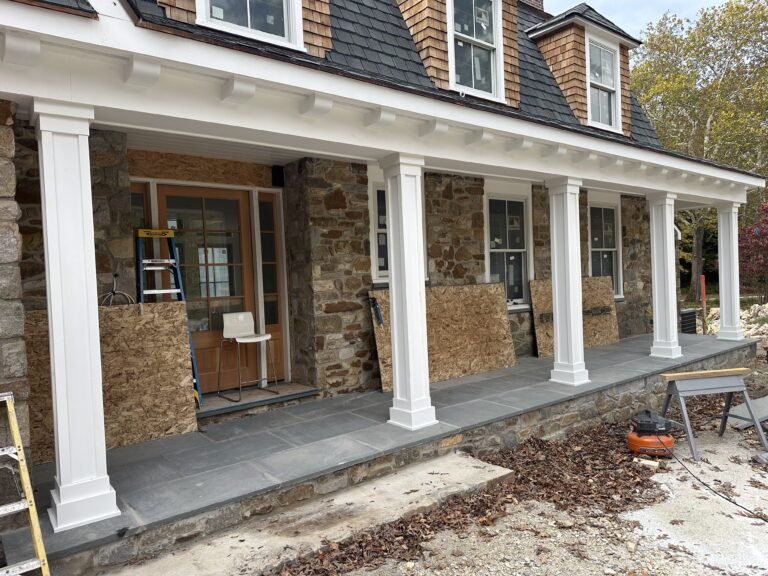

A century-old farmhouse carries craftsmanship you cannot buy new. 1920s Pennsylvania farmhouse interior restoration is a balancing act between honoring that original work and making the home function for the way people live now. The plaster walls, the deep trim profiles, the wide-plank floors, and the built-in details were made by hand from materials that are hard to source today. The goal of a good restoration is not to modernize all of that away. It is to preserve the soul of the house while quietly bringing its systems and comfort up to date.
D&E Mako Renovation restores these homes across the farm country of Lancaster County, from New Holland and Ephrata out toward East Earl and Terre Hill. This guide covers the original materials you are working with, how to preserve period details, and the practical realities of wiring, plumbing, and comfort in a home built in the 1920s.
What this guide covers
- The original materials in a 1920s farmhouse and how they behave
- How to preserve original plaster and trim profiles
- Restoring rather than replacing hardwood floors
- Updating wiring and plumbing in a century-old home
- Balancing preservation with modern comfort
The materials behind a 1920s Pennsylvania farmhouse interior restoration
You cannot restore what you do not understand. A 1920s farmhouse was built with materials and methods that differ from anything modern, and treating them like modern materials is the fastest way to ruin them.
Plaster, not drywall
The walls are lath and plaster, not drywall, and they behave differently. Plaster is harder, more brittle, and applied over wood or metal lath in layers. It cracks with settling but is repairable by someone who knows the material. Tearing it all out for drywall is tempting and almost always a mistake, because original plaster has a depth and solidity that drywall cannot match. Skim-coating and patching preserves it.
Old-growth wood trim
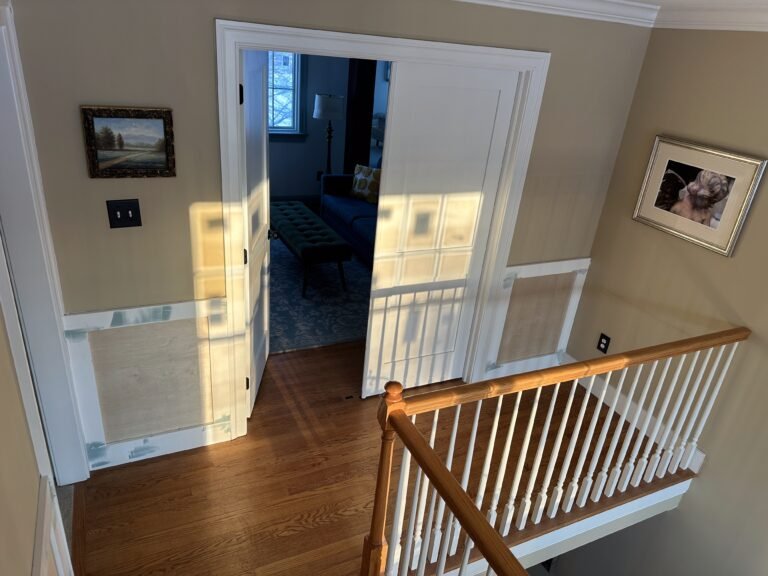
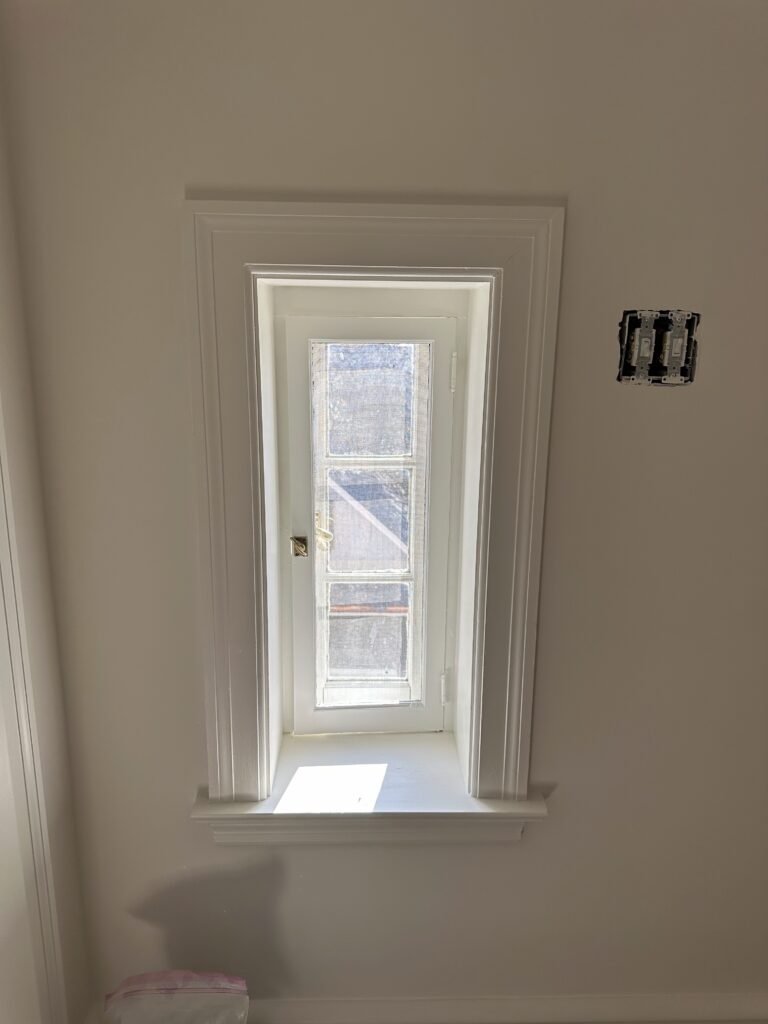
The trim in these homes was milled from dense old-growth lumber, often in deep, specific profiles you cannot buy off a shelf today. Door and window casings, baseboards, picture rails, and built-ins were made to last and they have. Preserving and repairing this trim, or matching it when a piece is missing, is specialized work that our trim and finish carpentry service is built around.
Worth knowing: The original trim in a 1920s farmhouse is often irreplaceable. Before anyone pries off a single piece, it is worth pausing to ask whether it can be saved instead.
Preserving period details
The details are what make these homes special. A restoration lives and dies on how carefully they are handled.
Detail 01
Repairing original plaster
Cracked and damaged plaster gets repaired, keyed back to the lath, and skim-coated rather than demolished. Done right, the walls keep their original character and that hard, solid feel that newer homes simply do not have.
Detail 02
Restoring trim and millwork
Layers of old paint come off, damaged sections get repaired, and any missing pieces are matched to the original profile. The deep, characterful trim is one of the most valuable things in the house, and it is worth the patience.
Detail 03
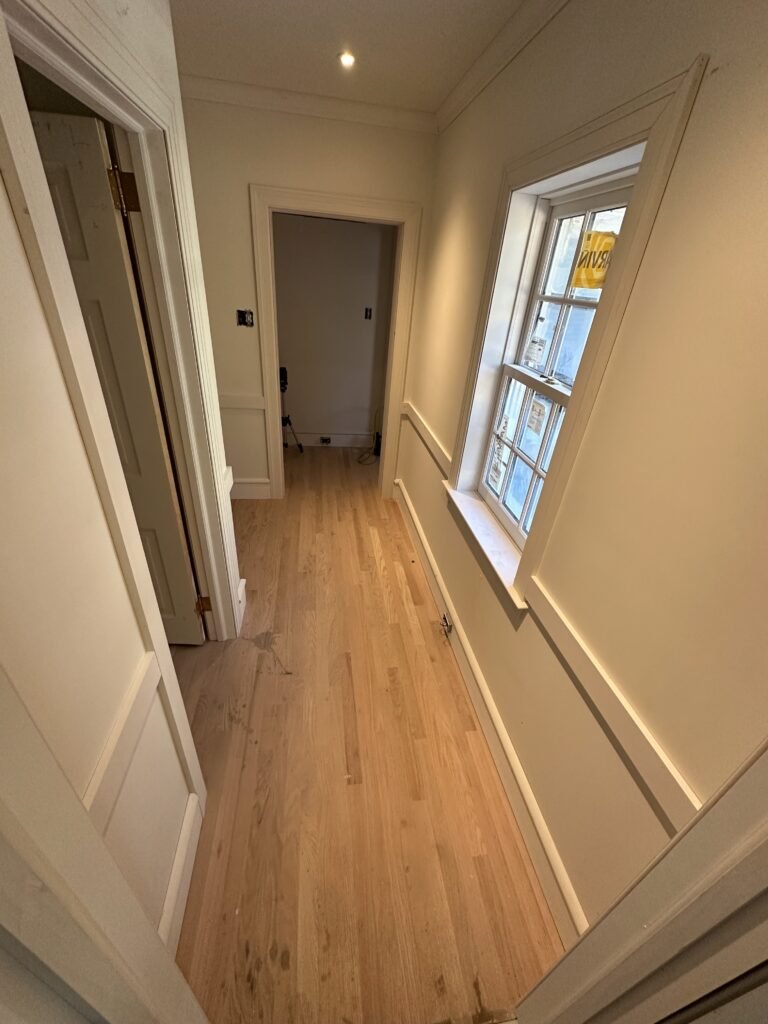
Saving the hardwood floors
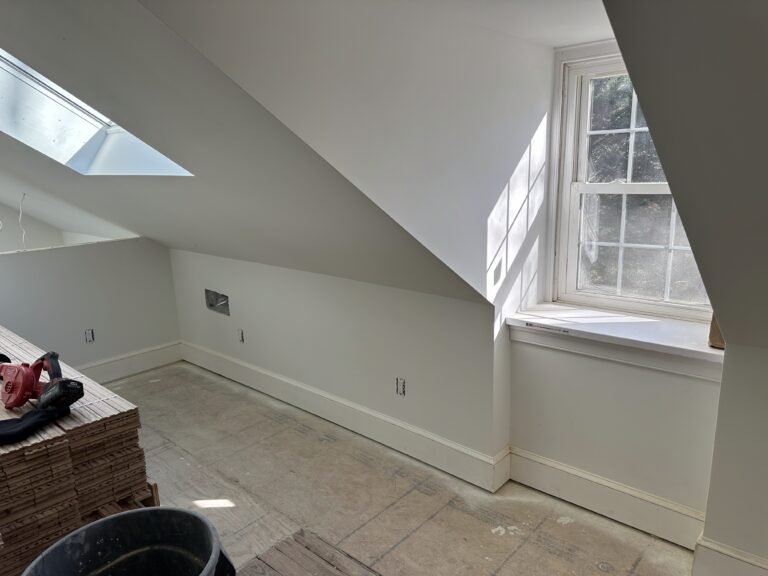
The original floors are often wide-plank or narrow-strip hardwood that can be sanded and refinished to look extraordinary. Refinishing the original almost always beats replacing it, both for character and for value.
Updating systems and comfort without losing the character
Preservation does not mean living with 1920s wiring. The art is updating the invisible systems while leaving the visible character intact.
Wiring, plumbing, and insulation
A century-old farmhouse usually needs electrical and plumbing brought up to modern standards, and that work has to be done carefully so it does not destroy the plaster and trim you are trying to save. Skilled crews route new systems through existing cavities and minimize the openings, then repair what they touch. Insulation and comfort upgrades matter too, but they have to respect how an old building manages moisture. Many of these homes also predate the 1978 lead paint ban, so disturbing old finishes should involve a certified firm, which you can find through the EPA’s Lead-Safe program.
Pulling it all together
A farmhouse restoration touches structure, surfaces, and systems all at once, which is why it benefits from a single team coordinating the whole thing. Our custom construction and renovation service handles the structural and system side, while our interior finishing service brings the surfaces back to life. The two together are what turn a tired old farmhouse into a restored one.
Worth knowing: Old buildings were designed to breathe and dry in their own way. Sealing a century-old farmhouse up like a modern home can trap moisture, so comfort upgrades need a builder who understands how these walls actually work.
Where D&E Mako Renovation works across Lancaster County
Lancaster County service area
- New Holland, PA — farm country full of century-old farmhouses
- Ephrata, PA — our home base, with historic homes throughout the area
- East Earl, PA — rural properties with original 1920s interiors
- Terre Hill, PA — small-town and farm homes worth restoring
- Blue Ball, PA — historic farmhouses in the surrounding countryside
- Goodville, PA — rural homes with preservation-worthy details
If your project is outside these areas, get in touch through our contact page and we will let you know whether it falls within our range.
The short version on farmhouse restoration
A 1920s Pennsylvania farmhouse interior restoration is about preservation first and modernization second. The plaster, the old-growth trim, and the original hardwood are the things that make these homes irreplaceable, and they should be repaired and restored rather than torn out. The systems, the wiring, plumbing, and comfort, are where modern updates belong, done carefully so they do not damage what you are saving.
Get the balance right and you keep the soul of a century-old home while making it genuinely comfortable to live in. That is the whole point, and it takes a builder who values the old work as much as you do.
Restoring a historic farmhouse? Let us help you preserve the character and update the rest.