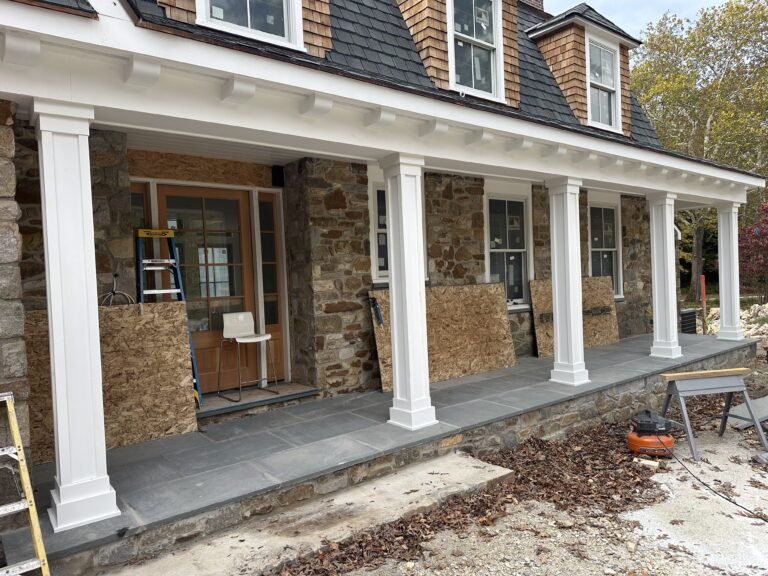

Once homeowners decide they are done with rotting wood trim, the next question is which engineered product to use. The AZEK vs Boral TruExterior trim for Pennsylvania homes comparison pits cellular PVC against poly-ash, two very different materials that both solve the rot problem in their own way. AZEK is the well-known PVC option, light and bright white and rot-proof. Boral TruExterior is a poly-ash composite that behaves more like real wood and brings its own advantages. Knowing how they differ in weight, workability, paint, and movement is how you pick the right one for your project.
D&E Mako Renovation installs engineered trim across Lancaster County, on homes in Ephrata, Lititz, and New Holland where owners want exterior detailing that lasts. This guide breaks down what each material is, how each handles, and where each one shines.
What this guide covers
- What AZEK PVC and Boral TruExterior poly-ash actually are
- How weight and workability compare on the job
- How each takes and holds paint
- Expansion and movement behavior in our climate
- Which material fits which application
AZEK vs Boral TruExterior trim for Pennsylvania homes: the materials
These two products start from completely different places, and that drives every practical difference between them.
AZEK cellular PVC
AZEK is cellular PVC, a plastic-based trim that does not absorb water, cannot rot, and gives insects and mold nothing to feed on. It is light, bright white out of the package, and a longtime favorite for exterior trim. You can read more from AZEK Building Products. Because it is PVC, it is impervious to moisture but moves noticeably with temperature, which shapes how it has to be installed.
Boral TruExterior poly-ash
Boral TruExterior is a poly-ash composite, made largely from fly ash and polymers. It behaves much more like real wood than PVC does. It is heavier and more substantial, it can be used in ground-contact and tricky applications PVC is not suited for, and it moves far less with temperature. It cuts and works like a dense wood, which many carpenters appreciate, while still resisting rot and insects.
Worth knowing: The biggest practical difference is movement. PVC moves a lot with temperature and poly-ash moves very little. That single trait decides how each one has to be detailed on the wall.
How they handle on the job
The differences that matter to you as a homeowner show up in how the trim installs and how it looks and performs afterward.
Point 01
Weight and workability
AZEK is light and easy to handle on ladders and long runs, and it cuts cleanly with standard tools. Boral is heavier and denser, more like working dense lumber, which some carpenters prefer for how solid it feels but which is more to lift and carry on a big job.
Point 02
Paint and finish
AZEK comes bright white and can be left unpainted or painted, though dark colors need a paint formulated for PVC to handle heat. Boral has a more matte, wood-like surface that takes paint readily and holds it well, and it accepts darker colors more comfortably. Both finish beautifully when prepped right.
Point 03
Expansion and movement
This is where they truly diverge. PVC expands and contracts significantly with temperature, so AZEK demands careful fastening, gapping, and glued joints to stay flat and tight. Boral moves very little, so it installs more like wood with fewer movement worries, an advantage on long runs and intricate detail work.

Which one fits your project
Neither product is universally better. Each one has applications where it is the clear right call.
When AZEK makes sense
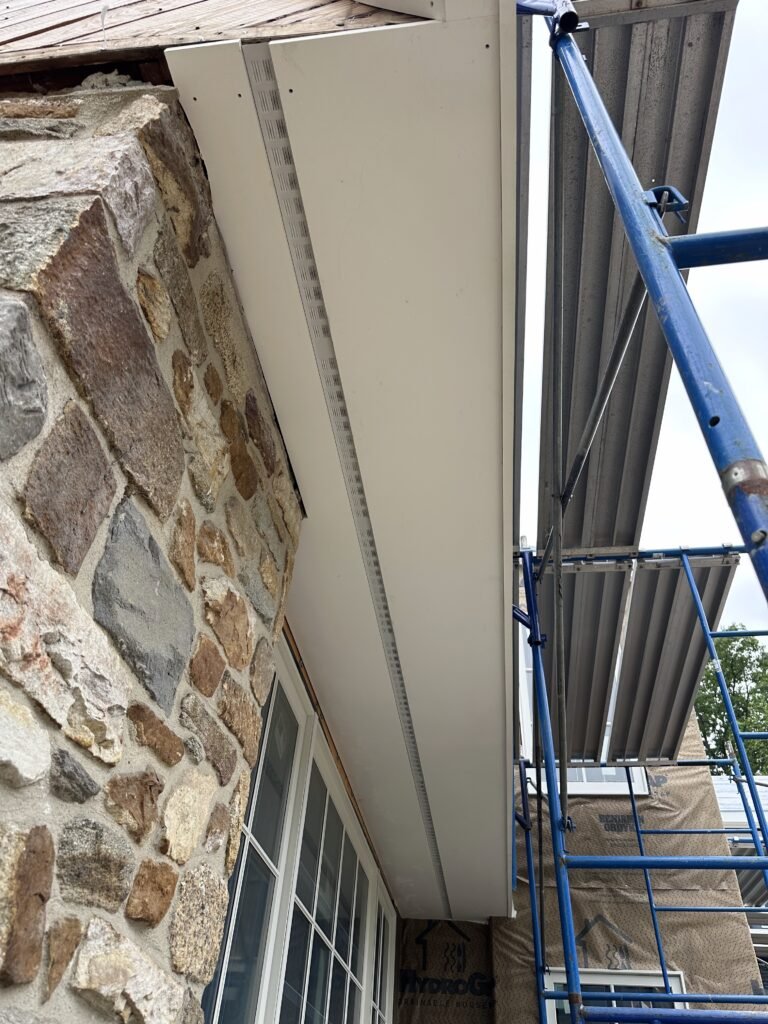
Choose AZEK when you want a light, bright, fully rot-proof PVC trim and you are working with a crew that knows how to detail for thermal movement. It is excellent for standard fascia, rake, and window and door trim where its low weight and moisture immunity shine. This is a core part of our AZEK trim and aluminum service, and it pairs naturally with the exterior work in our guide on aluminum trim installation.
When Boral makes sense
Reach for Boral when you want a product that works and looks like wood, takes dark paint easily, moves very little, and can go in applications PVC should not, including near grade. It is a strong choice for detailed, paint-grade trim and for carpenters who want wood-like behavior without the rot. Either way, the craftsmanship matters as much as the material, which is the foundation of our trim and finish carpentry service.
Worth knowing: A skilled installer can make either material look flawless. A careless one can make either fail. With engineered trim, the brand matters less than whether it is detailed for how that specific material moves.
Where D&E Mako Renovation works across Lancaster County
Lancaster County service area
- Ephrata, PA — our home base, installing both PVC and poly-ash trim
- Lititz, PA — historic homes where paint-grade trim detail matters
- New Holland, PA — established homes upgrading exterior trim for good
- Manheim, PA — houses replacing rotted wood trim with engineered options
- Denver, PA — a mix of homes choosing low-maintenance detailing
- Akron, PA — borough homes wanting crisp, lasting trim
If your project is outside these areas, get in touch through our contact page and we will let you know whether it falls within our range.
The short version on AZEK versus Boral
The AZEK vs Boral TruExterior trim for Pennsylvania homes choice comes down to PVC versus poly-ash. AZEK is light, bright, fully rot-proof, and ideal for standard exterior trim, provided it is detailed for its significant thermal movement. Boral works and looks like wood, moves very little, takes dark paint well, and handles applications PVC cannot, at the cost of more weight.
Both end the rot problem for good. Pick AZEK for light, moisture-immune simplicity, and Boral for wood-like behavior and detailed paint-grade work. With either one, the installation details are what make it last.
Choosing trim that will not rot again? We will recommend the right material for your home.