
Crown molding is one of those details people feel before they notice it. Walk into a room that has it and the space reads as finished, considered, a little more elegant. Crown molding installation in Lancaster County PA is among the highest-impact ways to lift a plain room without touching its structure. The catch is that crown is also the trim most likely to expose sloppy work. It sits where the wall meets the ceiling, runs every corner of the room, and shows every gap. The difference between crown that looks built-in and crown that looks tacked-on is entirely in the craft.
D&E Mako Renovation installs crown molding throughout Lancaster County, in homes around Ephrata, Lititz, and New Holland. This guide covers what makes crown tricky, the styles that suit different homes, and why the cuts and corners are where quality shows.
What this guide covers
- Why crown molding is harder to install than it looks
- The styles and profiles that suit different rooms
- Why corners and coped joints make or break the result
- Material choices for crown molding
- How crown fits into a larger trim project
Why crown molding installation in Lancaster County PA is harder than it looks
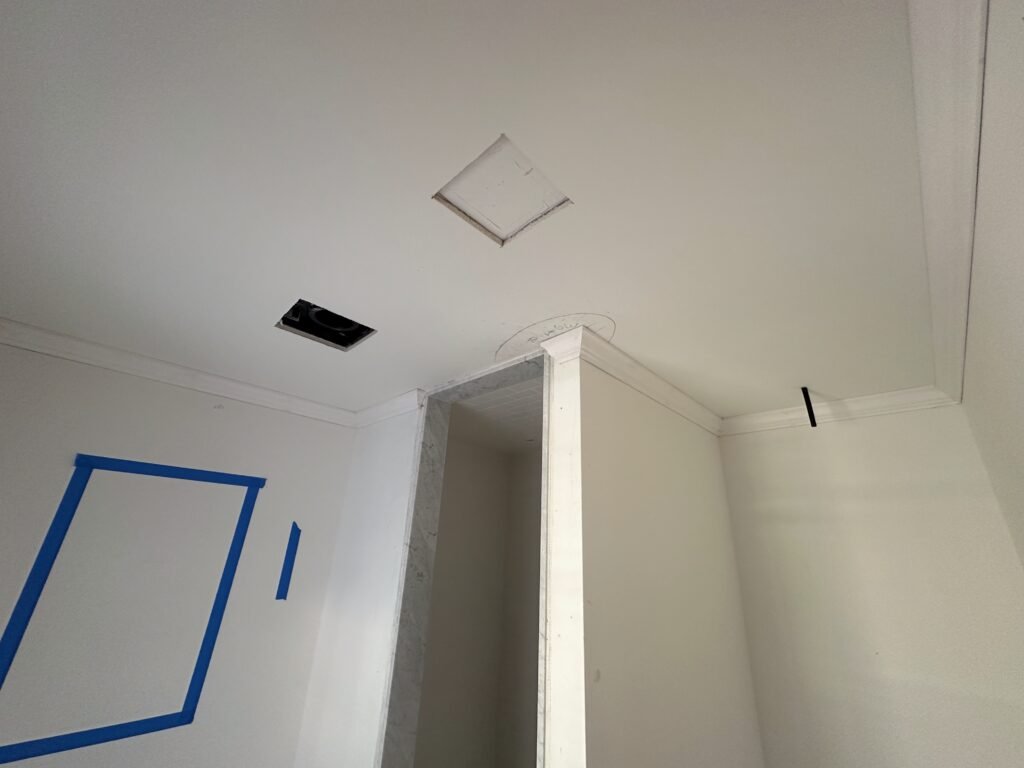
Crown sits at an angle, spanning the corner between wall and ceiling, which makes every cut a compound problem. That geometry is what trips up amateurs and is exactly why skilled carpenters take it seriously.
The angle is the challenge
Unlike baseboard, which lies flat against the wall, crown leans out from the wall at an angle. Cutting it means accounting for that angle and the corner angle at the same time. On top of that, the walls and ceilings in older Lancaster County homes are rarely perfectly square, so the corners are not the clean 90 degrees the math assumes. A good installer reads the actual room and adjusts, rather than trusting the numbers.
Watch: How to Install Crown Molding
Source: HGTV on YouTube, walking through crown molding installation.
Worth knowing: The corners are where the eye goes first. A crown job with tight, clean corners reads as professional from across the room, while open miters announce a rushed install no matter how nice the molding is.
Choosing a style that fits the room
Crown is not one thing. The profile and scale should match the room, the ceiling height, and the character of the home.
Style 01
Simple profiles for modest rooms
A smaller, cleaner profile suits a room with standard ceilings or a simpler home. It adds a finished edge without overwhelming the space, and it reads as tasteful rather than fussy.
Style 02
Larger profiles for taller rooms
Rooms with high ceilings can carry a deeper, more detailed crown that would feel heavy in a smaller space. Scale matters: crown that is too small in a big room looks lost, and crown that is too big in a small room feels crowded.
Style 03
Period-appropriate crown for older homes
In a historic Lancaster County home, the crown should respect the era. Matching the scale and feel of the original trim keeps the home cohesive, which is its own kind of skill, covered in our work on 1920s farmhouse interior restoration.
Why the corners and material matter
Two things separate good crown from great crown: how the corners are joined and what the molding is made of.
Coping versus mitering
On inside corners, skilled carpenters cope the joint rather than simply mitering it. Coping means cutting one piece to fit the exact profile of the other, which produces a tight joint that stays closed even as the house moves with the seasons. A mitered inside corner, by contrast, tends to open into a visible gap over time. Coping is slower and demands skill, and it is one of the clearest marks of a real finish carpenter. This is the foundation of our trim and finish carpentry service.
Material choices
Crown comes in solid wood, finger-jointed wood for paint, MDF, and lightweight polyurethane. Each has a place depending on whether it will be painted or stained, the budget for the room, and the look you want. A good carpenter helps you match the material to the job. If you want to understand what professional finish credentials mean when vetting a carpenter, NARI is a useful resource. Crown also pairs naturally with other trim upgrades, so it is often part of our broader interior finishing service.
Worth knowing: Crown molding delivers a lot of visual payoff for a project that does not touch your home’s structure. It is one of the most cost-effective ways to make a room feel custom.
Where D&E Mako Renovation works across Lancaster County
Lancaster County service area
- Ephrata, PA — our home base, installing crown in homes of every style
- Lititz, PA — historic homes where period-appropriate crown matters
- New Holland, PA — established homes adding a finished detail
- Manheim, PA — houses upgrading plain rooms with trim
- Akron, PA — borough homes getting a custom feel
- Mount Joy, PA — homes combining crown with other trim work
If your project is outside these areas, get in touch through our contact page and we will let you know whether it falls within our range.
The short version on crown molding
Crown molding installation in Lancaster County PA is one of the best ways to make a room feel finished, but it is unforgiving of poor work. The angled geometry, the out-of-square corners common in older homes, and the coped joints at inside corners all demand a real finish carpenter. The molding is the easy part. The corners are the test.
Match the profile to the room, choose the right material, and insist on coped inside corners, and your crown will look built-in rather than added-on. Done well, it quietly elevates the whole space.
Want crown molding that looks built-in, not tacked-on? Let us show you clean corner work.