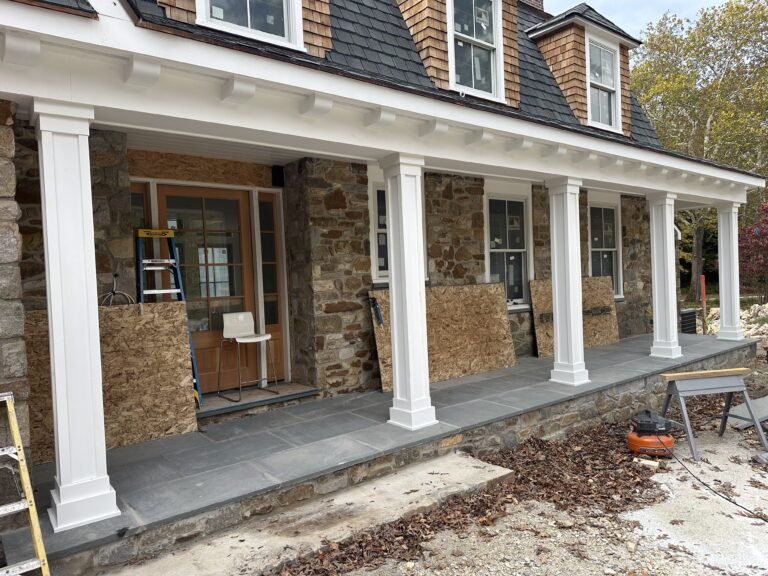

If you have been quoted for exterior work, you have probably heard these three words used almost interchangeably, and it is easy to get lost. Knowing the difference between fascia, soffit, and frieze board helps you understand your own home, follow what a contractor is describing, and spot where a problem actually is. All three live at the eave, they work together, and they fail together, but each does a distinct job.

What this guide covers
- What the fascia is and does
- What the soffit is and does
- What a frieze board is
- Why they fail together and get fixed together
The three parts of the eave
Part 01
Fascia
The fascia is the vertical board that runs along the edge of the roof, capping the ends of the rafters. It is the flat band your gutters hang on, so it is the most visible of the three from the street. When people talk about a rotted board at the roof edge or peeling paint below the gutter, they usually mean the fascia.
Part 02
Soffit
The soffit is the horizontal underside panel that closes off the eave, spanning from the fascia back to the wall. Look up while standing under the overhang and you are looking at the soffit. It is often vented, which lets air into the attic, so it is not just trim; it is part of your roof’s ventilation.
Part 03
Frieze board
The frieze board is the trim board that runs horizontally where the top of the wall meets the soffit. It sits at the back of the eave, against the siding, and finishes the transition between the wall and the roof overhang. It is the least talked-about of the three but part of the same finished eave assembly.
Quick reference: Fascia faces out at the roof edge, soffit faces down under the overhang, and the frieze board sits where the wall meets the soffit. Together they close and finish the eave.
Why they fail together
Because these parts are joined at the eave, water rarely damages just one. A clogged gutter or missing drip edge sends water behind the fascia, which rots the fascia, soaks the soffit, and eventually reaches the frieze board and the wall. That is why we so often replace them as a set rather than one board at a time; fixing only the fascia while the soffit stays wet just invites the problem back.
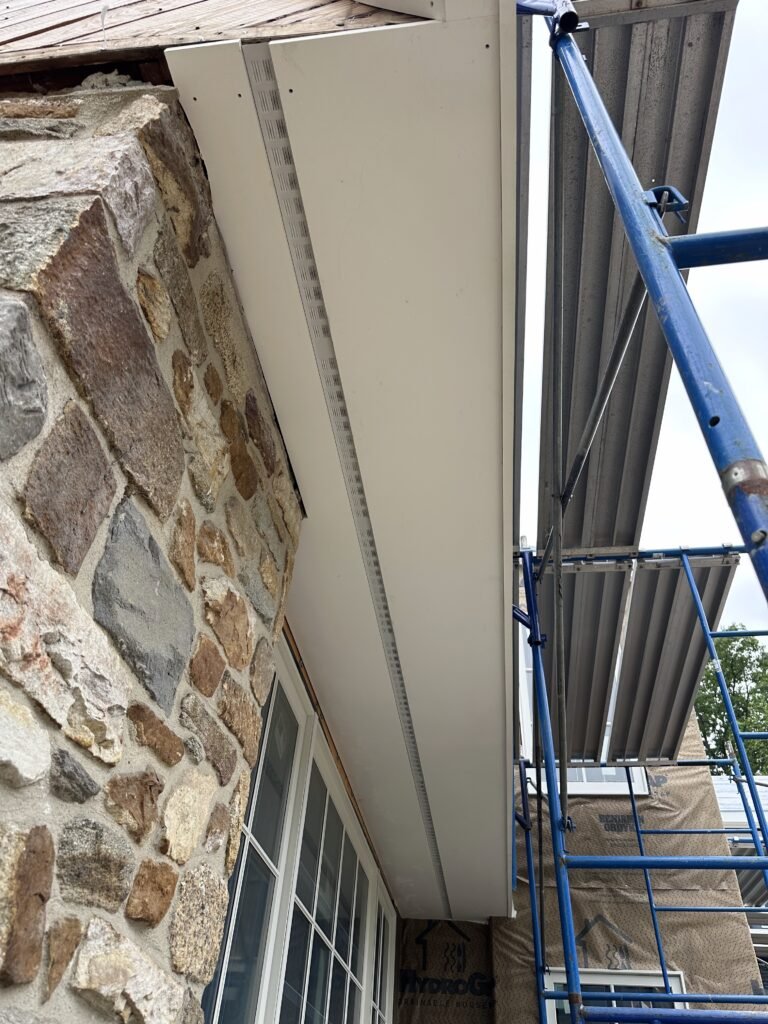
Fixing the eave for good
When the eave is failing, the lasting solution is usually to replace the fascia, soffit, and frieze together in low-maintenance materials like cellular PVC and vented aluminum, so the whole assembly stops rotting and stops needing paint. The moisture management behind it matters, and the research at Building Science Corporation explains how water moves at the eave. This work is part of our AZEK trim and aluminum service, and our guides on rotted fascia repair and soffit ventilation go deeper on each part.
The short version
The difference between fascia, soffit, and frieze board is simple once you picture the eave: the fascia is the vertical board at the roof edge that holds the gutters, the soffit is the underside panel you see looking up under the overhang, and the frieze board is the trim where the wall meets the soffit. They work as one system, they fail together when water gets in, and the lasting fix is to replace them together in low-maintenance materials.
Seeing rot or peeling paint at your roofline? We will sort out which part it is and fix the whole eave.