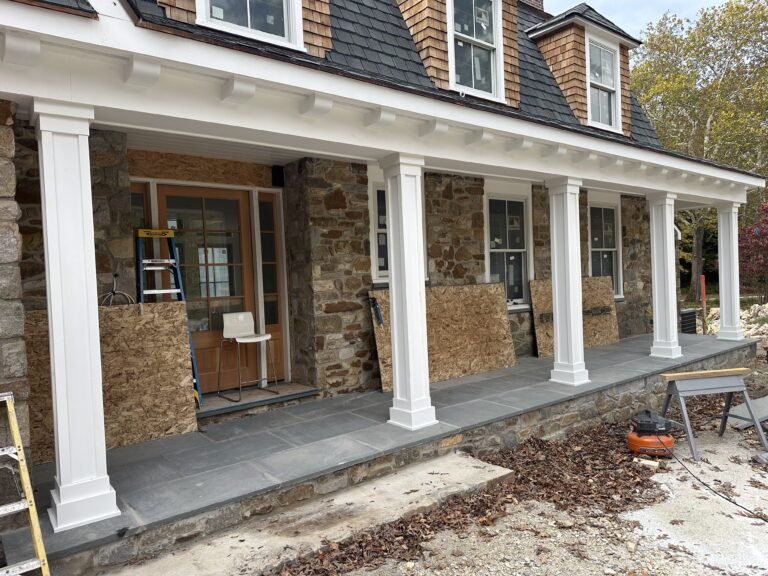

Permits are the part of renovating that homeowners most want to skip, and skipping them is one of the costliest gambles you can take. The honest answer to the question do I need a permit for interior renovation in Lancaster County is: it depends on what you are doing. Cosmetic work usually does not require one. Anything that touches structure, electrical, plumbing, or the home’s safety systems usually does. Knowing where that line falls protects you at resale, keeps your insurance valid, and most importantly keeps the work safe. Guessing wrong cuts the other way.
D&E Mako Renovation pulls permits and works through inspections for homeowners across Lancaster County, in Ephrata, Lititz, Manheim, and the surrounding municipalities. This guide explains what typically triggers a permit, what usually does not, why local rules vary, and what actually happens if you skip the process.
What this guide covers
- What interior work typically requires a permit
- What cosmetic work usually does not
- Why permit rules vary between municipalities
- What happens if you skip the permit
- How a contractor handles permitting for you
Do I need a permit for interior renovation in Lancaster County?
The simplest way to think about it is by what the work touches. If you are changing structure, systems, or safety, expect a permit. If you are changing only surfaces, usually not.
Work that typically requires a permit
Permits are generally required for structural changes like removing or altering walls, for electrical work such as new circuits or panel changes, for plumbing modifications like moving fixtures or running new lines, and for anything affecting egress, like changing or adding windows for bedroom escape. Converting a space to a new use, finishing a basement into living space, or any work that alters the home’s safety systems falls into permit territory. These rules exist because this is the work that, done wrong, can hurt someone.
Work that usually does not
Purely cosmetic updates typically do not need a permit. Painting, installing flooring over an existing subfloor, replacing trim, hanging cabinets, swapping a fixture for one in the same location, and similar surface-level work generally falls outside permit requirements. The key word is cosmetic. The moment you move a wall, a wire, or a pipe, you have likely crossed the line.
Worth knowing: When you are unsure, assume a permit is needed and confirm with the municipality. It is far easier to ask first than to unwind unpermitted work later.
Why the rules vary and what code governs them
One of the most confusing things for homeowners is that the answer can differ depending on exactly where they live.
Municipal variation
Lancaster County is made up of many boroughs and townships, and while they build on the same statewide framework, local administration and specific requirements can vary. What one municipality treats as minor, another may want documented. This is why a blanket answer never fully works, and why local knowledge matters. A contractor who works across these municipalities knows where to check and how each office operates.
The code behind it
Pennsylvania construction follows the codes published by the International Code Council, which set the standards for structural, electrical, plumbing, and life-safety work. Permits and inspections are how those standards get verified on your project. Understanding that framework is part of why our interior finishing service includes handling the permitting process, not leaving it on you.
What happens if you skip the permit
Plenty of work gets done without permits. The problem is that the consequences show up later, often at the worst possible time.
Consequence 01
Problems at resale
Unpermitted work surfaces during a sale. Buyers, inspectors, and lenders ask about it, and you can be forced to retroactively permit, open up finished work for inspection, or even undo it. It can stall or sink a sale at the finish line.
Consequence 02
Insurance complications
If unpermitted work contributes to a loss, a fire from bad wiring, for example, your insurer may dispute the claim. The savings from skipping a permit vanish against a denied claim.
Consequence 03
Safety risk
The deepest reason is safety. Permits and inspections exist to catch dangerous mistakes in structural, electrical, and plumbing work before they become hazards to the people living there. Skipping them removes that safety check entirely.
Permitting is straightforward when a contractor handles it, and it is part of how we run larger jobs, including the structural and commercial work covered in our guide on what to ask before a commercial renovation. Avoiding permit trouble is also one of the issues in our list of common interior renovation mistakes.
Worth knowing: A contractor who suggests skipping permits to save time or money is telling you something important about how they work. Reputable builders pull permits as a matter of course, because they stand behind the result.
Where D&E Mako Renovation works across Lancaster County
Lancaster County service area
- Ephrata, PA — our home base, working through local permitting regularly
- Lititz, PA — borough projects requiring proper permits and inspections
- Manheim, PA — homes with structural or system changes that need documentation
- New Holland, PA — established neighborhoods renovating to code
- Akron, PA — borough homes where local rules apply
- Denver, PA — a mix of municipalities with their own requirements
If your project is outside these areas, get in touch through our contact page and we will let you know whether it falls within our range.
The short version on renovation permits
The answer to do I need a permit for interior renovation in Lancaster County comes down to what the work touches. Structural, electrical, plumbing, and safety-related changes generally need a permit. Purely cosmetic updates generally do not. Because rules vary by municipality, the safe move when you are unsure is to confirm before you start.
Skipping permits to save a little time creates much bigger problems at resale, with insurance, and most of all with safety. The good news is that a contractor who knows the local offices makes the whole process painless, so it never has to be your headache in the first place.
Not sure if your project needs a permit? Ask us. We will tell you and handle it if it does.