
Every winter it is the same story: snow on the roof, icicles hanging off the eaves, and a stain creeping across a ceiling inside. That is an ice dam at work, and older homes are especially prone to them. Learning how to stop ice dams on a Pennsylvania home means understanding that the icicles are a symptom, not the disease. The real fix happens in the attic and at the eaves, not on the roof surface where the ice appears.
What this guide covers
- What actually causes ice dams
- Why older homes are more prone to them
- The real fixes that stop them
- What not to waste money on
What causes an ice dam
An ice dam forms from a simple chain of events. Warm air from the living space leaks into the attic and warms the underside of the roof. That warmth melts the snow on the upper roof, and the meltwater runs down to the cold eaves, which hang out beyond the heated space. There it refreezes into a ridge of ice, a dam, that backs up the next round of meltwater under the shingles and into the house.
Worth knowing: The icicles you see are the symptom. The cause is warm air escaping into a poorly insulated, poorly ventilated attic. Fix that, and the dams stop forming.
Why older homes are more prone
Older Pennsylvania homes tend to have less attic insulation, more air leaks around fixtures and chimneys, and weaker attic ventilation than modern construction. All three feed the ice-dam cycle: more heat reaches the roof, and less cold air flushes it away. That is why the same house can get worse dams as insulation settles and ages.
The real fixes
Fix 01
Seal attic air leaks
Stopping warm air from escaping into the attic is the single most effective step. Sealing gaps around lights, fans, chimneys, and the attic hatch keeps the roof deck cold, which is exactly what you want. The building-science research at Building Science Corporation is consistent on this being the root fix.
Fix 02
Add insulation
More attic insulation keeps the heat in the living space where it belongs, so less of it reaches the roof. Air sealing and insulation work together, and doing both is what breaks the cycle.
Fix 03
Restore attic ventilation
Balanced intake at the soffits and exhaust at the ridge keeps cold air moving under the roof deck, flushing away any heat that does get through. On many older homes the soffit vents are blocked or missing, which is a common and fixable culprit. Our guide on soffit ventilation and attic airflow covers this in detail.
What not to rely on
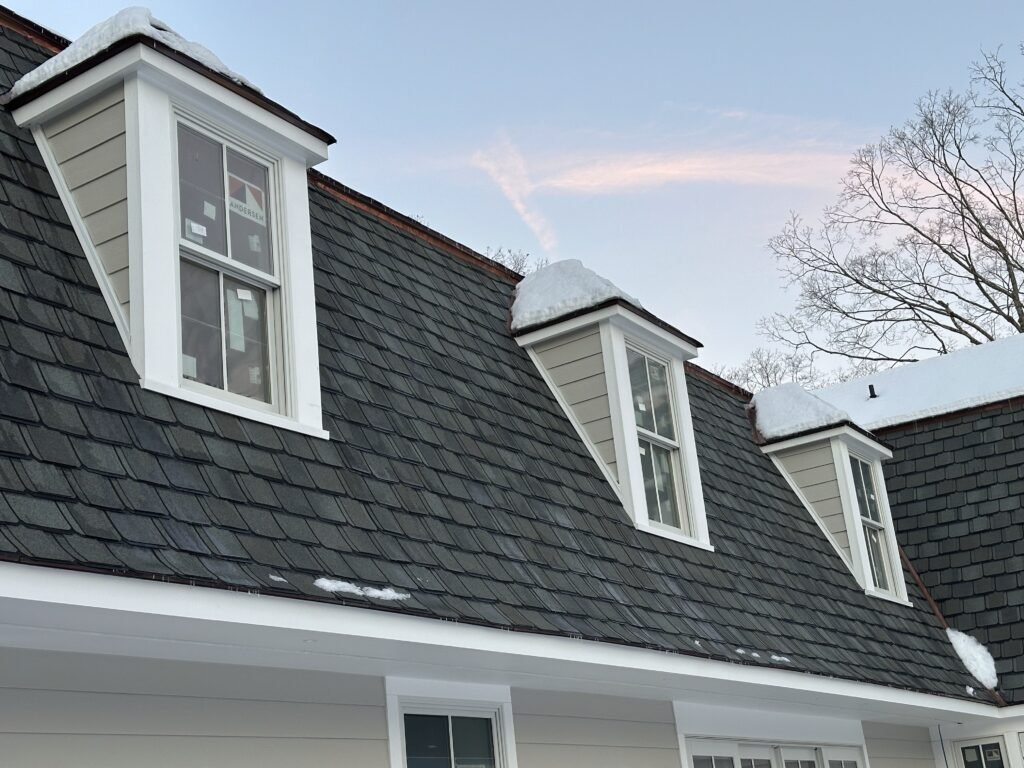
Chipping ice off the roof each winter, running heat cables, or raking snow are all temporary at best and can damage the roof at worst. They treat the symptom while the warm-attic cause keeps producing new dams every storm. The lasting fix is always the attic and the eaves. Recurring ice dams also often show up alongside the fascia and soffit damage covered in our guide on rotted fascia repair, since the same water works on the eaves.
The short version
How do you stop ice dams on an older Pennsylvania home? Keep the roof deck cold. That means sealing the warm-air leaks into the attic, adding insulation, and restoring balanced soffit-to-ridge ventilation, with the blocked soffit vents on older homes being a frequent, fixable cause. Heat cables and roof raking only chase the symptom. Fix the attic and the eaves, and the dams, the icicles, and the ceiling stains stop coming back.
Tired of ice dams and ceiling stains every winter? Let us find and fix the real cause.