
There is a good chance the best floor in your house is hiding under old carpet. Hardwood floor refinishing in Lancaster County PA is one of the highest-return, lowest-disruption improvements an older home can get, because it restores something you already own rather than replacing it. The solid oak and pine floors in the region’s older homes were built to be sanded and refinished many times over. Bring them back and a tired room looks new, the whole house feels warmer, and you have added real value for a fraction of what new flooring costs.
D&E Mako Renovation refinishes and restores floors for homeowners across Lancaster County, in Ephrata, Lititz, New Holland, and the surrounding towns. This guide covers when a floor can be refinished, how the process works, and what separates a great refinish from a blotchy one.
What this guide covers
- How to tell if your floor can be refinished
- The difference between screening and full sanding
- The steps in a proper refinish
- Why dust control and finish choice matter
- When to refinish versus replace
Can your floor be refinished? The hardwood floor refinishing in Lancaster County PA question
Not every floor is a candidate, but far more are than people assume. The key is how much solid wood is left above the tongue and groove.
What makes a floor refinishable
Solid hardwood can be sanded and refinished several times over its life, so most older Lancaster County floors have plenty of material left. Even floors that look rough, with old finish, stains, and scratches, are usually restorable. The floors that cannot be refinished are thin engineered floors with a wear layer that has already been sanded through, or solid boards so worn or damaged that sanding would go below the tongue. A quick inspection tells us which you have.
Watch: How to Refinish Hardwood Floors
Source: Lowe’s Home Improvement on YouTube, refinishing hardwood floors.
Worth knowing: Before you budget for new flooring, pull back a corner of the carpet. In older Lancaster County homes there is often solid hardwood underneath that refinishes for far less than replacement.
Screening versus full sanding
There are two levels of refinishing, and choosing the right one depends on the condition of the existing finish.
Option 01
Screening and recoating
If the floor is structurally fine and only the top finish is worn or dull, a screen and recoat lightly abrades the existing finish and adds a fresh coat. It is faster, cheaper, and far less dusty than a full sand, and it works well for floors with light wear and no deep damage or color change needed.
Option 02
Full sanding
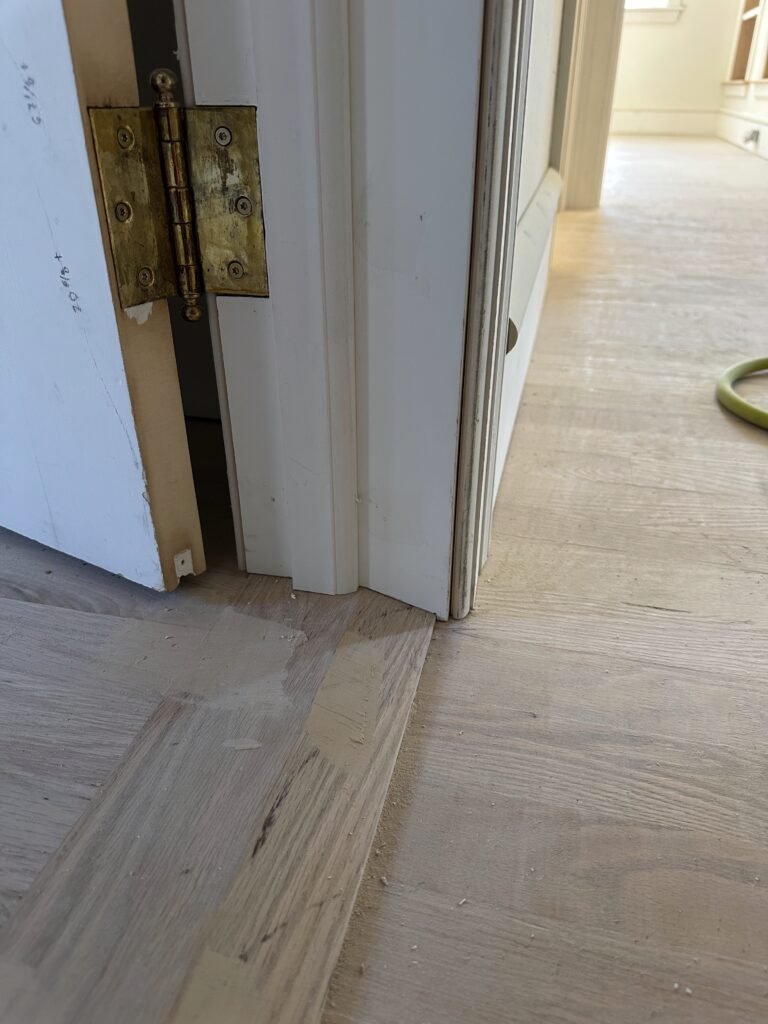
When the finish is heavily worn, the floor is stained or damaged, or you want to change the color, a full sand removes the old finish and a thin layer of wood down to fresh material. This is the complete restoration, and it is the only way to even out deep scratches or apply a new stain color.
What a proper refinish involves
The result depends on technique. A rushed refinish leaves swirl marks, uneven stain, and drips. A careful one looks flawless.
The steps that matter
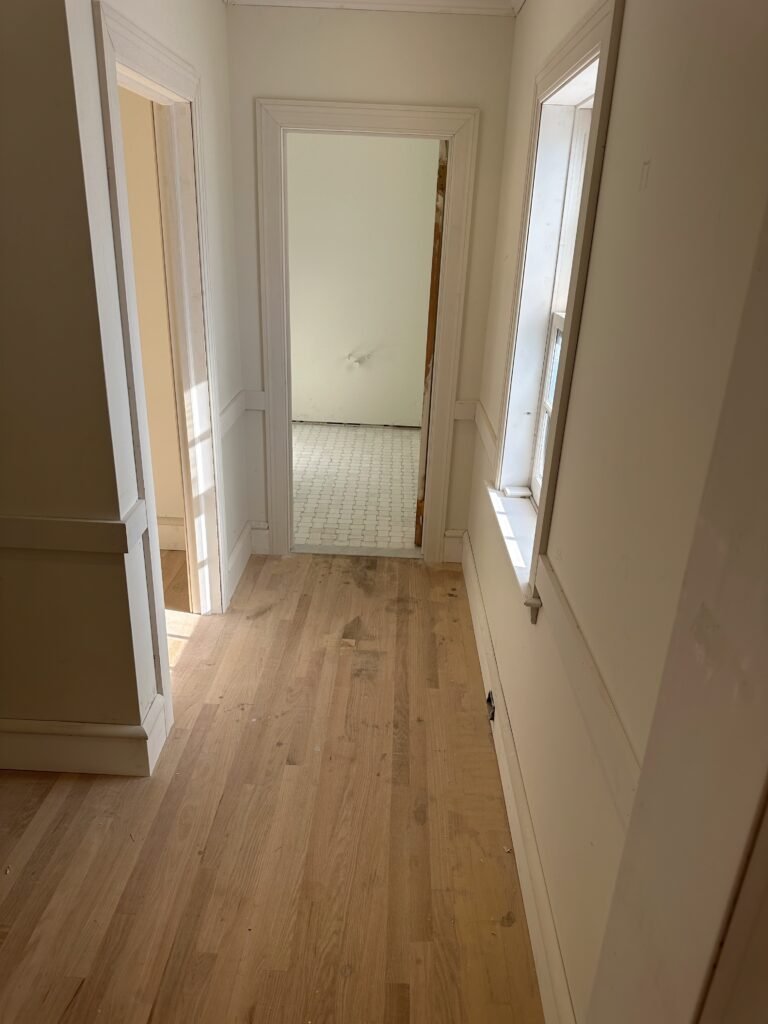
A proper refinish means progressive sanding through finer grits so the surface is smooth and even, careful edge and corner work where big sanders cannot reach, thorough dust removal between steps, and even application of stain and finish in the right conditions. Blotchy stain almost always comes from uneven sanding or skipped prep, so the unglamorous steps are the ones that make the floor beautiful. This detailed restoration is part of our interior finishing service, and it often accompanies the trim and detail work covered in our guide on trim versus finish carpentry.
Dust, finish, and timing
Modern sanding equipment with dust containment keeps the mess far lower than the old days, though some dust is unavoidable. The finish choice, from oil-based to water-based, affects color, sheen, dry time, and how long before you can walk on the floor and move furniture back. Because the floor needs to cure, plan for the room to be out of use for a few days. Refinishing is a common part of restoring older homes, like the work in our guides on 1920s farmhouse restoration and renovating a 1950s ranch. For understanding professional finishing standards, NARI is a helpful reference.
Worth knowing: The finish coat gets all the attention, but the sanding underneath is what makes or breaks the result. Even sanding is the difference between a floor that glows and one that shows every swirl.
Where D&E Mako Renovation works across Lancaster County
Lancaster County service area
- Ephrata, PA — our home base, restoring original floors in older homes
- Lititz, PA — historic homes with solid hardwood worth reviving
- New Holland, PA — established homes uncovering floors under old carpet
- Manheim, PA — houses refreshing worn or dated floors
- Akron, PA — borough homes restoring original wood
- Mount Joy, PA — homes changing floor color with a full sand
If your project is outside these areas, get in touch through our contact page and we will let you know whether it falls within our range.
The short version on refinishing floors
Hardwood floor refinishing in Lancaster County PA is one of the best-value improvements an older home can get, because it restores solid wood you already own. Most older floors have plenty of material left to sand, so before you replace, find out what is under the carpet.
Choose a screen and recoat for light wear or a full sand for damage and color changes, and insist on careful, even sanding, since that is where the quality lives. Done right, a tired floor comes back looking better than new flooring, for a fraction of the cost.
Curious what is under your carpet? Let us take a look and bring your floors back.