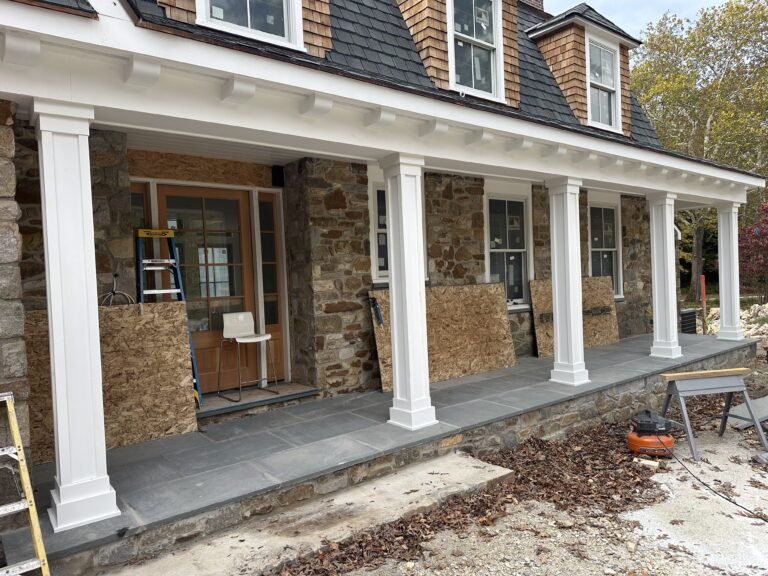

Every summer it returns: a door that closed cleanly all winter now drags, catches at the top corner, or refuses to latch without a shove. If you have wondered why interior doors stick in summer and pop back to normal in winter, the answer is usually humidity, not a broken door. Understanding what is happening tells you whether you can plane a little off the edge or whether the sticking is pointing at something bigger.
What this guide covers
- Why humidity makes doors stick in summer
- When it is just the door and when it is the frame
- How to fix a seasonal sticking door
- When sticking points to a bigger issue
Why summer humidity is usually the cause
Wood is hygroscopic, which means it absorbs moisture from the air. In Pennsylvania’s humid summers, both the door and its wood frame take on moisture and swell slightly. A door that had a comfortable gap in dry winter air can swell just enough to rub the jamb or the top of the opening, and then it drags. When the air dries out in winter, the wood shrinks back and the door swings free again. That seasonal cycle is the classic signature of a humidity-related sticking door.
Worth knowing: If a door sticks in summer and frees up in winter, that is humidity. If it sticks the same all year, or got suddenly worse, the cause is more likely the frame or the house moving.
Is it the door or the frame?
Where the door binds tells you a lot. If it rubs along the top or the latch-side edge only in humid weather, the door itself has swelled. If the door and frame no longer line up squarely, if the gap is uneven top to bottom, or if it started after a season of new cracks and sticking windows too, the opening itself may be shifting with the house rather than just swelling.
How to fix a seasonal sticking door
Step 01
Find exactly where it binds
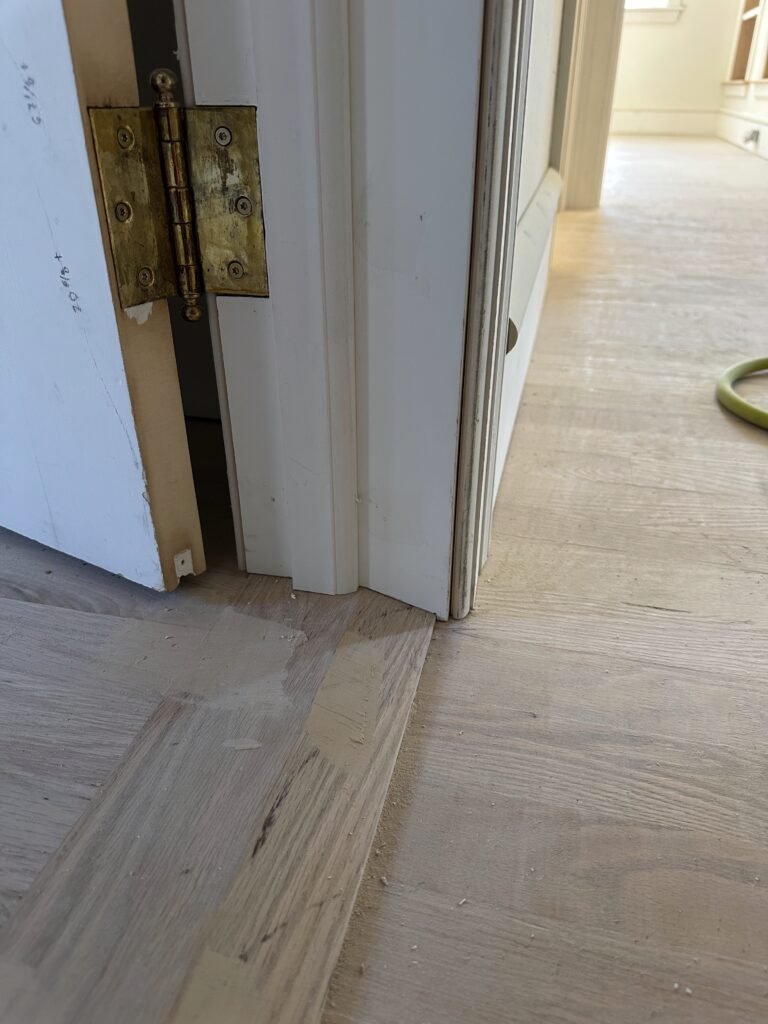
Close the door slowly and watch, or slip a piece of paper around the edge to locate the tight spot. Fix the real contact point rather than guessing.
Step 02
Tighten the hinges first
Loose or worn hinge screws let a door sag and rub. Snugging the screws, or replacing a stripped one with a longer screw into solid framing, often solves the problem without touching the door.
Step 03
Plane sparingly, if needed
If the door still rubs, a light plane or sand at the exact tight spot restores clearance. Take off only a little, because wood that is over-planed in summer leaves a gap in winter. Seal any bare wood so it does not absorb more moisture.
When sticking means something bigger
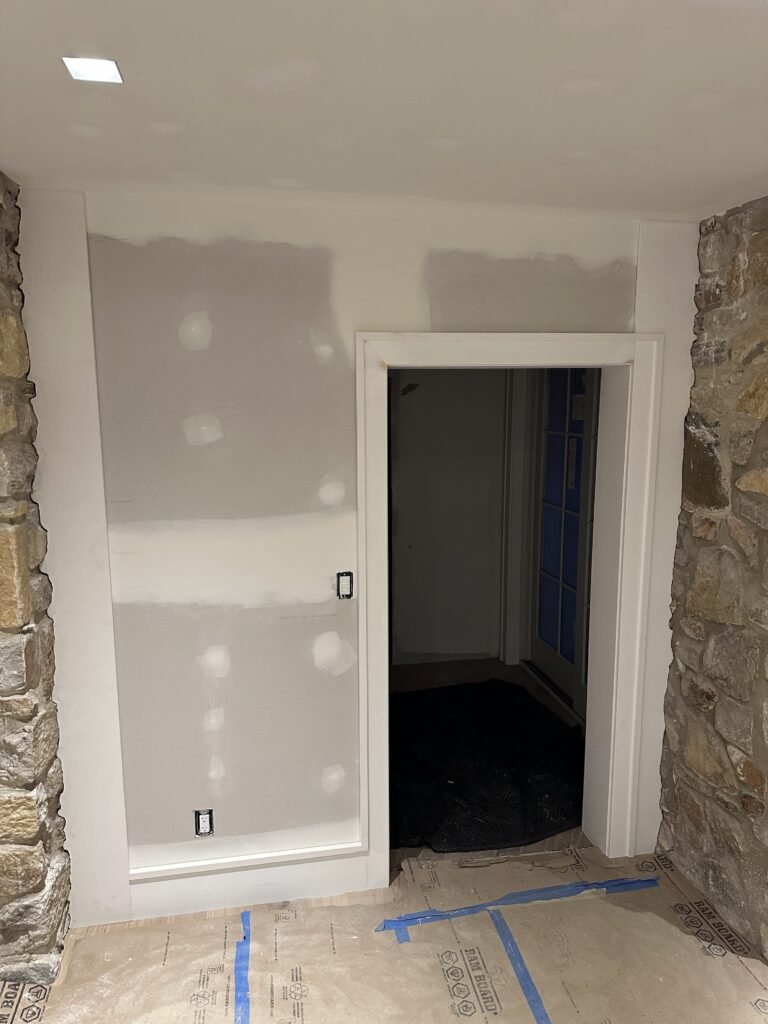
Doors that stick year-round, worsen steadily, or appear alongside new drywall cracks and uneven floors can be a sign the house is settling or the framing is moving, not just the wood swelling. In that case, planing the door only chases the symptom. Our guide on why drywall cracks in older homes covers the patterns to watch, and the moisture background at Building Science Corporation explains how humidity moves through a house. Rehanging doors and correcting frames is part of our interior finishing service.
The short version
Why do interior doors stick in summer? Because wood doors and frames absorb humidity and swell in the humid months, then shrink back and free up in dry winter air. Find the exact binding point, tighten the hinges first, and plane sparingly only if needed, sealing any bare wood. If a door sticks all year or keeps getting worse alongside cracks and uneven floors, the house may be moving, and that is worth a closer look rather than another pass with the plane.
Doors sticking every summer, or a whole house full of them? Let us sort out door swell from house movement.