
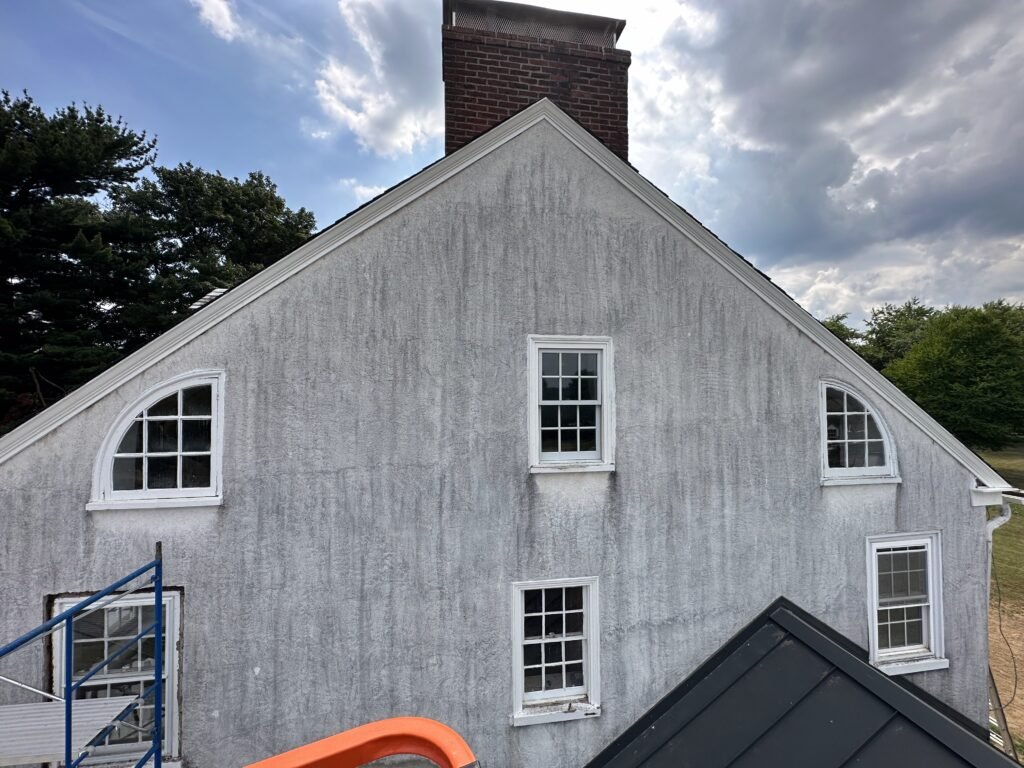
Plenty of older Pennsylvania homes wear aging stucco that has cracked, stained, or started letting water in, and owners understandably ask whether they can just cover it: can you install fiber cement siding over stucco, or does the stucco have to come off first? It is a reasonable question with an important answer, because stucco is not like old siding, and getting this wrong traps moisture in a wall that is already prone to it.
What this guide covers
- Whether fiber cement can go over stucco
- Why the wall behind the stucco is the real question
- What a proper stucco-to-siding conversion involves
- How to decide for your home
The honest answer: it depends on the wall
Technically, siding can be attached over stucco in some situations by furring out and creating a new fastening and drainage plane. But the far more important question is what condition the wall behind the stucco is in. Failing stucco often means water has already been getting into the wall, and covering that up without addressing it seals the moisture inside, where it keeps doing damage out of sight. On most older homes, the responsible path is to investigate the wall, not simply hide it.
Worth knowing: Stucco problems are usually water problems. Covering failing stucco without checking the wall behind it can trap the very moisture that caused the failure.
Why the wall behind the stucco matters most
Stucco is a hard, brittle cladding, and when it cracks, water finds those cracks and gets behind it. Over time that can rot sheathing and framing while the surface still looks solid from the street. Before deciding how to reside, the wall needs to be evaluated for hidden moisture damage and for whether there is a functioning water-resistive barrier behind the stucco. The building-envelope research at Building Science Corporation is clear that a working drainage and barrier system is what keeps a wall dry, and that is exactly what old cracked stucco often lacks.
What a proper conversion involves
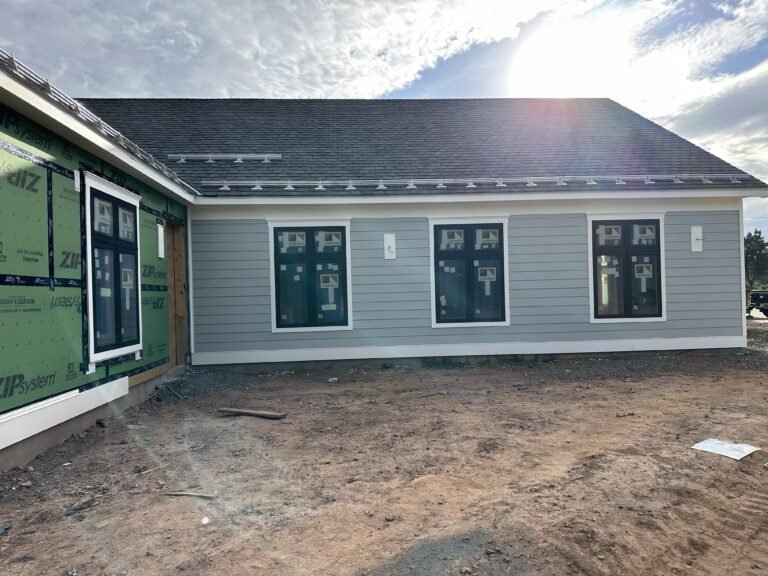
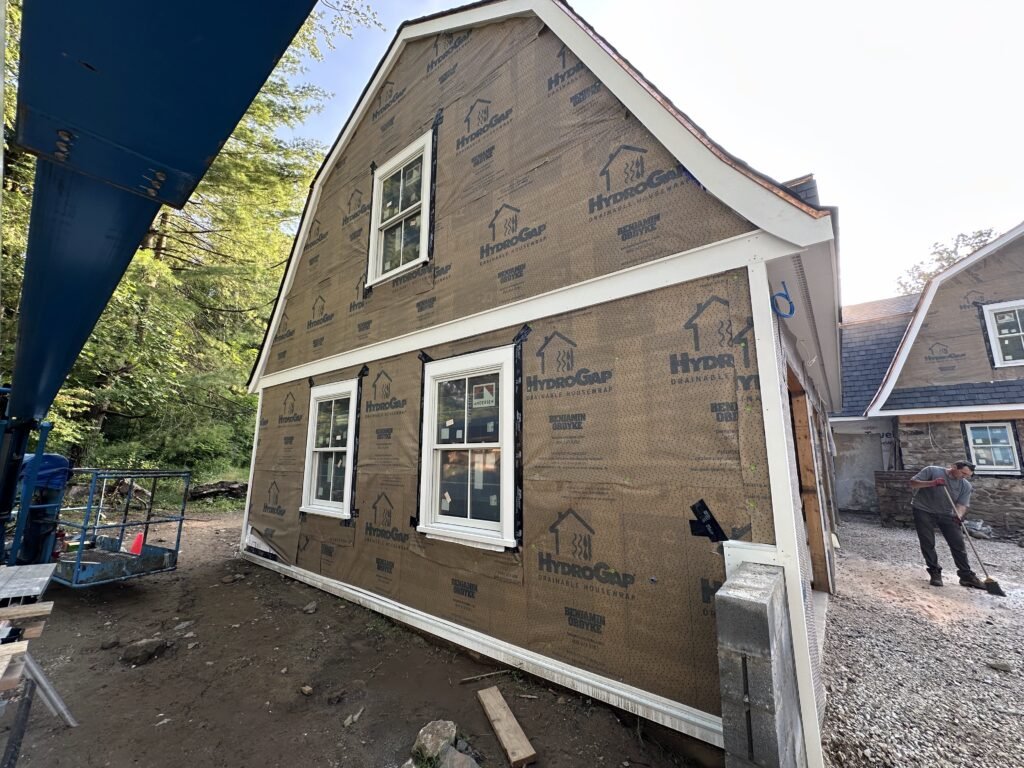
On most homes we would rather do it right than fast. That usually means removing the failing stucco, inspecting and repairing the sheathing, installing a proper drainable housewrap and flashing, and then installing fiber cement over a wall that is finally set up to stay dry. The result is not just a new look; it is a sound wall with a real moisture-management system behind durable, low-maintenance siding. This is the same principle behind our guide on removing old siding before new siding, and it is core to our siding installation and repair service. If you are choosing a siding material, our comparison of James Hardie versus LP SmartSide helps.
The short version
Can you install fiber cement siding over existing stucco? Sometimes, mechanically, but that is the wrong question to lead with. Failing stucco usually means water has been getting into the wall, so the real question is what condition the wall behind it is in. On most older homes, removing the stucco, repairing the wall, and installing a proper moisture barrier before new siding is the path that actually solves the problem instead of hiding it. Start with the wall, not the surface.
Have cracked or failing stucco? Let us check the wall behind it before you cover anything.