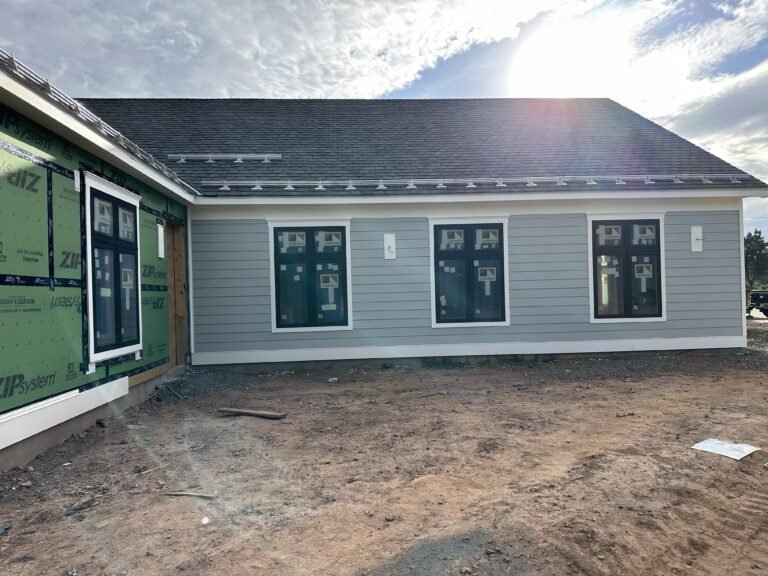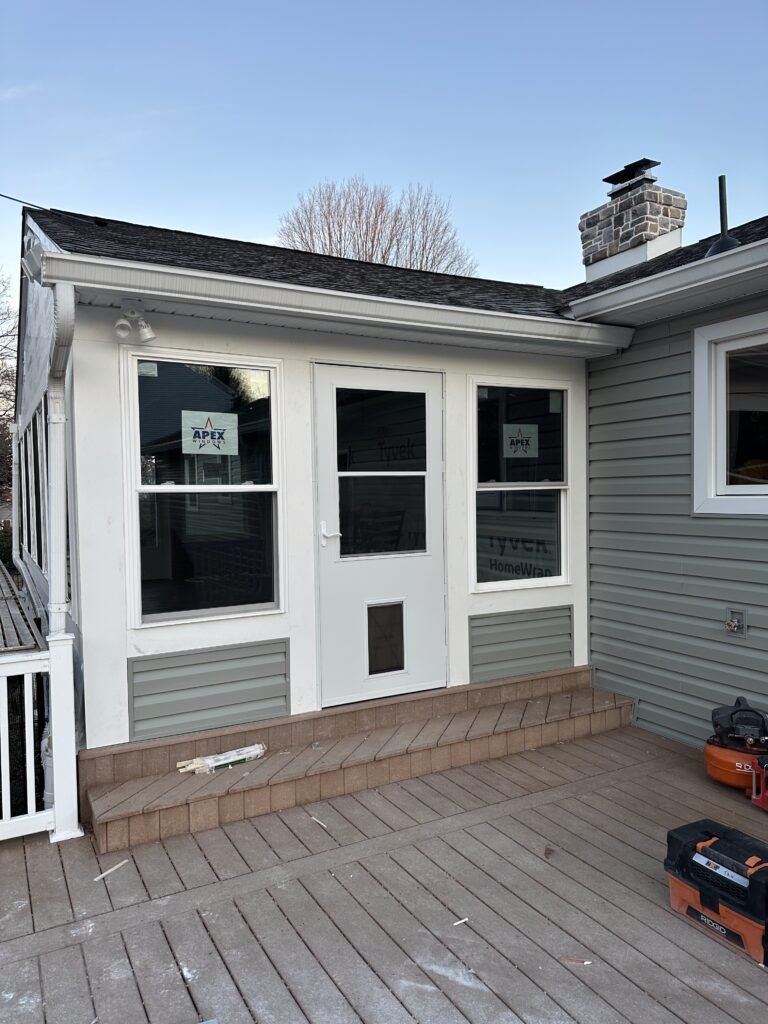

Two siding products dominate the conversation when homeowners want something tougher than vinyl, and they take fundamentally different approaches. Comparing James Hardie vs LP SmartSide for Pennsylvania weather comes down to fiber cement versus engineered wood, and both have earned their reputations here. They handle our freeze-thaw winters, humid summers, and wind-driven rain well, but they differ in weight, installation, maintenance, and feel. There is no universal winner. There is a better fit for your home, your priorities, and your budget for upkeep down the road.
D&E Mako Renovation installs both across Lancaster County, on homes from Ephrata to Lititz to New Holland. This guide is an honest, installer’s-eye comparison: what each product is made of, how each behaves in our climate, and the real trade-offs that should drive your decision.
What this guide covers
- What James Hardie and LP SmartSide are actually made of
- How each material performs in Pennsylvania weather
- The differences in weight and installation
- Long-term maintenance for each
- How to decide which fits your home
James Hardie vs LP SmartSide for Pennsylvania weather: the materials
The whole comparison starts with what these products are, because their composition drives everything else.
Fiber cement, the James Hardie approach
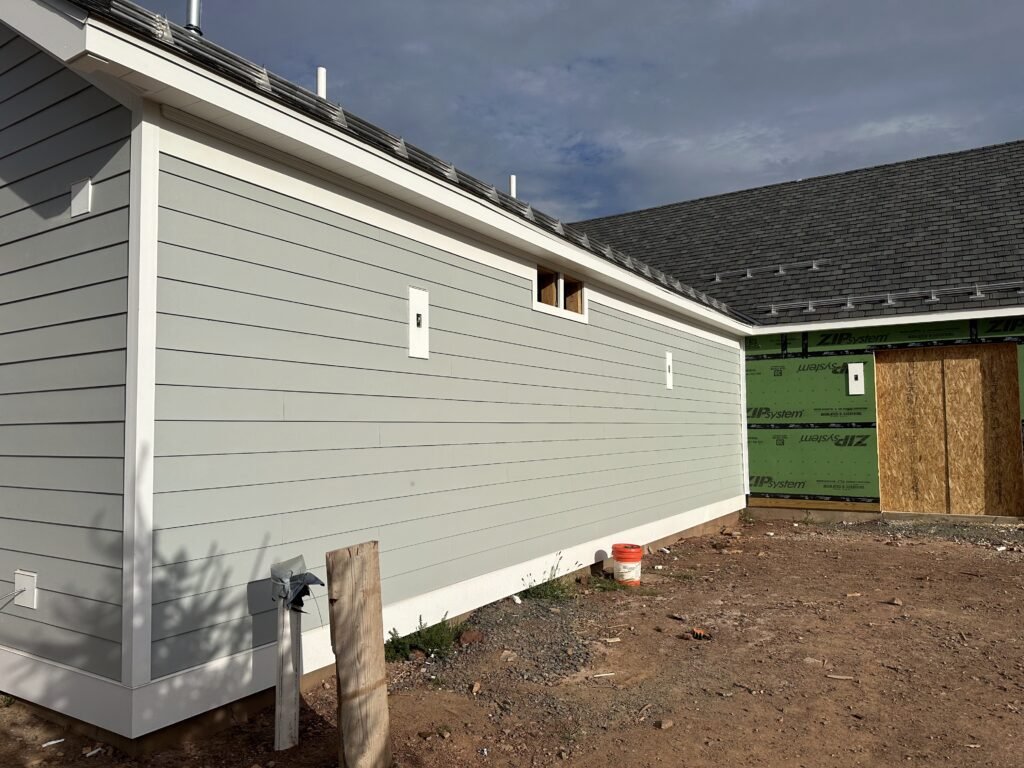
James Hardie siding is fiber cement, a blend of cement, sand, and cellulose fibers. It is essentially a masonry-based product, which makes it extremely resistant to rot, insects, and fire. It does not burn, it does not feed termites, and moisture does not break it down the way it does wood. You can learn more directly from James Hardie. The trade is that it is heavy, hard, and requires specific handling and tools.
Engineered wood, the LP SmartSide approach
LP SmartSide is engineered wood, made from wood strands and fibers bound with resins and treated for moisture and insect resistance. It keeps the warmth and workability of wood while being far more durable than traditional wood siding. It is lighter than fiber cement and easier to cut and handle, which affects how it installs. The treatment is what allows an engineered wood product to hold up in a climate as wet as ours.
Worth knowing: Both products perform well in Pennsylvania when installed correctly. The most common failures we see with either one trace back to bad installation, not the material itself.
How each performs in our climate
Pennsylvania weather is hard on siding. Here is how the two stack up across the conditions that matter here.
Point 01
Moisture and freeze-thaw
Fiber cement is highly moisture-stable and shrugs off freeze-thaw cycles because it is cement-based. Engineered wood resists moisture through its treatment and resins and performs well, but it is still a wood-based product, so proper sealing of cut edges and good installation details matter more for keeping water out.
Point 02
Impact and durability
Fiber cement is hard and rigid, excellent against weather but more prone to chipping or cracking on hard impact. Engineered wood has more give, which makes it more forgiving of impacts like hail or a stray ball, though it relies on its coating staying intact.
Point 03
Fire and pests
Fiber cement is noncombustible and offers nothing for insects to eat, a clear edge. Engineered wood is treated against pests and rot and performs well, but as a wood-based product it does not match the inherent fire and insect resistance of cement.
Installation, maintenance, and choosing
The differences that affect your day-to-day living come down to how each installs and what it asks of you over the years.
Weight and installation
Fiber cement is significantly heavier and harder, which means more labor, specialized cutting to control dust, and careful handling. Engineered wood is lighter and cuts more like lumber, which can make for a faster install. Both demand correct fastening, flashing, and clearances to perform, which is why we treat installation as the real variable. Either product is part of our siding installation and repair service.
Long-term maintenance
Both hold paint well and need far less upkeep than old wood or aluminum, but both will eventually need repainting, and keeping caulking and sealed edges maintained extends the life of either. If you are deciding partly because your current siding is failing, our guides on when siding needs removal versus repair and why siding peels and how a contractor fixes it are worth a read before you commit.
Worth knowing: Pick based on priorities. Want maximum fire and insect resistance and do not mind the weight? Fiber cement. Want a warmer, lighter, more workable product that still far outlasts old wood? Engineered wood. Both are solid choices here.
Where D&E Mako Renovation works across Lancaster County
Lancaster County service area
- Ephrata, PA — our home base, installing both products across the township
- Lititz, PA — homes upgrading from worn aluminum or wood siding
- New Holland, PA — established neighborhoods choosing durable cladding
- Manheim, PA — homes weighing fiber cement against engineered wood
- Denver, PA — a mix of properties residing for the long term
- Akron, PA — borough homes wanting low-maintenance exteriors
If your project is outside these areas, get in touch through our contact page and we will let you know whether it falls within our range.
The short version on Hardie versus SmartSide
The James Hardie vs LP SmartSide for Pennsylvania weather decision is a choice between fiber cement and engineered wood, and both perform well here. Fiber cement wins on fire and insect resistance and moisture stability, at the cost of weight and workability. Engineered wood wins on lighter, warmer, easier handling, while relying on its treatment and good installation to keep moisture out.
Neither is wrong. The right answer depends on what you value most and how the product gets installed. Get the installation right, and either one will outlast and outperform whatever is on your house today.
Trying to choose between Hardie and SmartSide? We will walk through both for your specific home.