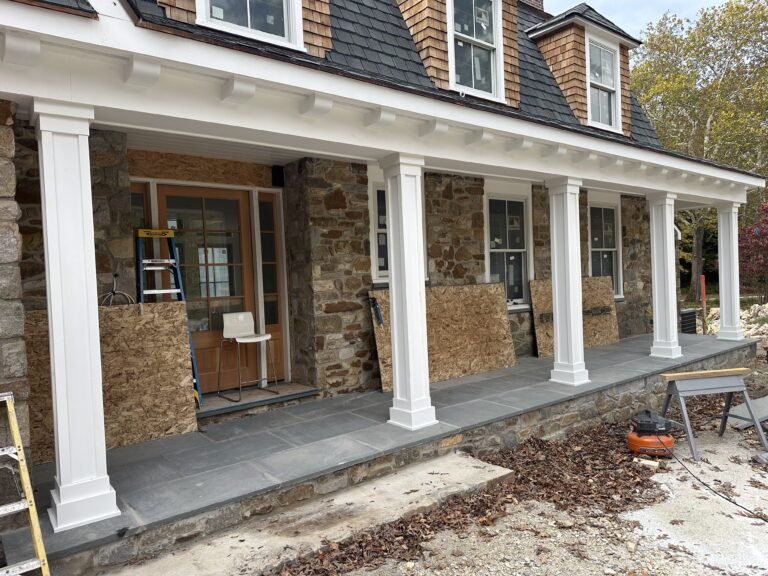

Aluminum trim takes more abuse than almost any other exterior detail on a house. It rides along the roofline, wraps your windows, and runs the rakes where sun, wind, and freeze-thaw cycles hit hardest. By the time most owners start pricing out warped exterior aluminum trim replacement in Chester County, the trouble has been building for years. The finish chalks under your fingertips. A run of fascia cover buckles in August heat. A seam opens just enough for water to slip behind it.
D&E Mako Renovation handles these exteriors across Chester County and into Lancaster County, from West Chester and Malvern out to Exton and Downingtown. The housing stock here is all over the map, from 1960s aluminum-clad ranches to newer builds where the original trim was installed fast and cheap. The failures look different on each, but the questions are the same. Is this repairable? Can you match it? Or is it time to pull it and start over?

What this guide covers
- How to tell warping, panel damage, and finish failure apart
- Why chalking aluminum is not the same problem as peeling paint
- What it actually takes to match aluminum trim color to existing siding
- When repainting buys you years and when it just hides the issue
- The point where replacement costs less than another round of repair
- How often aluminum trim should be repainted in a Pennsylvania climate
Reading the damage before you decide anything
Aluminum does not rot, and that fools people. They assume aluminum trim is permanent because it is metal. The metal usually is fine. The coating on it, the fasteners holding it, and the wood hiding behind it are what fail. So the first job is figuring out which layer has the problem, because each one points to a different fix.
Surface problems versus structural problems
Chalking and faded paint are surface problems. The aluminum underneath is sound, the finish has simply oxidized after a couple of decades of UV exposure. Warping, oil-canning, dents, and lifted seams are structural. Those mean the panel has moved, been struck, or was never fastened correctly. You can paint over a surface problem and get real results. You cannot paint a warp flat.
What the wood behind it is telling you
Aluminum trim is a cover. Behind your fascia cover there is a real wood fascia board, and behind window wraps there is wood casing. When that wood gets wet and stays wet, it swells and pushes the aluminum out of shape. So a warp is often not an aluminum problem at all. It is a moisture problem wearing an aluminum mask. If you see warping near a gutter seam or a valley, check the wood before you blame the metal.
Worth knowing: If a magnet sticks, it is not aluminum, it is steel trim, and the failure mode is rust rather than chalking. The repair path changes completely, so test before you plan.
The five ways aluminum trim fails in Pennsylvania
Almost every call we get about exterior aluminum falls into one of five buckets. Knowing which one you are looking at tells you whether a Saturday with a brush solves it or whether you are looking at warped exterior aluminum trim replacement in Chester County instead.
Failure 01
Warping and oil-canning
The panel waves, bulges, or looks rippled in raking light. This comes from heat expansion with no room to move, from wet wood swelling underneath, or from fasteners driven too tight. You cannot flatten it. Once aluminum has stretched and deformed, that section gets cut out and replaced. This is the classic replacement case.
Failure 02
Dented or torn panels
Ladders, hail, falling branches, and string trimmers all leave marks. A shallow dent on a flat run is cosmetic. A tear, a crease at a corner, or a punched-through fascia cover is not, because it lets water reach the wood. Damaged sections get swapped out individually so you are not re-cladding a whole elevation over one impact.
Failure 03
Color mismatch and faded runs
Matching aluminum trim color to existing siding is its own headache. Original factory colors get discontinued, and forty years of sun shifts a color away from anything on a current chart. Sometimes the answer is repainting the whole run in a current color so it reads as one piece. Sometimes it is replacing a single panel and painting everything to unify it.
Failure 04
Chalking finish
Rub the trim and a white powder comes off on your hand. That is the painted finish breaking down. Chalking is normal aging, not damage. A wash, a proper bonding primer, and a quality exterior coat bring it back. The trick is prep, because painting over chalk without cleaning it first is the number one reason a repaint peels within a season.
Failure 05
Peeling and flaking paint
This is chalking that got ignored, or a previous paint job that skipped the primer. The coating has lost its grip on the metal. Peeling cannot be spot-fixed and feathered the way it can on wood. The whole panel gets stripped back, cleaned, primed for metal, and recoated, or it gets replaced if the underlying aluminum is also deformed.
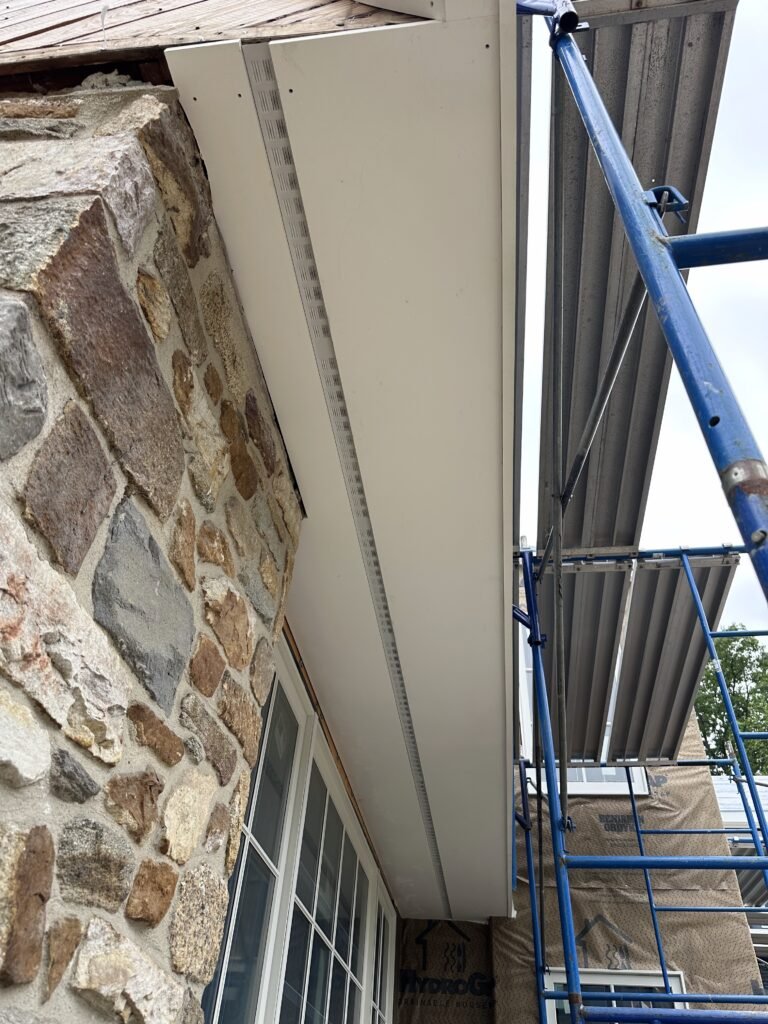
When warped exterior aluminum trim replacement in Chester County makes sense
Repair has a ceiling. Past a certain amount of damage, you are spending good money to extend the life of something that is going to fail again. Here is where we tell owners to stop patching.
The repair-versus-replace line
If the aluminum is flat, sound, and only the finish is tired, repair. Clean it, prime it for metal, repaint it, and you can get many more years out of it. If panels are warped, torn, or the wood behind them is wet, replace those sections. And if you are touching the trim anyway because the siding is coming off, that is the moment to upgrade, since the labor to access it is already being spent.
Why amateur repaints fail fast
Most failed aluminum paint jobs trace back to two skipped steps: no real cleaning and no metal-bonding primer. Aluminum is slick and it oxidizes, so house paint straight onto it has nothing to hold. Building science research on coatings and adhesion is consistent on this point, and you can read more through the Building Science Corporation resources. Prep is ninety percent of a finish that lasts.
Worth knowing: In our climate, a properly prepped and primed aluminum repaint generally holds well past a decade. A skipped-prep job can fail in a single Pennsylvania winter, which is why prep, not paint brand, is the real variable.
How often aluminum trim should be repainted in PA
There is no fixed schedule, but freeze-thaw cycles and strong southern sun age finishes faster here than in milder regions. South and west elevations chalk first. As a working rule, expect to revisit the finish roughly every ten to fifteen years, sooner on sun-blasted faces, later on shaded north sides. When you start seeing chalk on your hand, the clock has started.
If you are weighing this against a larger exterior project, our breakdown of aluminum trim installation in West Chester PA walks through what new work looks like, and our AZEK trim and aluminum service page covers the materials we install. When trim damage is tied to siding issues, our guide on whether siding needs removal versus repair helps you see the bigger picture.
Where D&E Mako Renovation works across Chester and Lancaster Counties
Chester and Lancaster County service area
- West Chester, PA — older borough homes where original aluminum trim is reaching the end of its finish life
- Malvern, PA — a mix of historic and newer construction, often with mismatched trim from past repairs
- Exton, PA — suburban builds where fascia covers and window wraps are the usual trouble spots
- Downingtown, PA — established neighborhoods with aluminum-clad eaves that warp near old gutter seams
- Ephrata, PA — our home base, where we see every era of aluminum trim across the township
- Lititz, PA — well-kept older homes where owners want repair done right rather than full replacement
If your project is outside these areas, get in touch through our contact page and we will let you know whether it falls within our range.
The short version on aluminum trim repair
Sort the problem before you spend anything. Surface failures like chalking and peeling are repairable with proper prep and a metal primer. Structural failures like warping, tears, and wet wood behind the panel point toward warped exterior aluminum trim replacement in Chester County, because no amount of paint fixes a deformed panel.
The cheapest mistake is repainting over the wrong problem. The smartest move is having someone read the damage correctly the first time, match what can be matched, replace what cannot, and prep everything so the finish actually lasts. Do that once and your trim goes back to being the part of the house you never think about.
Not sure if your trim needs paint or replacement? We will take a look and tell you straight.