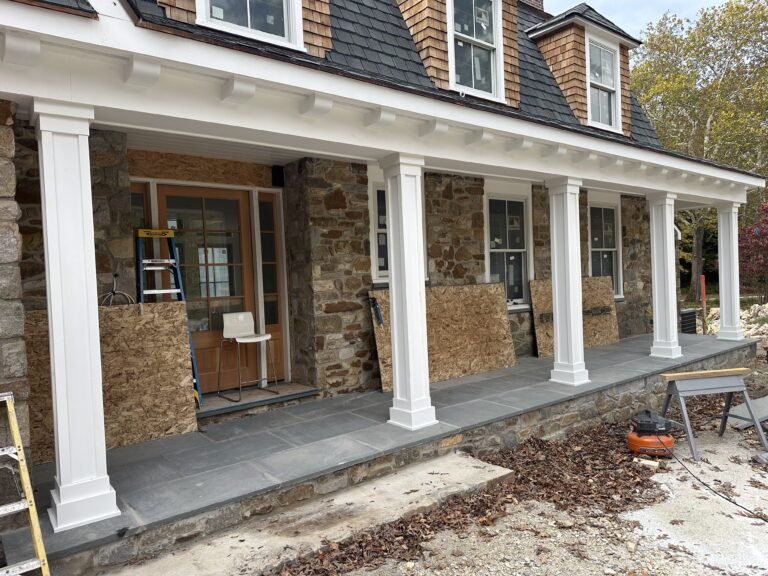

Fascia is the board that runs along your roofline, the flat trim your gutters hang on. Most people never look at it until something goes wrong. By then they usually need a rotted fascia board repair contractor in Lancaster County PA, because rot does not announce itself early. It works behind the paint, behind the gutter, and behind the aluminum cover, and it stays hidden until a section sags or a gutter starts pulling away from the house.
D&E Mako Renovation sees this constantly on older homes around Ephrata, New Holland, and Lititz, where wood fascia has been weathering for decades. The good news is that rotted fascia gives off clear signals once you know what to look for. This guide walks through how to spot it yourself, what causes it, and why a quick patch almost never holds.
What this guide covers
- The visual and physical signs of a rotted fascia board you can check yourself
- What actually causes fascia rot on Lancaster County homes
- How sagging soffit ties into fascia failure
- Why spot-patching rotted fascia is a short-term fix at best
- When repair is enough and when a section needs full replacement
Signs your fascia board is rotted
You do not need a ladder for most of this. A walk around the house with a careful eye catches the majority of fascia problems while they are still small and repairable.
What you can see from the ground
Look for paint that is bubbling, blistering, or peeling in patches along the fascia. Look for dark streaks or water stains. Check whether the line of the fascia is straight, because a dip, a wave, or a section that sags tells you the wood has lost its strength. Gutters that pull away from the house or hold standing water are another tell, since the fasteners are anchored into the fascia and rotted wood will not hold a screw.
What you find up close
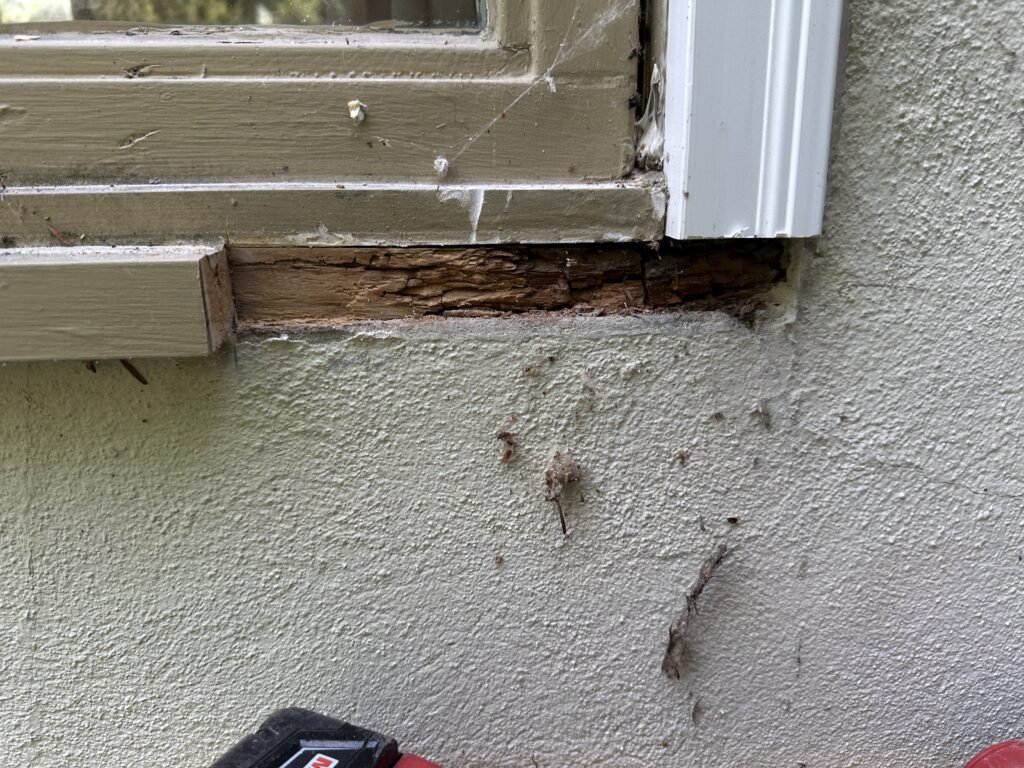
On a ladder, press the wood with a screwdriver or your thumb. Sound fascia is firm. Rotted fascia is spongy, crumbles, or lets the tool sink in. You may see fungal growth, a musty smell, or wood that has gone soft and dark. If aluminum fascia cover is hiding the wood, soft spots under the metal and oil-canning where the wood has shrunk are the giveaways.
Worth knowing: If your gutters overflow during heavy rain, treat it as a fascia warning, not just a gutter chore. Water spilling behind the gutter soaks the fascia from the back, where you cannot see it until the front fails.
What causes fascia rot on Lancaster County homes
Rot is always a water story. Wood that stays wet long enough feeds fungus, and fungus eats the wood. The question is where the water keeps coming from, and on most homes it traces back to one of these sources.
Cause 01
Clogged or failing gutters
This is the biggest one. When gutters clog with leaves, water backs up and pours over the rear edge directly onto the fascia and behind it. A gutter that pitches the wrong way or has open seams does the same thing. The fascia stays damp through every storm and never fully dries.
Cause 02
Missing or damaged drip edge
Drip edge is the metal flashing that directs roof runoff into the gutter instead of behind it. Plenty of older Lancaster County homes were built without it or lost it during a reroof. Without that flashing, water wicks back onto the top edge of the fascia every time it rains.
Cause 03
Ice dams in winter
Our freeze-thaw winters build ice dams at the eaves. Melting snow refreezes at the roof edge, backs up under the shingles, and forces water onto the fascia and soffit. This is why fascia rot often clusters at the eave corners where ice loves to form.
Cause 04
Bad paint and skipped maintenance
Wood fascia only survives because of its coating. Once the paint cracks and is left that way, water gets into the end grain and the back of the board. A decade of deferred painting on a south-facing eave is often all it takes to start serious rot.
How a rotted fascia board repair contractor in Lancaster County PA fixes it
The fix depends on how far the rot has spread and what it has reached. The mistake homeowners make is treating the symptom without finding where the water gets in.
Why patching alone fails
Wood filler and a coat of paint can make a soft fascia look fine for a season. It does nothing about the water source or the rot already inside the board. Within a year the patch separates, the rot keeps moving, and now it has reached the soffit and the rafter tails behind it. What started as one board becomes a structural repair. The right sequence is to stop the water first, then replace the compromised wood, then re-cover.
Sagging soffit and what it means
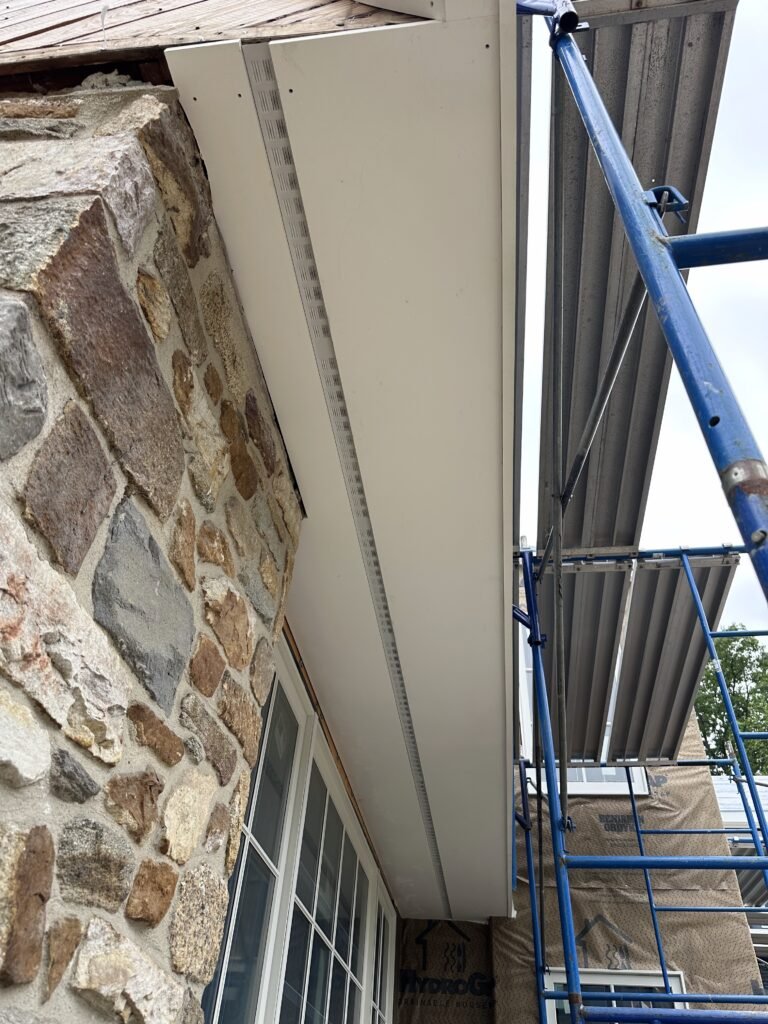
The soffit is the underside panel that closes off the eave. When fascia rot spreads inward, the soffit loses its support and starts to sag, droop, or pull loose. Sagging soffit is rarely its own problem. It is usually fascia rot that traveled. A repair that ignores the soffit leaves the door open for pests and more moisture, so both get addressed together.
Worth knowing: Moisture moves through a building envelope in predictable ways, and the eave is one of the most common entry points. The research at Building Science Corporation is a solid reference if you want to understand how water gets in and why drainage details matter.
Repair versus full replacement
If only a short run is soft and the rafter tails are sound, that section is cut out and replaced with new material, often a rot-resistant board so it does not happen again. If rot has reached multiple boards, the soffit, or the framing behind it, you are into a larger replacement. The line is structural: surface damage gets repaired, framing damage gets rebuilt. Our guide on when siding needs removal versus repair follows the same logic, and many fascia problems show up alongside the siding issues covered in why siding peels and how a contractor fixes it.
When we replace fascia, we often recommend moving to a low-maintenance material so this is a one-time fix. That work falls under our siding installation and repair service, since fascia, soffit, and siding are all part of the same exterior system.
Where D&E Mako Renovation works across Lancaster County
Lancaster County service area
- Ephrata, PA — our home base, full of older homes with original wood fascia past its prime
- New Holland, PA — established neighborhoods where ice-dam damage shows up at the eaves
- Lititz, PA — historic and mid-century homes where owners want fascia done right, not patched
- Akron, PA — smaller borough homes with gutter-related fascia rot
- Denver, PA — a mix of housing where deferred painting has let rot start
- Reamstown, PA — rural and suburban homes where soffit sag often points to fascia failure
If your project is outside these areas, get in touch through our contact page and we will let you know whether it falls within our range.
The short version on rotted fascia
Fascia rot is slow, quiet, and almost always caused by water that has been getting in for a while. Watch for peeling paint, dark stains, sagging lines, and gutters that pull away. Press the wood. If it gives, you have rot. A rotted fascia board repair contractor in Lancaster County PA will find the water source first, then replace what is compromised, then re-cover so it stays sealed.
The cost of waiting is that a one-board repair becomes a soffit and framing job. Catch it early, fix the cause, and your roofline goes back to doing its job quietly.
Noticing soft spots or sagging at your roofline? Let us take a look before it spreads.